


The Bohemian Waxwing (Bombycilla garrulus) passes through the village in October as it heads south to its winter habitat and again in March when it flies back to its breeding grounds in the boreal forests of the north. Some winter in the southern United States; others travel as far as Costa Rica and Panama for the winter.
Traveling in madcap flocks, Bohemians stop along their migration route to fill up on berries, cherries and other fruit, and their appearance makes me smile, a fine thing indeed this year. The birds fly jubilantly around the old crabapple tree, gleefully dance from branch to branch, make crude comments to the nearby crows and starlings, laugh at their own jokes and pelt each other with desiccated crabapples. Getting clear photos of them is quite an exercise because they never stop moving.
Bohemian Waxwings are mainly fruit eaters, and in colder weather, they subsist on frozen mountain ash berries, hawthorn berries, rosehips, high bush cranberries and other fruit. In late winter, and early spring, it is not unusual for the birds to become tipsy after consuming fermented berries. They fly around erratically, stagger about, have trouble making landings and even fall out of trees at times.
I thought these rowdy visitors were Cedar Waxwings until I noticed their peachy colored faces, rufous (red) undertail coverts and white wing streaks, also their scarlet-tipped secondaries, often rather difficult to see. By the time the birds departed, the old crabapple tree was bare, and the deep snowdrifts in the front yard were peppered with bits and pieces of frozen crabapple. Along came a whole murder of crows and made short work of the leavings.
Bohemians are seasonal harbingers, and their appearance in the front yard in March often means that springtime is on its way, but this year, they should have waited a few weeks longer. It is still cold and snowy here. We have a long way to go.

It is the first Tuesday in September, and village children are off to school, walked there (or just to the bus stop) by nannies, proud parents, big brothers and sisters, and occasionally family pets. I have known many of the kids since they traveled about in prams, and here they are going off to school. Dear me, how time flies.
This morning, yellow school buses are rumbling along village streets, something we have not seen for a few months. The cheerful crossing guard who has presided over a nearby corner for years was back on duty in his jaunty orange vest, and we compared notes on how our summers had gone. He went fishing and played a lot of golf. Beau and I tended our unruly garden and did a little rambling. We were happy with how things had gone this time around. Before the wretched tumble, that is.
The youngsters wear jackets in confetti colors, carry backpacks and lunch boxes in pink, turquoise and lime green, tote miniature umbrellas patterned in flowers or bunnies or polka dots. They bloom like pint-sized peonies out in the street, and watching them from the window, I feel like doing a little blooming too.
Only a short distance away, other brightly arrayed offspring have hatched out in thickets and hedgerows and are strengthening their magnificent orange wings for the long journey south to begin in a week or two. I love this time of the year, but I am always sad when the kids spread their wings and leave home.
When monarchs alight on fall asters in the garden, the combination of orange, purple and gold is dazzling. Every butterfly is a stained glass jewel, a wild, vivid and breathtaking wonder. Lacking a clearly visible black pheromone spot on the rear wing, the butterfly at the top of this post may be female, but I am not sure. Sometimes the spot is not visible in profile.
There are vibrant colors everywhere we look in early September, and they are a sumptuous treat for old eyes. It doesn't matter whether the riotous tints are on Virginia creepers, monarch butterflies, coneflowers or tiny raincoats - they invite us to kick up our heels and dance, or more likely just stumble and lurch about.

It is the first Tuesday in September, and village children are off to school, walked all the way there (or just to the bus stop) by proud parents, big brothers and sisters, and (occasionally) family pets. I have known many of the kids since they traveled about in prams, and here they are going off to school. Dear me, how time flies...
On our walk this morning, we counted several bright yellow school buses trundling along village streets, something we have not seen in our travels for a few months. The cheerful crossing guard who presided over a nearby corner last year was back on duty, and we compared notes on how our summers had gone.
The youngsters wear jackets in confetti colors, carry backpacks and lunch boxes in pink, turquoise and lime green, tote miniature umbrellas patterned in flowers or bunnies or polka dots. They bloom like pint-sized peonies out in the street, and watching them from the window, I feel like doing a little blooming too.
Only a short distance away, other brightly arrayed offspring have hatched out in village hedgerows and thickets, and they are strengthening their glorious wings for the long journey south to begin in a week or two. I shall be sad when they depart.
When Monarchs alight on fall asters in the garden, the combination of orange, purple and gold is dazzling. Every butterfly is a stained glass jewel, a wild, vivid and breathtaking wonder. Lacking a clearly visible black pheromone spot on the rear wing, the butterfly at the top of this post may be female, but I am not sure. Sometimes the spot is not visible in profile.
There are vibrant colors everywhere I look in early September, and they are a sumptuous treat for these old eyes. It doesn't matter whether the riotous tints are on Virginia creepers, monarch butterflies, coneflowers or tiny raincoats - they invite me to kick up my heels and dance, or more likely just lurch about.

like this morning, when the wild geese came
squawking, flapping their rusty hinges, and
something about their trek across the sky
made me think about my life, the places
of brokenness, the places of sorrow,
the places where grief has strung meout to dry. And then the geese come calling,the leader falling back when tired, anothertaking her place. Hope is borne on wings.Look at the trees. They turn to gold fora brief while, then lose it all each November.Through the cold months, they stand,take the worst weather has to offer.And still, they put out shy green leavescome April, come May. The geese glideover the cornfields, land on the pond withwith its sedges and reeds. You do not haveto be wise. Even a goose knows how tofind shelter, where the corn still liesin the stubble and dried stalks. All we do ispass through here, the best way we can.They stitch up the sky, and it is whole again.
Barbara Crooker, from Radiance

The first 'cloaks' of the season have hatched out, and Beau and I were happy when several flew right by our noses on a recent morning walk. The little dears alighted on nearby tree trunks, perched on stones along the trail, rested on the glossy metal of parked cars to warm their wings in the early sunlight. Perhaps spring has truly arrived? Their appearance in the woods is usually a good indication.
I was a little worried about their food supply until I remembered their diet is mainly tree sap, particularly that of maples, poplars, oaks and birches. The butterflies also 'mud-puddle', a feeding process in which they take in nutrients from damp soil, compost and decaying organic matter in the woods, sometimes gathering in groups to do do.
Groups of butterflies are called kaleidoscopes, but a coterie of cloaks dining together in a lovely patch of wet mud ought to be called a puddle. A banquet of cloaks would be a fine expression too. Whatever one calls them, our early hatching purple wonders have no need for spring wildflowers.
The Mourning Cloak hibernates and is freeze tolerant, sleeping through the winter in trees and actually freezing when temperatures plummet. It is one of the few northern butterflies to do so. In winter, the cells in its body are flooded with proteins and sugars to control the formation of ice crystals, and Nymphalis antiopa can survive temperatures as low as -60 ⁰C (-76⁰F). During hot dry summers, the butterfly enters a similar state called aestivation, awakening in autumn when temperatures are more moderate. One has to love a butterfly with such elegant survival strategies.
Also known as the Camberwell Beauty in Britain, the species is one of the longest living butterfly species on the planet, and it is certainly one of the most powerful fliers, capable of flying long distances and sometimes found far from its range.
I always forget how beautiful "cloaks" are when they are viewed from other angles. The butterfly is lovely with its dark plummy purple wings open wide, displaying a row of bright blue spots along the back edge and yellow fringes, but this member of the tortoiseshell (or anglewing) family is equally exquisite when seen with its wings folded.
Every year I am enchanted all over again when I encounter a specimen of Nymphalis antiopa in profile, my attention held by its iridescence and complex overlapping scale structure. There is much to be learned from looking at the great wide world from a slightly different angle, and there are always surprises.
And so it begins... I wish my departed love was here to witness the earth coming to life again. This was his favorite season, and he so loved these butterflies.


One would have to go a long way to top the brilliant colors of the palette on display this morning. Red, purple, orange and gold go perfectly together at any time of the year, but especially in shaggy, flowering July.
When a newborn Monarch alighted on the crown of a purple coneflower a few days ago, it was cause for celebration, for singing, cavorting in the greenery and general silliness. Come to think of it, the "Susies" in the background are sometimes called coneflowers too (although they are two distinct species).
How on earth can one describe something so vibrant, so breathtakingly perfect? Butterfly, blooms and summer garden say it all, and no words are needed from this old hen. Such images will linger in memory long after northern days grow very short indeed, and the south corner of the garden is buried in snow.
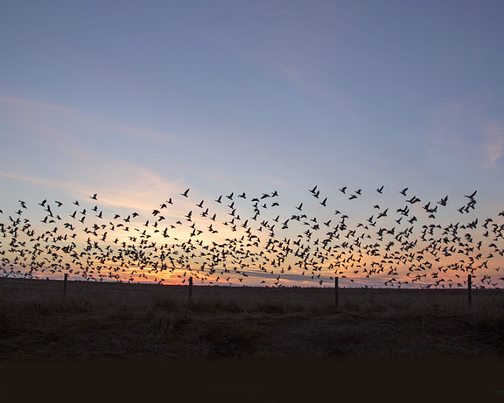
Once upon a time, when women were birds, there was the simple understanding that to sing at dawn and to sing at dusk was to heal the world through joy. The birds still remember what we have forgotten, that the world is meant to be celebrated.
Terry Tempest Williams, When Women Were Birds
This week's word has been around since the thirteenth century, coming to us from the Middle English memorie, the Anglo-French memoire and the Latin memoria/memor meaning "mindful". Further back are the Old English gemimor meaning "well-known", the Anglo-Saxon gemunan meaning "to bear in mind", the Greek mermēra meaning "care", and the Sanskrit smarati meaning "that which is remembered". In the Vedas, the word smarati is used to describe teachings handed down orally from the ancients and never written out. At the beginning of this week's wordy adventure is the Proto-Indo-European (PIE) root form (s)mer- meaning to keep something in mind.
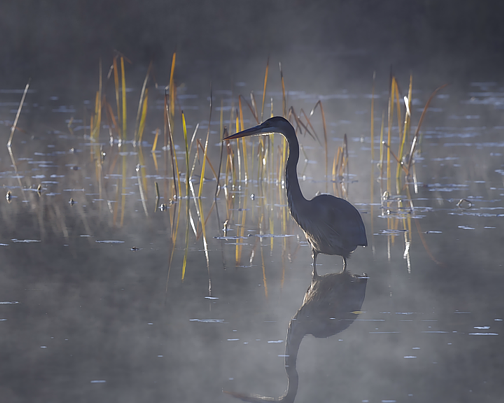
One of the late autumn entities that always tugs at my heartstrings is the last heron of the season, he or she haunting leaf-strewn shallows in solitary splendor and hoping to find a few fish, frogs and water beetles to fuel the long trip south. It's an arduous journey from here to there - all the way to the southern states, Cuba, Colombia, Honduras, Mexico, Venezuela, and the Galapagos Islands. Consuming a few omega-rich meals before starting out on such a long voyage is a sensible thing to do.
I have already written here more than once about a long ago autumn morning in northern Ontario when the heron migration was in full swing. The great birds had gathered in predawn darkness to feed before flying onward, and hundreds stood almost side by side in the foggy waters of the Mississagi river near the town of Iron Bridge. As we moved along the shoreline, their silhouettes appeared one by one out of the mist, and it was breathtaking. It was wild magic of the finest kind.
There is enough enchantment in such tatterdemalion snippets to last many lifetimes, and I would like to retain the memory of that morning for the rest of my earthly days and beyond, no matter how many other mind scraps embrace the void somewhere along the road. I've always loved the "great blues", and I revisit the scene often in my thoughts, always a place of tranquility and stillness. We need as many peaceful places as we can find in these troubling times.
For whatever reason, archaic English refers to a group of herons together, not as colony or a flock, but as "a sedge of herons". Every summer I watch herons fishing in the shallows along Dalhousie Lake and think that if there were no other teachers about, I would be just fine with a sedge of herons to show me the way.
I don't usually think of a group of Great Blues as a sedge though. For those of us who love Ardea herodias and stay home in winter rather than flying south, the right expression for a gathering of our favorite birds is surely "a memory of herons". In the depths of the long white season, we think of them and smile.


