September 30, 2011

Friday Ramble - Season

Season.... The word comes to us from the Middle English sesoun through the Old French seson and the Vulger Latin satio, meaning time of sowing or planting, all arising from the Latin serere, meaning to sow. Season shares its origins with the word seed, and both are concerned with fertility, fruitfulness and nourishment.

We use the word to mark four distinct divisions of the calender year as defined by designated differences in temperature, rainfall, daylight and the growth of vegetation, both wild and cultivated: Spring, Summer, Autumn and Winter.

In earlier times, a season simply marked the interval within which an important hunting and/or agricultural activity was undertaken and completed i.e. the planting season, the harvest season, the hunting season, the dormant season. Each season is complete within itself whether viewed through the august lens of the calendar year or the loving eyes of a crone and the Great Round - each season is a cycle with its beginnings (sowing), its center or middle (cultivation and nurturing) and its completion (harvest or reaping).

In much the same way, to season a broth or stew is to undertake a savory sowing of foodstuff with the seeds of taste and ambrosial fragrance. Be it the sowing, tending and reaping of one's vegetable garden or the careful addition of herbs and spices to a casserole, it's all about nurture and enjoyment.

As I type away here, there is the soothing sound of rain falling beyond the windows. If you live as far north we do, this season is about apples, rain and falling leaves, and the words form a lovely mantra for autumn potterings among the turning trees.  With these sweet and spicy things we season our autumn days.

September 29, 2011

Thursday Poem - Assurance

You will never be alone, you hear so deep
a sound when autumn comes. Yellow
pulls across the hills and thrums,
or in the silence after lightning before it says
its names — and then the clouds' wide-mouthed
apologies. You were aimed from birth:
you will never be alone. Rain
will come, a gutter filled, an Amazon,
long aisles — you never heard so deep a sound,
moss on rock, and years. You turn your head —
that's what the silence meant: you're not alone.
The whole wide world pours down.

William Stafford

September 28, 2011

Connecting With the Gaian Tarot

When the box arrived at my front door on a sunny morning a few weeks ago, my heart did a little dance - I knew that what lay inside was a copy of Joanna Powell Colbert's gorgeous Gaian Tarot. What to do??? Should I dismantle the package right on the threshold and have the deck in my hands at once, or should I wait for the right moment?

I decided to wait for the right moment, for the unwrapping of such a soulful gift calls for spirit, an open heart, gratitude and deep respect - for the deck and its sublimely gifted creatrix certainly, but for the Old Wild Mother and all Her creations too.  First and foremost, this magnificent tarot deck honors Mother Earth herself, Gaia in all her times and seasons and boundless gifts.

Joanna and I are long time mermaid sisters, and I been watching in delight as her creation took shape over the last several years.  I have a copy of the exquisite handmade Majors only deck, and one Major Arcana card after another captured my rapt attention on meeting initially, each my favorite until I turned over the the next card.  The Seeker, the Moon, the Star, the Priestess, the Hermit, the Wheel, Gaia - I've come to love them all since encountering them for the first time.

In Joanna's inspired revisioning, the Fool has become the Seeker, and the High Priestess is simply the Priestess. The card called the Empress in most other decks has been reborn as the Gardener, and the Emperor is now the Builder.  I especially liked the reshaping of the Hierophant as the Teacher, the Chariot as the Canoe, and the Hanged Man becoming the Tree this time around.  Gaia, formerly the World card, is one of the most beautiful, inspiring and healing tarot cards I have ever worked with.  Other changes include Bindweed (formerly The Devil), Awakening (formerly Judgment), and Lightening (formerly the Tower).  The Death card in this deck is one of the very few I have ever liked.

The Gaian Tarot's Four of Earth is partially based on a photograph taken in one of my favorite woodland groves in the Lanark Highlands, and I cherish Joanna's gift of a print - the framed image hangs in my studio, and I can see it as I am typing way here.  No stranger to the Major Arcana, I thought I knew what wonders the Minor Arcana would hold, but when I opened the box, the contents dazzled mine eyes - they were a banquet, a symphony, a sumptuous feast for the senses. Every card was a jewel, the colors vibrant and glowing, the images flowing through one's hands like birds, like leaves, like the world itself in effortless flowing transformation.  How sweetly the cards sang, and their song seemed to be in the voice of this planet we all call home.  I was blown away on first seeing the deck in its entirety and sat quietly for quite a while, just holding the cards.  The Guardian of Air left me absolutely speechless.

This is a deck for those of us who love the earth, who follow her rhythms and strive to honor her in daily life and our spiritual practice, whatever form that practice may take.  The suits are elemental, Water, Earth, Fire and Air rather than Cups, Pentacles, Wands and Swords, and that feels exactly right.  The Court cards are Children, Explorers, Guardians and Elders rather than Pages, Knights, Queens and Kings, and that too feels right.  I have long felt that the notions of aristocracy implicit in the court cards of most tarot decks are not apt for our times.  There is a lovely balancing of male and female energies in this deck, and sometimes the genders depicted on the cards are different than those shown on traditional cards.  It is always surprising when it happens, and there is always food for thought when it does.

The book which accompanies the cards is a jewel on its own, eloquent, thoughtful, and the perfect guide to setting off on what is often called "the Fool's Journey".

One cannot work with such a remarkable deck without thinking about past tarot journeys, and this old road of mine has been a long and winding one.  My first tarot deck was the Rider-Waite deck created by Arthur Edward Waite and Pamela Colman Smith and published in 1909 by William Rider and Son of London, England.  I discovered the deck in my university bookstore as an undergrad, and it was the only deck there at the time - there were not as many tarot choices then as there are now.  I still have those original cards, and their once vivid colors have faded over the years - they're soft and pliable from so much handling, their edges dingy, fragile and quite tattered.  A cherished artifact from times gone by, my old deck marks the beginning of this fool's long trek through the living world with tarot in hand.

Other decks later followed the Rider-Waite into my tarot cupboard: the Aquarian, Marseille, Visconti-Sforza, Robin Wood, Motherpeace, and Daughters of the Moon, to name a few.  Then along came the Greenwood tarot created by Chesca Potter and Mark in the nineties, and that was my favorite working tarot for several years. For starters, I felt a bone deep kinship with what Mark Ryan described as the pre-Celtic shamanism of the mythic forest.  Then there was the profound causal relationship between the cards and the living earth  - it was a radical approach to tarot in those days, one that grabbed me and shook me right down to my roots.  Working with the Greenwood cards, I felt, not yet at home perhaps, but on my way at last and happy to be traveling the road.

There have been many other beautiful and much loved decks over the years, and they have all been fine teachers; Kris Waldherr's Goddess Tarot, Songs for the Journey Home, Will Worthington and Phillip Carr-Gomm's Druidcraft Tarot and the Wildwood Tarot (the Greenwood Tarot as newly revisioned by Mark Ryan, Will Worthington and John Matthews). 

The Gaian Tarot is among the most beautiful tarot decks ever created, and working with it is a wonderfully positive and uplifting experience.  When I do a reading, I feel joy and hope, the deep intuitive wisdom of the cards, a sense of rightness and being rooted, kinship with the earth under my wandering feet.  Such things are all too rare and precious in these, or any times for that matter, and they are to be cherished.

The Moon was the first card of Joanna's magnificent deck I encountered, and seeing it, I knew that something extraordinary was coming into being. The lunar card reappeared prominently when I did a reading with the full deck for the first time.  I seem to have come full circle with that reading, and that feels grand and magical.  Here's to La Bella Luna, lighting up the velvet night and our road to wisdom and connection, lighting the way along this dancing earthly trail we are on together.

September 27, 2011

September Reds

 
Could I live in a world or place where the trees don't turn red and gold and burgundy in September?  I think not - a world without the Great Round, the four seasons and these resplendent reds is too awful to contemplate.

September 26, 2011

Drifting Veils of Morning

One of those nebulous autumn mornings when skies are overcast, and the village is cloaked and mysterious...  The earth is warmer than the air, and the meeting of the two elements turns otherwise mundane landscape features like power lines and hydro towers into entities fey and luminous.

I almost typed "early autumn" in the preceding paragraph, but as of the equinox last week, autumn is properly upon us, and she is comfortable in her tenure of mist, rain, wind and madcap tumbling leaves.

Fog swirls around everything in billowing waves, draping trees like a veil, smoothing hard edges and rounding the contours of house and street. Out of the pearly gray and the sepia comes a sound now and again: rain on the roof of the little blue house, village doors opening and closing as sleepy residents collect their newspapers, the muffled purring of autos, an early commuter detouring through the park, children walking to school, a caroling bird in the hedgerow, the whistle of a faraway train that is usually only a faint echoing in the air.

On such mornings, the world seems to go on forever and to be filled with a luminous floating Zen possibility. Part of me is curled up and engaged in a morning breathing meditation, counting my slow breaths in and out. The other parts are drifting along with the fog and happy to be doing it. 

September 25, 2011

Little Sister in the Garden

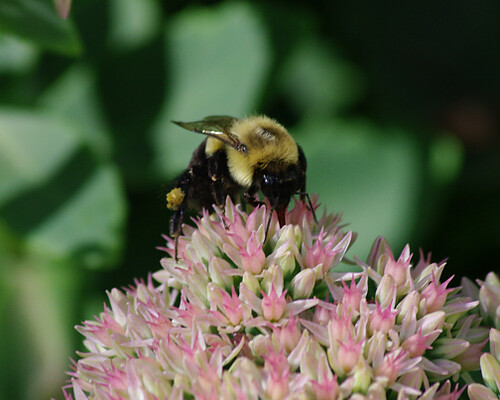
Common Eastern Bumble Bee (Bombus impatiens)
and "Autumn Joy" Stonecrop (Sedum telephium)
Yesterday morning's "bumble" will probably be one of the last little sisters to visit us this year. Nights are turning cold here, and the happy buzzing congregation of only a few weeks ago is just an echo in the wind.
The wee girl was alone for quite a while gathering late nectar among the pink and copper garden sedums, and she was moving slowly in the chilly morning air. When the day warmed up a little, she was joined by a scant handful of other bumbles, but no longer are there merry throngs cavorting among the steadfast bloomings of autumn.

There is a lesson or three to be learned from the ever cheerful and plucky bumbles. As our days shorten and temperatures plummet, they continue to do their appointed work, to buzz about and gather nectar as long as they can. Knowing all the while that winter is coming and their precious days are numbered, they move from flower to late autumn flower, and oh, how they sing in their last time on the earth. Smaller by far, but like the herons and the loons and the great geese, I shall miss them.

September 23, 2011

A Wreath for the Equinox

Whether you observed Mabon (the Autumn Equinox) a 
few days ago on Wednesday, or you are celebrating it this 
day, bright blithesome blessings to you and your kin.

May your larder be overflowing with the abundance of this 
harvest season, and your communal banquet table groaning
under the robust weight of your seasonal celebrations.

May the fire on your hearth be kindled with fragrant wood 
from fastnesses wild and much loved, and may it burn brightly
in the chalice of your fireplace, stove or chiminea.

May all good things come to you.

September 22, 2011

Thursday Poem - At Blackwater Pond

At Blackwater Pond the tossed waters have
settled
after a night of rain.
I dip my cupped hands. I drink
a long time. It tastes
like stone, leaves, fire. It falls cold
into my body, waking the bones. I hear them
deep inside me, whispering
oh what is that beautiful thing
that just happened?

Mary Oliver

September 21, 2011

For the Autumn Equinox

This is September 21, traditionally celebrated as Mabon or the Autumn Equinox and one of the three observances dedicated to the harvest, the other two being Lughnasadh (or Lammas) which fell on August 1 and Samhain (or Halloween) which will follow in a few weeks time on October 31.  This year, the actual astronomical date of the Equinox falls on Friday, September 23, but many celebrate on September 21 year in and year out, and so here I am this morning, waxing thoughtful about a cosmic event that celebrates natural equilibrium, harvest and community.

Today goes by many names: Harvest Home, Mabon, the Feast of Ingathering, Equinozio di Autunno (Strega), Meán Fómhair, and in Druidic tradition, Alban Elfed, to name just a few. Mabon is the name by which Autumn Equinox ritual observances are most widely known, but the connection between the Welsh hunter god and September 21 is flimsy to say the least - Mabon's only discernible link with the Autumn Equinox is that it may have been the date of his birth, but we don't know for sure.  Lugh, Demeter, Ceres, Persephone or even John Barleycorn might have been better choices as a deity presiding over autumn equinox rites.  South of the equator seasonal patterns are reversed (of course), and this day is celebrated as Ostara or the Spring Equinox.

In the old Teutonic calendar, the Autumn Equinox marked the beginning of the Winter Finding, a ceremonial interval lasting until Winter Night on October 15, and it was also the date of the old Norse New Year. In Christian tradition, the festival is closely associated with St. Michael the Archangel - his feast takes place a few days from now on September 25 and is known for obvious reasons as Michaelmas. The purple Michaelmas Daisy with its golden heart is one of my favorite flowers ever.  Today is about abundance and harvest, but most of all, it is about balance - this is one of only two days in the whole turning year when day and night are perfectly balanced in length. Like all the old festivals dedicated to Mother Earth, this is a liminal or threshold time, for we are poised between two seasons, summer and autumn.

A ballad by Bob Dylan always comes to mind around this time of the year:  "The Times They Are a-Changin". Written for Dylan's third studio album in 1963, his anthem of change was an inchoate expression of the tumult of the times and particularly the civil rights movement, and it presaged by only a few weeks the assassination of John Fitzgerald Kennedy. The lyrics were inspired to some extent by the Book of Ecclesiastes, and Dylan added a reference to Mark 10:31: "But many that are first shall be last, and the last shall be first." Critics claimed that his creation was outdated the minute it was published, but the words have always seemed timeless to me, as appropriate today for seasonal turnings as they were for the turbulent social and political movements of the sixties. Dylan's friend Pete Seeger later adapted passages from Ecclesiastes to write his own folk anthem "Turn, Turn, Turn!.

One holds out hopeful thoughts on the day of the Autumn Equinox - she hopes that the skies overhead will be brilliantly blue and full of singing geese, the confetti clouds high and the waning moon visible before sunrise, that trees and vines and creepers will be arrayed in ruby and russet and gold. As always in this season, there is a bronze chrysanthemum on our threshold, and this morning it is graced by a single fallen oak leaf. The plant is my own nod to the seasons and a homage of sorts. 
On this day of color and richness and equilibrium, we can be still for a moment and acknowledge our bond with the place where we have been planted this time around.  We can offer up thanks for home and hearth, for the bounty we are reaping and "putting by" to see us through the long nights of winter. We can celebrate clan and tribe and community and sharing - all the fine old qualities that unite us in a dancing train spiraling on down the years from the ancestors to the present day and ourselves.

Whatever you call it, a very happy Autumn Equinox, Harvest Home, Mabon, Feast of Ingathering, Equinozio di Autunno, Meán Fómhair and Alban Elfed to you and your clan. 

September 20, 2011

Standing in the Light

Young Blue Jay
(Cyanocitta cristata)
I've already said it at least once in the last week or so, but there is something almost indescribably eloquent in the way northern birds stand motionless in September and look up at the autumn sky - there is yearning and patience and acceptance in every curve and vane and quill. 
The tilt of this youngster's head says it all, that he (or she) knows sunlight hours are waning, that every ray of morning light is precious, and there are hard times ahead. Our jays do not migrate, and they visit the garden behind the little blue house in the village all winter long for food and companionship. 
Knowing what lies ahead, we have already stocked up on winter feed at the local farm co-op and lugged it all home, that we may feed our little feathered friends when the wind blows and the snow flies.

September 19, 2011

Of Apples and Gingerbread

And so it begins...  Stalls at weekend markets are in full display mode with rank upon rank of gourds in every color of the rainbow, squash and early pumpkins, baskets of potatoes, carrots and beets.  Craftier enterprises offer strands of grapevine, autumn leaves and berries, wreaths, sheaves of standing corn, scarecrows and bales of hay meant to be used in decorating home and hearth for autumn. The craving to decorate one's surroundings at this time of the year seems to go hand in hand with pickling, preserving and plain old "putting things by" for winter.
This past weekend, the first Macintosh apples of the season made their appearance, and we came away with a paper sack of perfection - the intoxicating scent perfumed the family buggy all the way home, and Spencer insisted on being fed an apple, bite by succulent bite as we made our way down the road.
When my son-in-law was asked what sort of cake he would like for his birthday dinner yesterday, he asked for gingerbread, and I dusted off a favorite maritime recipe last stirred up around this time last year.  It too perfumed the house with its spice and sweetness, and the combined aroma of apples and gingerbread everywhere was heady stuff - the essence of this fruiting season in all its vibrant glory.   We served the cake up for dessert last evening with one's choice of whipped cream or homemade vanilla ice cream, and it was absolutely grand.  There is nary a bite left.

September 17, 2011

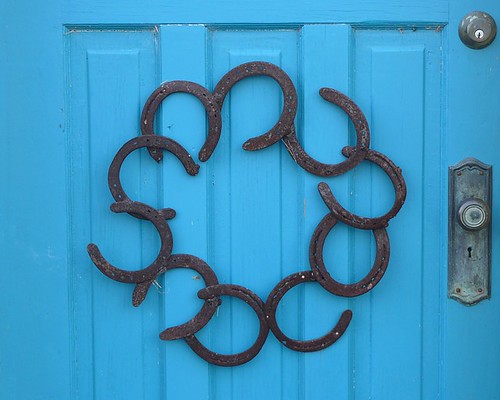
By the Door

I have been thinking for the last week or so that it is high time that I posted a vibrant threshold image here.  The image looks a LOT clearer if you click on it for a slightly larger (and clearer) view.
The first autumn frosts will arrive within a few days and the welcoming botanical tableaux on our front walkways will be over for this year.  All our doorway lovelies are fading away, and it will not be long until they have expired and returned to the earth from which they came.
How quickly time seems to fly away...  It is so cold in the mornings now that one needs a warm jacket, hat and gloves for early walks, and our collars are turned up against the wind before leaving home. 

September 16, 2011

Friday Ramble - Monarch in the Glen

A flash of bright orange, and there he or she was in a clearing on the edge of the trail into the deep woods - a perfect newly emerged specimen of Monarch butterfly (Danaus plexippus), breathing deeply in and out and drawing strength into wings as yet untried.
The Two Hundred Acre Wood was filled with Monarch butterflies this week, and they filled the air with their exuberant flights, their unfettered swooping and circling about in the wind. There were whole clouds in motion, and it was lovely to watch their airborne antics.
The word monarch comes to us from the Middle English monarke, thence from the Old French monarque, the Late Latin monarcha and finally the Greek monarkhos, all meaning to be a ruler - to be superior in power and presence and reign by divine right.  Let there be no mistake - these magnificent creatures rule wherever they appear.
My vivid little being was a male, his gender readily identified by a black spot or androconium in the center of each hind wingscent scales designed to attract females of the same species.  Unlike the earlier generation born in our fields this summer, this handsome lad is configured for long distance flight, and it will not be long until he and his vibrant kin are airborne and bound for a sunny winter abode in Mexico.
Nights are cool here now, and in only a few days all our butterflies will be gone. It seems only fitting that those of us who are staying behind should wish them joy on their long journey south.

September 15, 2011

Thursday Poem - At the Door of Night

at the door of night, my mirrored
pond holds the setting sun like a jewel
and all the herons homeward go,
backlighted against the trees

upon the shore we three stand
watching rapt, as the thousand
things that formed this day
are folding inward slowly

(kerrdelune)

September 14, 2011

Wordless Wednesday - Purple

Michaelmas Daisy or New England Aster
(Symphyotrichum novae-angliae 
formerly Aster novae-angliae)

September 13, 2011

The Harvest Moon of September

September's moon is my favorite moon in the whole turning year - it is also (above all others), the one I can't describe adequately or take a good photo of, no matter how extensive my preparations and how hard I try.  Every year, I potter off to a good vantage point, set up camera and tripod, check settings and wait patiently. The moon rises over the trees (or sometimes a rooftop), and I stand there in the darkness like an enraptured fool with my eyes open wide, a heart full of wonder and a paucity of words up to the task of describing the occasion.

Last year, I described the situation as a cosmic joke, this business of a creaky elder standing out under the trees and taking picture after picture of the full lunar orb, but never a good one. Well, gentle readers, here we are again, another glorious Harvest Moon has just gone by, another mediocre image captured and shared.   It brings to mind the old Zen tale in which a monk on his deathbed was asked to describe his mindful life, and he replied joyously, "just one mistake after another..."

Lady Moon was as golden last night as a moon in harvest time ought to be, but whether or not I managed to capture her perfectly does not matter a fig or a hoot in the greater scheme of things.  She rose into the heavens like a great golden lantern, and Himself, Spencer and I were out there together in the darkness to witness her splendid ascension.  As we packed up our stuff later and headed indoors, we couldn't help thinking that such transcendent beauty deserved an ecstatic gesture of some kind, a chorus, a chant or a benediction - something grander and more luminous than our simple deep bows and sighs of approval.

We also know this moon as the:

Acorn Bread Moon, Acorns Gathered Moon, All Ripe Moon, Aster Moon, Autumn Moon, Barley Moon, Between Harvest Moon, Eating Indian Corn Moon, Black Calf Moon, Calf Grows Hair Moon, Chrysanthemum Moon, Corn Moon, Corn Maker Moon, Dancing Moon, Deer Paw the Earth Moon, Dog Salmon Return to Earth Moon, Elderberry Moon, Drying Grass Moon, Fruit Moon, Hay Cutting Moon, Her Acorns Moon, Holy Moon, Hulling Corn Moon, Index-finger Moon, Leaf Fall Moon, Leaf Yellow Moon, Leaves Changing Color Moon, Little Chestnut Moon, Maize Moon, Mallow Blossom Moon, Moon of the First Frost, Moon of Full Harvest, Moon of Much Freshness, Moon When the Leaves Fall off, Moon of Plenty, Moon When the Corn Is Taken in, Moon When the Plums Are Scarlet, Moon When Deer Paw the Earth, Moon When Calves Grow Hair, Moon When Everything Ripens and Corn Is Harvested, Moose Moon, Morning Glory Moon, Mulberry Moon, Nut Moon, Papaw Moon, Rice Moon, Rudbeckia Moon, Seed Moon, Shining Leaf Moon, Silky Oak Moon, Singing Moon, Soaproot Dug For Fish Poison Moon, Sturgeon Moon, Wavy or Snow Goose Moon, Wine Moon, Wood Moon, Yellow Leaf Moon.

September 12, 2011

Nectar and Early Light

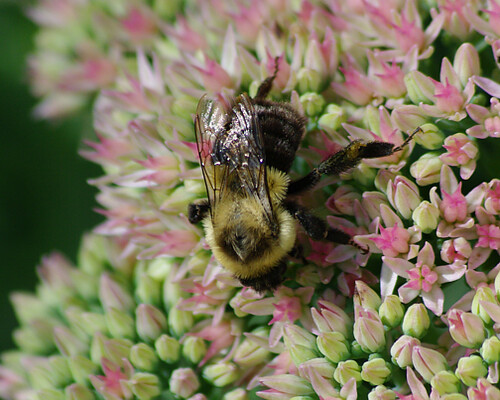
Eastern Bumble Bee (Bombus impatiens)
and Sedum (Autumn Joy)

September 11, 2011

For This Day

Mantis in the Wind

Praying (or European) Mantis
(Mantis religiosa)
One is never quite sure whether to curse or bless the brisk winds that sweep across the Lanark highlands in September.  Blessing is always better....

Capturing images at this time of the year involves a fair bit of what I like to call "dancing with the wind". In my case, the dancing is a combination of hobbling, lurching and flailing about with camera in hand - it bears little or no resemblance to dancing cranes or the flowing katas of any Oriental discipline I can summon to mind.

One never knows just what the results of one's windy photographic efforts will be, and I am always happy on returning home to find that the marriage of wind and weed and little wild green cousin has been fruitful.

The mantis danced on her swaying stem, and I danced around her in a circle clicking, both of us content to be there in the sunlight and doing our own creative thing on a fine morning in early autumn.

September 10, 2011

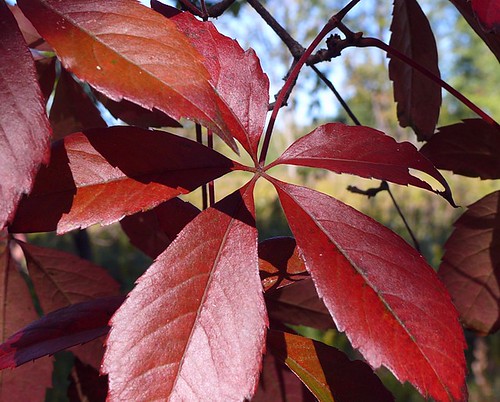
In My Hedgerow Turning....

Virginia Creeper
(Parthenocissus quinquefolia)

September 9, 2011

Friday Ramble - Migration

Can it be? Another September has arrived in the world with its changeable skies, rains and winds, confetti colors and tumbling leaves. One of my favorite British poets, John Keats, called this time a 'season of mists and mellow fruitfulness", and his words come back to me this morning as I tap away here at the keyboard and look out the window occasionally.  However one looks at it, this is a time of transcendent change, restless movement and migration.
A lovely word, migration has its roots in the Latin migratio, migrationem and perhaps the Greek ameibein, all meaning to change or transform.  In chemistry, we use the word to describe the orderly movement of an atom from one place to another within a specific molecule.  More commonly, we use the word to describe the seasonal movements of birds and animals from one climactic zone to another and then back again. We do not (and perhaps never will) understand the precise algorithms of migration, but it has long been speculated that sensitivity to the Earth's magnetic fields, the length of days and nights and the position of the sun and stars overhead all play their parts in the equation.
I am slowly making my way through David Lewis-Williams' The Mind in the Cave: Consciousness and the Origins of Art, and his weighty (but controversial) scholarly work is providing me with much food for thought. How interesting to think that in the beginning, humans were migratory animals too - we were compelled to follow the seasonal migrations of the ancient herds which provided our food supply along with materials for our clothing, footwear and tools. Somewhere along the line in our migrations, we discovered time and started to mark the passing of days and seasons on the walls of our caves. If Dr. Lewis-Williams is correct, and he makes compelling arguments, we discovered art, ritual and shamanic transformation around the same time, and we have never looked back.
After a visit to Lascaux in the early forties, an astonished Picasso told his guide that humanity had not learned a thing about art and creativity in twelve thousand years. He was wrong about the antiquity of the magnificent paintings in the French caves (they are at least five thousand years older), but his amazement and awe as he stood in front of the Chinese Horse echo down the years.  How far have we come anyway?

In autumn, the geese fly south, and snug in our bothies we listen, far from traditional rhythms of hunting, gathering and seasonal movement. Modern day human migrations are those of the spirit and imagination for the most part, but they are no less adventurous and transformational for all that. No longer compelled to travel from one place to the other in search of food and warmth, we curl up by our hearths, and from them we can indeed take wing.

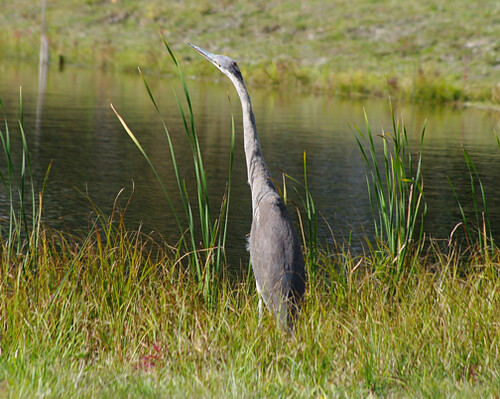
This past weekend, a heron in my Lanark pond lifted her face and looked up at the flocks of migrating northern geese silhouetted against the clouds - it won't be long until it is her own time to go, and I suspect she was thinking of that.  As I watched her from nearby, it seemed to me that there was infinite patience and yearning in the tilt of her perfect head, grace and wordless eloquence in every curve of her expressive wings. It cracked my heart wide open, and if I could have held her in my arms, I would have.

September 8, 2011

Thursday Poem - Fall Song

Another year gone, leaving everywhere
its rich spiced residues: vines, leaves,

the uneaten fruits crumbling damply
in the shadows, unmattering back

from the particular island
of this summer, this NOW, that now is nowhere

except underfoot, moldering
in that black subterranean castle

of unobservable mysteries - roots and sealed seeds
and the wanderings of water. This

I try to remember when time's measure
painfully chafes, for instance when autumn

flares out at the last, boisterous and like us longing
to stay - how everything lives, shifting

from one bright vision to another, forever
in these momentary pastures.

Mary Oliver
(from American Primitive)

September 6, 2011

Sheep May Safely Graze

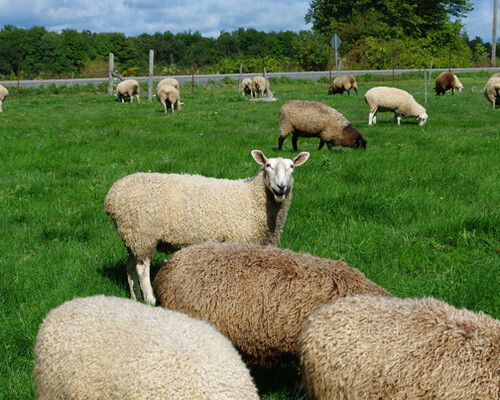
A cool sunny morning in September, blue sky and fluffy clouds from here to there, fields unfurling into the distance like bolts of of gold and green linen, the sturdy companionship of a placid flock of Border Leicesters at the farm of friends in the Lanark Highlands.

There is something timeless, enduring and soothing about hanging out with a flock of sheep.  It's time well spent, and no matter how I feel when arriving at the paddock, I usually depart in a frame of mind both peaceable and reflective. Who would have thought that sheep were given to smiles and expressions of blithe regard?  There is one golden eyed ewe who is always delighted when I turn up at the fence, and her undisguised pleasure shows in her happy ears and her wide grin. 
Reaching for the creaking latch at the farm gate, I find myself humming a few bars of Johann Sebastian Bach's Was mir behagt, ist nur die muntre Jagd  (The cheerful hunt is all my heart's desire).  A handful of melodies from the maestro's magnificent creation have a lovely way of ambling through my thoughts on mornings like this one.  BMW 208, usually called simply Jagdkantate (Hunt Contata), was composed for the birthday of a long ago Austrian Duke.  The noble himself has not walked the earth in centuries, but the fifth aria, Schafe können sicher weiden (Sheep may safely graze), is gorgeous stuff indeed, perfect for clear autumn mornings and visits with woolly ruminants in pastoral settings.
Several hundred moons ago, I loved playing Bach on piano and pipe organ and later managed to produce decent renditions on my cello and alto recorder - fine musics, wild places and the company of fellow creatures like the sheep continue to gladden and pacify this old hen in her terrestrial potterings - they dish out in elemental grace and careful abundance what the British poet Chaucer called "sentence and solace".

One of these days, I shall get out the old cello - these days it seems much bigger and heavier than it used to be.  I shall park myself comfortably out by the paddock fence and play a little Bach for the flock.  However lacking my tunefulness and technique may be, I think they might enjoy it.

September 4, 2011

Rivers and Wildnesses

Beyond Geddes bridge, the river is a jewel in early September stillness, a shining strand in Indra's web but lower now before the coming of the autumn rains.  The wind stirs the trees and trails its fingers in the waters making shimmering ripples here and there.   On the other side of the bridge, a lone heron stands in the shallows, and loons call to each other in haunting voices across the bay

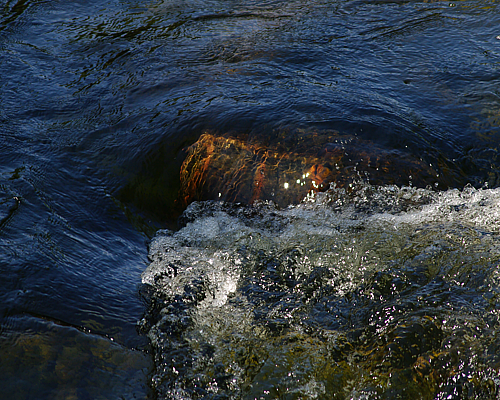
Crone stands on the bridge and snaps a few photos of a place she loves, late afternoon sunlight and ripples on the water, a favorite chunk of rainbow granite with the waves washing over it - the river kicks things up a notch and intensifies the colors of the old stone like a polarizing lens, making it sparkle like a garnet in its place.  Her thoughts are much like this this winding river making its way through the highlands between guardian rocks and old trees.
She thinks of her long ago childhood and all the times when life seemed beyond enduring, when she was in desperate need of sanctuary and fled to what she called her "wildnesses" - the enfolding woodlands and what Dylan Thomas described as "rivers of the windfall light".
She stands here in wildnesses many years later, watching the play of light across the water and trying to capture the moment with her camera and notebook.  The loveliest part of these moments at the edge of time, and indeed the whole equation, is what the river is saying: "Just rest in this moment, nothing else is needed at all..."   Even as a child, she knew that.  She smiles as she turns to go, thinking that in some measure she will be here by the autumnal river forever.

September 3, 2011

Gathering

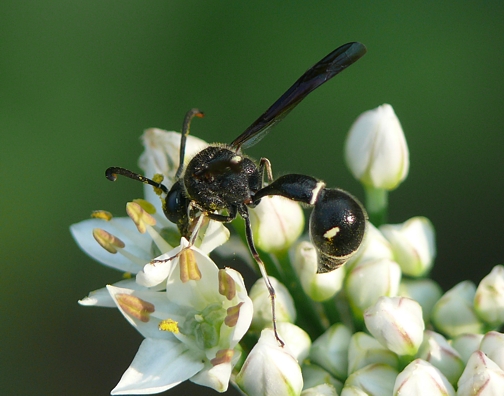
Potter Wasp and Garlic Chive
(Eumenes fraternus)

September 2, 2011

Friday Ramble - Journey

Journey comes to us from the Middle English journei, meaning day (or day's travel), through the Old French jornee and Vulgar Latin diurnta, originating in the Late Latin diurnum (meaning day), or perhaps the neuter form of the Latin diurnus, meaning daily or "of a day". The word claims kinship with journal, diurnal and diary which comes to us from the Latin diārium meaning daily allowance or record. Somewhere in there too and predating 950 CE by a fair bit of time are the Middle English dæg; and the Germanic tag.

The word harks all the way back to the beginning time when we moved from place to place on our own two feet and measured our barefoot progress by the interval of daylight involved in the process. There are some lovely synonyms for this week's word: adventure, campaign, caravan, expedition, exploration, migration, odyssey, passage, peregrination, pilgrimage, quest, ramble, roaming, roving, safari, sally, seeking, sojourn, transmigration, vagabondage, voyage, wandering and wayfaring.

Journeying is not just the simple business of getting from one place to another place though. When I say the word (and I am fond of it), I think not of trips to school or marketplace, but of childhood rambles and my clear sense even then that life was an adventure unfolding - that something grand, magical and illuminating awaited behind the next tree or around a bend on the trail ahead. As a child I spent hours watching leaves float down rivers of windfall light, how light turned the whole world dazzling gold as the sun went down. A child has no words for such things, but oh, how feelings of wonder tugged at my sensibilities in those times.  "Ready or not, here I come, seeking something magical, mysterious and incandescent, I know not what."

One has to grow up, and from rapt childhood moments the odd little girl moved on into college, adulthood, work, marriage and parenting, all the bumps and potholes in the shambolic road of life. Oh, there were snippets of fey knowing here and there to be sure, but the journey often seemed (much of the time anyway) to be "arrow straight" and running toward a flat and distant horizon, nary a tree, a hill, a cantrip or a mystery in sight.

I am older now and hopefully (but I am not sure) a little wiser for my meanderings.  In these rather more elderly days, I think of the wind in highland trees and sunrises seen from the top of the cliffs over Dalhousie Lake, drifting fogs on an autumn morning and the way clouds seen from "up there" seem to form a sparkling road - one spiraling right out into eternity and the great beyond. There are glorious sunsets to be seen if one has the courage to climb the mountain at twilight, but from the shoreline below too, often in the splendid company of herons.

Here I am again, watching leaves float down the river, haunting shorelines with my camera and trying to capture that twilight moment when the world seems to be spun of blazing gold. The childhood sense of journeying and great mystery that seemed to vanish during my frantic middling years has returned and so have my dreams.  There are night time sojourns on the north shore of Lake Superior, oceans of cloud on the roof of the world, sunrises over the yellow mountains of China's Anhui province. There is a sense of adventures in the offing, and eldritch musics being purveyed in the voices of the sirens. Shopping malls, high rise buildings and city streets never put in an appearance in my dreams, and that is the way I like it.

Childhood rambles in woods, fens and fields, mortgage payments, the straight line highways of our middle years, and now (thankfully) sunrises, sunsets, starry nights and moons witnessed in wondrous places - they are all part of the tale and our earthly journey and whether or not we remember it most of the time, the journey is all about community, wildness, light and grace unfolding. Joy on your own wild and sweet journey...

September 1, 2011

Thursday Poem - Do Not Expect....

Do not expect that if your book falls open
to a certain page, that any phrase
you read will make a difference today,
or that the voices you might overhear
when the wind moves through the yellow-green
and golden tent of autumn, speak to you.

Things ripen or go dry. Light plays on the
dark surface of the lake. Each afternoon
your shadow walks beside you on the wall,
and the days stay long and heavy underneath
the distant rumor of the harvest. One
more summer gone,
and one way or another you survive,
dull or regretful, never learning that
nothing is hidden in the obvious
changes of the world, that even the dim
reflection of the sun on tall, dry grass
is more than you will ever understand.

And only briefly then
you touch, you see, you press against
the surface of impenetrable things. 

Dana Gioia