December 31, 2011

At the End of the Year

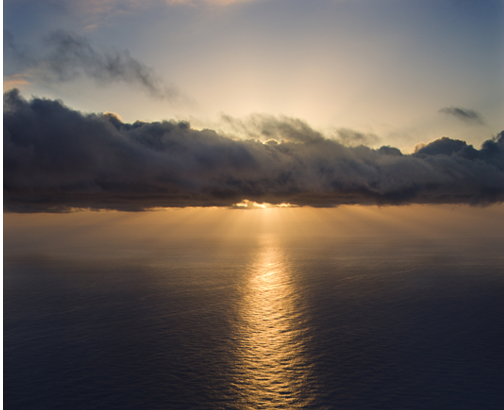
A good thing it is to end the calendar year like this, pale winter sunlight falling across a much loved river in the Lanark highlands and lighting up the snowdrifts and old willows on the other side.  Ice is slow in forming, for the river is an old one, and her currents run fast and free.  She's a wild goddess, a veritable crone among rivers, not the slightest bit intimidated by winter weather and subzero temperatures - she will resist freezing over completely as long as she is able to draw breath and taunt the season with her impetuous winding ways.
After the river freezes over, I stand and listen as she sings her way along under the ice, and she often seems to be singing a duet with the wind. There's a kind of Zen counterpoint between the two wild voices, two unbridled entities utterly independent in their contours and rhythm, but meticulously interwoven and seamless in their soaring harmonies.

Putting all notions of complex orchestration and liquid choreography aside, there's lovely music in the air on icy winter days by the shore.  The sound of moving water has always been a leitmotif for me, and I often think that life can be measured in rivers and currents rather than cocktails, jewelry, pairs of shoes and coffee spoons. The thought of the river singing her way along under the ice is a comfort later in the long white season, and it seems right to be here on the last day of the year.

In springtime, I watched as the river overflowed her banks and published her claim to the fertile fields on both sides. In early summer, I counted bales of hay, photographed deer and wild turkeys feeding along her curving shoreline, watched the sun go down through the trees.  It has only been a month or two since I sat here and cried my eyes out after learning that not one, but two people I love, had passed beyond the fields we know, not at the same time, but within a few days of each other.  Not so long ago, I parked here for hours and tried to collect my thoughts after learning that an imperative medical treatment had stopped working.  True to form, I wasn't really worried about expiring (I knew I would be back in some form or other), but I was stressed out from a thousand tests and hospital visits and was certain that I would be journeying beyond this realm as mad as a hatter. The river worked her magic, and I am still wandering about on this plane, but it could be reasonably argued that I have been more than a little peculiar ever since.

Bliadhna mhath urb (Scottish), ath bhliain faoi mhaise (Irish) or blwyddyn newydd dda (Welsh).  Happy New Year everyone, and thank you for sharing the blogging journey with me this year. May there be joy and health and sweet abundance in your life in the months to come.  May all good things come to you!
December 30, 2011

Friday Ramble - Embracing the Crone of Winter

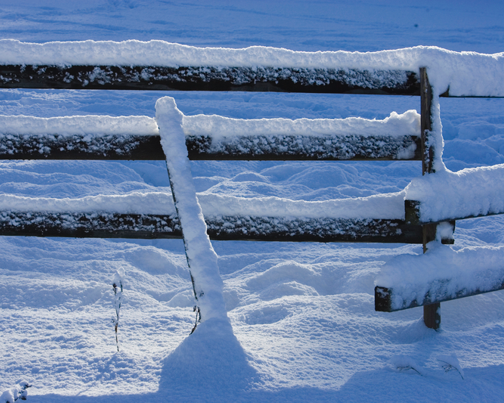
No doubt about it, Lady Winter has arrived.  Arrayed in deep snow and companioned by the icy north wind, she came striding over the ridge a few days ago, and she is here to stay this time. In her iron grip, we find ourselves thinking about moving away, or if staying put, going into hibernation as the bears do.
There are things we do not remember in winter, and things we fail to understand most of the time  - that cold clear waters flow effortlessly along under all the ice and snow, that the fallen leaves trapped within the ice on the river were once green and living things and will nourish their descendents in springtime.  We focus on moving the snow out of our way and fail to understand that snow is an integral part of our path, that next year's leaves, flowers and fruit are sleeping snugly somewhere underneath it all. Winter's deep snows are just where they are supposed to be - it is we who are in their way and much of the time in our own way too.
On a cold morning in the woods, simple truth sometimes comes flooding into one's senses like the north wind or a fast running river. Even the slumbering trees seem to echo that truth as one looks up at their perfect snowy arches against the sky. However one feels about the long white season, being here and truly present in winter is something special. 

December 29, 2011

Thursday Poem - At the End of the Year

The particular mind of the ocean
Filling the coastline's longing
With such brief harvest
Of elegant, vanishing waves
Is like the mind of time
Opening us shapes of days.

As this year draws to its end,
We give thanks for the gifts it brought
And how they became inlaid within
Where neither time nor tide can touch them.

The days when the veil lifted
And the soul could see delight;
When a quiver caressed the heart
In the sheer exuberance of being here.

Surprises that came awake
In forgotten corners of old fields
Where expectation seemed to have quenched.

The slow, brooding times
When all was awkward
And the wave in the mind
Pierced every sore with salt.

The darkened days that stopped
The confidence of the dawn.

Days when beloved faces shone brighter
With light from beyond themselves;
And from the granite of some secret sorrow
A stream of buried tears loosened.

We bless this year for all we learned,
For all we loved and lost
And for the quiet way it brought us
Nearer to our invisible destination.

John O'Donohue,
from To Bless the Space Between Us

December 28, 2011

Winter Musics Large and Small

One of those fine, sunny and blue winter mornings which seldom makes an appearance in late December, and is always accompanied by deep cold and wind.
The river is cloaked in mist and doing its very best to freeze over - even in places where the currents are strong, unruly and reluctant to give way to winter.  In places the ice forms abstract paintings in lustrous palettes and flowing shapes, thin sunlight washing over everything in shades of pallid gold and ghostly silver.
It has been cold enough in the last day or two that at times we are sometimes unable to break through the ice crust when walking along deer trails in Lanark - crunchy going all the way. The forest is a noisy place to be in such weather, a wide and treacherous realm of breaking glass in which sturdy boots and protective head gear are imperative.
A bitter wind goes dancing among the ice-coated trees, and it creates a veritable symphony as it goes along. The instruments are organic, and the principal notes are tinkles and chimes, rattles and creaks, groans and falling ice. Mama Gaia (the Old Wild Mother) is the original scribe and maker, the primal composer of music cosmic, refulgent and terrestrial.

This morning, a small cameo appearance from the doddering scribe/photographer, (me). . . . Near the end of one calendar year and the beginning of another, there is something reckless, daring and rather appealing about the idea of showing up here in person, but as just a patch of strong blue shadow in my favorite landscape, an antiquated abstraction in which no visual details of the gnarly old metabolism are revealed.

December 27, 2011

Boxing Day Guests


White-breasted Nuthatch
(Sitta carolinensis)

December 26, 2011

December 23, 2011

Friday Ramble - Winter

Icy winds blow, and night temperatures plummet; we wade hunched and swaddled through the woods with our heads down against the wind.  What else could this be but winter?

The word comes to us from the Old English expression once used to describe the fourth season of the year, thence the Proto-Germanic word wentruz meaning "wet season", probably originating in the Proto-Indo-European wed, wod or ud meaning "wet" or "wind". There are possible ties to the Old Celtic vindo meaning "white", although that word sounds more like the modern English "wind" to me. The Old Norse form sounds just like the modern word "weather" and may indeed be its root form. Cognates include the Gothic wintru, Icelandic vetur, Swedish vinte, Danish vinter and Norwegian vetter.

Wherever it hails from, the word we use to describe the coldest (and wettest) season of the year has been around for a very long time, and most of the cultures on this island earth have a word for it. The season occupies a particular place in our thoughts, dancing dramatically in a stronger light than its three more temperate kin. We tend to predicate our activities in the other three seasons on what we must do to make ready for winter, turning the earth, planting, harvesting, putting things by for the short days and long nights, piling firewood to burn on our hearths when the snow flies.

Because of the ferocity of northern winters, the ancient Anglo-Saxons measured their calendar years from one winter to the next. In Old Norse, the word vetrardag which was used to designate the first day of the long cold season was the Saturday that fell between Oct. 10 and 16. For the ancient Celts, winter began at Samhain (October 31) or All Hallows (November 1) and ended on Imbolc or Candlemas (February 1 or 2) when springtime arrived. In the Chinese lunisolar calendar, a year is measured from one Winter Solstice to the next, and winter begins around November 7, with the jie qi (or solar term) called the "opening of winter". Astronomically, the season is said to begin at the Winter Solstice in late December and end at the Vernal Equinox in late March - not so this far north where winter usually arrives some time in October and lingers until late April or even May.

It's all relative and a matter of cosmic balance. We owe the lineaments of our existence in the Great Round of time and the four seasons to a tilt in the earth's axis as it spins merrily in space. When winter is beginning here, the happy lands south of the equator are cavorting toward summer. I cling tenaciously to that thought in the depths of frozen January - that there is high summer and sunlight and greening somewhere in the world.

Around this time of the year, I briefly consider living somewhere where winter is a more temperate beastie, but it isn't going to happen. Rather than migrating, I pile up books and music and accumulate a good store of tea, stack firewood, make bread and cookies, count the jars of jam in my larder.  I take out my parka and heavy gloves, wax the old skis and oil my snowshoes for long winter rambles.

There is little or no snow this year except deep in the woods, so my traveling apparatus will probably not see much use until next month, and I am feeling just a bit cheated. We have been having some lovely frosts though, and I run outside as soon as there is enough light to photograph them.  To truly know the north woods, one has to journey through them in winter, spend hours drinking in the shapes of trees with eyes and lens, breathing in and out with them on snow drowned hillsides, listening to the snow falling among their perfect bare and beckoning branches.

December 22, 2011

Thursday Poem - At the Winter Solstice

Owl hoots three times in the far woods,
fair warning for all small creatures
scurrying to their burrows.

Are we not still and always
those crouching figures
who flee the heavenly alchemy?
Three times in the crackling air,
Owl hoots for us.

*
Wind plays the drums of snow...
staccato taps,
crescendo off the roofs,
flourish of shuddering branches.
Ice snaps its castanets,
its daggers.

Atonal music of the darkest days
needs the most fearless,
subtle listeners.

*
Those strumming flamenco
fingers of sunlight
are a long time away from now.

Now we go comforted
in dreams and ceremonies,
flaming our star-speck candles,
raising our voices against that other music,
drowning out the forever
at night’s heart.

*
Look up! The wheel is turning.
The spectacular crowd of stars,
the tangle of dimensions
jostle for our attention.
Salute the birth of everything holy.

This beautiful poem was written for the Winter Solstice by Dolores Stewart Riccio and was published in her exquisite Doors to the Universe. It is posted here with the kind permission of the poet.

December 20, 2011

At This Turning of the Light

After a time of decay comes the turning point. The powerful light that has been banished returns. There is movement, but it is not brought about by force... the movement is natural, arising spontaneously. For this reason the transformation of the old becomes easy. The old is discarded and the new is introduced. Both measures accord with the time; therefore no harm results.

The idea of RETURN is based on the course of nature. The movement is cyclic, and the course completes itself. Therefore it is not necessary to hasten anything artificially. Everything comes of itself at the appointed time. This is the meaning of heaven and earth.

24. Fu / Return (The Turning Point)
The Ching, Book of Changes

Yule is the best of times for stillness and reflection, and we will spend it quietly, or as quietly as frenetic holiday times permit. No fire on the shore of the lake this year, but there will be a trip out to the woods tomorrow and time spent among the snow capped highland cedars and spruces. We will take grain and apples and cut cedar browse for the deer, put out suet cakes and seed for the birds, deliver wine and loaves of the family fruitcake to friends later. Then home to fresh salmon, risotto and greens, followed by music, firelight, candlelight and tea.

There is a wealth of Yule lore and traditions at time priestess Waverly Fitzgerald's poetic and thoughtful Living in Season, and Joanna Powell Colbert at Gaian Soul offers us expressive meditations on the meaning of the season, turning light and natural rhythms.  For information on Yuletide traditions across the world, visit Dr. Kathleen Jenks at Mything Links.  Teresa Ruano's lovely Candlegrove has always been one of my favorite web groves at this time of the year, but the site is below the horizon at present - I entertain fervent hopes that it will rise again in the near future.

Joy on your journey and brightest blessings at this turning of the light.

December 19, 2011

Waiting: wishing: hoping

There he (or she) is, all fluffed up against the cold wind, clinging to the old ash tree and looking through the kitchen window at me as I stand looking out with tea in hand. The face is a study in mischievous curiosity, forbearance, and the fond hope that someone will flounder outside and replenish the feeders in the garden, one of which is just for squirrels. 
One after another, village squirrels line up on the veranda railing in winter like a procession of little grey Buddhas.  They await their turn at the breakfast buffet, their faces full of longing, tiny paws are tucked into their belly fur for warmth.
Spencer, on the other hand, shows no enthusiasm for going anywhere in this kind of damp cold.  He is curled up on the sofa in the den with a morose expression, gazing out at the gray world beyond the windows and grumbling expressively.

December 18, 2011

Winter's Eye

Winter's eye is passionate,
seeks defining shapes and patterns in the snow,
sweep of north wind and frozen river,
smoke curling skyward from farmhouse chimneys,
flowing curve of hoary branch and bend of whitened tree,
the glossy brush of ice and crackling frost.
There's a flash of color here and there,
red of cardinal's wing and berried hawthorn,
lacy green of cedar, soaring blue of spruce,
the burnished gold of sleeping willow,
deep indigo of twilight's lengthening shadow
along the fence in its perfect cloak of white.

Cate

December 16, 2011

Friday Ramble - Consider

It is one of my favorite words in the whole English lexicon, partly because of the notions of careful thought, deliberation and balance implicit within, but mostly because of its celestial origins.

Think Vincent Van Gogh and his gorgeous "Starry Starry Night" here... The word consider comes to us from around 1350 CE, and it traces its origins through the Middle English consideren and the Latin considerare, both words meaning "with the stars" or "in the company of the stars". Those origins are shared with other English words like constellation and sidereal, the former describing a whole group of stars glowing up there in the night sky, and the latter meaning simply "starry" and by extension, celestial or heavenly.

Small wonder that sentient beings are given to considering. Forged from the dust of ancient stars, we are probably never more true to ourselves or more in tune with our fundamental natures and our inner light than when we are engaging in the liminal act of considering something.

In considering something (in the true sense of the word) and holding that something gently in our thoughts, we are paying attention to what really matters, to what lies at the heart of earthly existence. In entertaining consideration, we are moving away from the profane and the mundane and flowing toward the archetypal, the authentic and a bone deep sense of connection with the living world of which we are such tiny insignificant parts. Dancing motes in the eye of the infinite are we.

It is one thing to consider our origins on a clear December night when the moon and stars are so close one can almost reach out and touch them.  It is another thing entirely to do it when the world is all wrapped up in murk, and one can't see anything down here on the earth, let alone the sky and dancing stars above. The stars from which we came are still present though - they are right up there and shining down on us.

Considering, we are traveling toward something wild, authentic, magical and mysterious, and we are doing it with the stars as our kin and traveling companions. As Clarissa Pinkola Estes wrote in "Women Who Run With the Wolves":

"We find lingering evidence of archetype in the images and symbols found in stories, literature, poetry, painting, and religion. It would appear that its glow, its voice, and its fragrance are meant to cause us to be raised up from contemplating the shit on our tails to occasionally traveling in the company of the stars."

December 15, 2011

Thursday Poem - How Swiftly

How swiftly the strained honey
of afternoon light
flows into darkness

and the closed bud shrugs off
its special mystery
in order to break into blossom:

as if what exists, exists
so that it can be lost
and become precious

Lisel Mueller

December 14, 2011

Magick for Terri

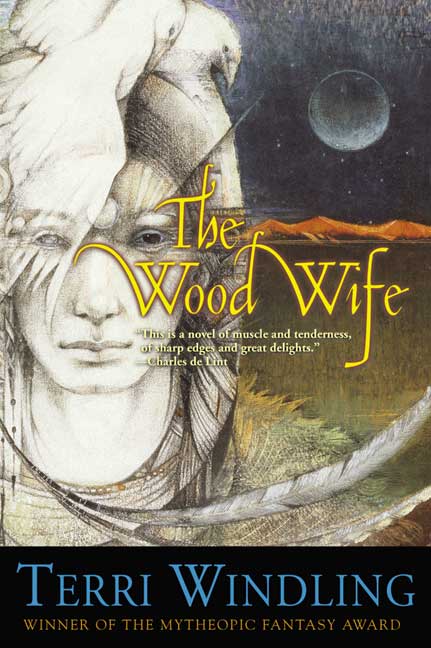
This is the last day for submitting bids on the amazing items being auctioned at Magick for Terri, a fundraising initiative to benefit mythic artist, editor and author Terri Windling and her family and assist them in coping with serious financial troubles arising from health and legal issues.

If the world of folklore, mythic fiction and fantasy literature has a muse, it is Terri.  There are copies in my library of everything she has ever written, my favorite (of course) being her Mythopoeic Award winning novel, The Wood Wife.

Terri has given generously of herself over the years, and now it is our turn to give something back. Please visit the auction site and think about bidding on one of the many wonderful items - there are drawings, paintings, antiques, pieces of jewelry, signed books, collectibles, music, and tantalizing offers from some of the foremost figures working in the fields of fantasy art and literature today.

Wednesday Not Quite Wordless - Seeing Stars

Star Anise (Illicium verum)
It has something to do with the season methinks - this looking for and finding stars in all sorts of likely and unlikely places - snowflakes, apples and pomegranates, anise in the spice cupboard, lights on the midwinter solstice tree, jeweled twinklings on the Yule wreaths adorning front doors in the village.

Then there are the dazzling and multitudinous stars in the inky dome of the heavens on long clear winter nights - sometimes they seem so close that one could reach out and touch them.  The region of the summer stars is grand, but oh, these winter nights...

December 13, 2011

The Sound of Snow

This image of Kinkakuji, Kyoto's Golden Pavilion, arrived with holiday greetings from a Japanese law firm with whom I did intellectual property work in the bad and sad old days when I engaged in corporate employment downtown. Deadlines and court filings were piled up to the ceiling when I opened the envelope that December day and extracted the little jewel of a card, but in that precious fleeting moment, all the cares of the day passed away like smoke. I caught my breath in delight and knew that the image was a "keeper", something I would retain and cherish and revisit, time and time again.  The framed image is tucked away for part of the year, but here we are in winter again, and the print has come out of hibernation to grace the western wall in my studio again.

The original Golden Pavilion formed part of a retreat complex created in 1397 for the shogun Ashikaga Yoshimitusu, who had just abdicated the throne in favor of his son. It contained a pagoda or two, living quarters, temples, a bell tower and formal gardens. When the old shogun died a few years later, the pavilion became a Zen temple in accordance with his wishes, and so it remains to this day, a revered shariden formally called Kinkaku-ji (Temple of the Golden Pavilion) or Rokuon-ji (Deer Garden Temple). Enshrining relics (ashes) of the Buddha, the temple exudes a timeless sense of peace by the lake in its exquisite garden setting. The present structure is covered in gold leaf and looks old, but is a replica erected in the fifties after a mad monk torched the original.

The companion piece in my studio at this time of the year is an old and fragile rendering of the same temple on rice paper, and it also graced the wall in my office downtown.  At difficult moments in my working life, the two images always conveyed peace and serenity, and now they continue to give both pleasure and peace here at home. Both scenes are beautifully rendered, and there are times when I can almost hear the snow falling and coming to rest among the trees.

There is nothing on my little gem of a card to indicate who the artist was, and I don't really need to know, but I wish I could say "thank you". It (the card) arrived at just the right moment, and it continues to bring pleasure now, many years later.

December 11, 2011

December's Elder Moon

How quickly time flies away!  Here we are at the twelfth and last full moon of this calendar year, and it seems only yesterday that Spencer and I were out in the garden shivering and watching the first full moon of the year rise over the trees.

The thirteen moons (twelve this year) of a calendar year wear different names, faces and personalities according to one's culture, where one happens to live in the world and what the seasonal activities of one's native place are. There are common threads or themes to lunar lore though, and the moon's names provide food for thought about the nature of community, hearth and connection. They speak eloquently of timeless natural rhythms and the calendar of the seasons: springtime and green things springing from the earth, planting and weeding, hunting, harvesting and gathering in, rest and regeneration.
December's moon falls at the darkest time of year in the north, and for me it will always be either the Elder Moon or the Long Nights Moon. The elder tree is December's sylvan symbol in the Celtic tree calendar, and December's moon falls during the darkest time of the year, so both names are apt.  This is also the month of my birthday (today in fact), and so I have particular fondess for this radiant winter moon.

It makes me happy to think that when January's full moon arrives next month, daylight hours will be lengthening again and we will be on our way to Spring and warmth. Having said that, we will be making our slow and careful way through bitter cold, deep snow and high winds, and there is a long way to go. Now and then, there will be confetti skies at sunrise, and the dark vaults of heaven will be full of stars at night. Such celestial happenings make our journeying through the Great Round a joyous undertaking, and in all the frenetic "toing and froing" of this holiday season, that is a fine thought to cling to.

We also know this moon as the: Ashes Fire Moon, Bauhinia Moon, Bear Moon, Beginning of the Winter Moon, Big Bear's Moon, Big Winter Moon, Birch Moon, Center Moon's Younger Brother, Cold Moon, Cold Time Moon, Bitter Moon, Deer Shed Their Horns Moon, Dumannos Moon, Eccentric Moon, Frozen over Moon, Heavy Snow Moon, Holy Moon, Hellebore Moon, Her Winter Houses Moon, Hunting Moon, Ice Lasts All Day Moon, Ice Moon, Little Finger Moon, Little Spirits Moon, Long Nights Moon, Long Snows Moon, Midwinter Moon, Moon of Cold, Moon of Long Nights, Moon of Much Cold, Moon of Popping Trees, Moon of Putting Your Paddle Away in the Bush, Moon of Respect, Moon When Buffalo Cow's Fetus Is Getting Large, Moon When Deer Shed Their Horns, Moon When Little Black Bears Are Born, Moon When the Young Fellow Spreads the Brush, Moon When the Wolves Run Together, Moon When the Sun Has Traveled South to His Home to Rest Before He Starts Back on His Journey North, Narcissus Moon, Night Moon, Oak Moon, Paulownia Moon, Peach Moon, Poinsettia Moon, Popping Trees Moon, Poppy Moon, Real Goose Moon, Sap Moon, Sjelcasen Moon, Solstice Moon, Snow Moon, Star Frost Moon, Turning Moon, Twelfth Moon, Under Burn Moon, White Orchid Tree Moon, Winter Maker Moon, Winter Moon, World Darkness Moon, Yule Moon

I also rather like "Midwinter Moon" and "Little Spirits Moon".  Wherever you live in the world, and whatever form your own celestial rites or observances take, I wish you joy on your journey at this turning of the Wheel.

December 9, 2011

On the Library Table - Cleopatra's Moon

One reads of the legendary Ptolemaic queen of Egypt now and again - Cleopatra VII of the raven hair, painted eyes and supposedly wanton ways.  Perhaps it's inevitable given the drama and mythic proportions of a glamorous life ended too soon (and deliberately) by the bite of an asp.  We pay scant attention to those came after her though, and across the sands of time, their stories are engaging, especially that of her young daughter Cleopatra VIII Selene.

Vicky Alvear Shecter's book begins when Cleopatra VIII Selene and her twin brother Alexander Helios were seven, and their brother Ptolemy Philadelphus a mere toddler.
The young princess's middle name meant "moon" and corresponded to her twin's middle name meaning "sun".  Their parents, Cleopatra VII and the Roman general Mark Antony, heaped privileges on their offspring, but the pampered existence of the young royals was to be cut short.  Egypt fell to invading Roman legions, their parents committed suicide, and they travelled to Rome as captives of Octavian, later to become the emperor Caesar Augustus.

After being paraded through the city in chains, the children were handed over to Octavia Minor (Octavian's older sister and Mark Antony's former wife) to raise.  Shecter has Alexander die at sea in the opening pages of the book as a plot device, but he and his little brother made it to Rome and vanished from official records shortly afterward.  The two boys were viable candidates for the throne, and there is a strong possibility that they were murdered.  Some time later, Caesar Augustus gave Cleopatra Selene, by then probably the sole living member of the Ptolemaic dynasty, to Juba II of Numidia in marriage.  Gifted with a lavish dowry by the emperor, the young couple went off to ancient Mauretania (modern day Morocco and Algeria) to rule in Rome's name and found a new royal dynasty there.  Thus the Ptolemaic bloodline survived in Africa.

Vicky Alvear Shecter has done remarkable things in writing this book.  She knows the times and the political currents which shaped them, and she brings the era to life gloriously.  As well as being a fine writer, she is a scholar, and her research was impeccable - the Alexandrian and Roman settings of the novel and the two societies depicted are wonderfully drawn. There are gods and goddesses (particularly the goddess Isis), opulently appointed nurseries and jeweled toys, banquets with exotic menus, alluring musics, roses and spices and perfumes in abundance.  The young Cleopatra Selene is fierce, charming, headstrong and determined to go home.  She is a worthy female descendant to an ancient queen who did things her own way from start to finish and set tongues wagging from one end of the ancient world to the other.

Cleopatra's Moon is being marketed as a young adult book, but it is a wonderful read for all ages. If I had young granddaughters or great granddaughters of an age to read it, I would certainly be giving them the book for Yule, but I plan to read it again myself during the holidays and am looking forward to soaking up the sounds and sights of ancient Egypt once more - the place has long been an interest of mine. And ancient Rome??? Not so much - going by the descriptions of Cleopatra Selene, ancient Rome was short on culture and something of a vast rubbish heap.

December 8, 2011

Thursday Poem - December Moon

Moon of mindlessness, of lying fallow
in fields of frozen shocks.
Moon of fingering old poems like rosary beads,
of quiet breathing under memory quilts.

Moon of reflection in icebound ponds,
of gazing at fractals in frost.
Moon of upstart pine and primordial oak
bearing the burdens of holy snow.

How the beauty of this world
is like a secret so old and widespread
that none believe it. Something so huge
could not be hidden, everyone says,

and they go on about their business
of accumulating stores and storage space
while rumors of extraordinary wonder
run like melted silver through the streets.

Moon of small fires and story-telling.
Moon of slow-growing light,
the shadow of wings across the sky,
the womb of becoming, the birth.

Dolores Stewart
From The Nature of Things
This exquisite poem poem printed here with the poet's kind permission.

December 6, 2011

A Yuletide Reading List

The days grow short, the nights grow long, and one thinks about curling up near the hearth with tea, seasonal munchies and a good book or three.  Here's a list of my favorite reading materials for this festive time of the year when we are all thinking about light, community and feasting. Some of these books are out of print, but they can sometimes be found in used book shops online, and they are, very often, happy campers in your local library.

The Oxford Book of Days,
Bonnie Blackburn and Leofranc Holford-Strevens

Echoes of Magic: A Study of Seasonal Festivals through the Ages,
C.A. Burland

Ancient Ways: Reclaiming Pagan Traditions
Pauline and Dan Campanelli

Wheel of the Year: Living the Magical Life
Pauline and Dan Campanelli

The Return of the Light: Twelve Tales from Around the World for the Winter Solstice,
Carolyn McVickar Edwards

Kindling the Celtic Spirit,
Mara Freeman

A Calendar of Festivals, Traditional Celebrations, Songs, Seasonal Recipes and Things to Make,
Marian Green

The Sun in the Church: Cathedrals As Solar Observatories,
John L. Heilbron

Celebrate the Solstice: Honoring the Earth's Seasonal Rhythms through Festival and Ceremony,
Richard Heinberg

Celestially Auspicious Occasions: Seasons, Cycles & Celebrations,
Donna Henes

Stations of the Sun: A History of the Ritual Year in Britain
Ronald Hutton

The Winter Solstice
Ellen Jackson

The Dance of Time: The Origins of the Calendar: A Miscellany of History and Myth, Religion and Astronomy, Festivals and Feast Days,
Michael Judge

The Solstice Evergreen: History, Folklore and Origins of the Christmas Tree,
Sheryl Karas

Perpetual Almanack of Folklore
Charles Kightly

Sacred Celebrations: A Sourcebook
Glennie Kindred

Celebrations Of Light : A Year of Holidays Around the World
Nancy Luenn and Mark Bender (Illustrator)

The Winter Solstice: The Sacred Traditions of Christmas,
John Matthews and Caitlin Matthews

Christmas in Ritual and Tradition
Clement A. Miles

Yule: A Celebration of Light and Warmth (Holiday Series),
Dorothy Morrison

The Battle for Christmas
Stephen Nissenbaum

Sacred Origins of Profound Things: The Stories Behind The Rites and Rituals of The World's Religions,
Charles Panati

The Shortest Day: Celebrating the Winter Solstice,
Wendy Pfeffer
and Jesse Reisch

Pagan Christmas: The Plants, Spirits, and Rituals at the Origins of Yuletide,
Christian Rätsch and Claudia Müller-Ebeling

All Around the Year, Holidays and Celebrations in American Life,
Jack Santino

Circle Round: Raising Children in the Goddess Tradition,
Starhawk, Anne Hill and Diane Baker

Keeping Christmas: Yuletide Traditions In Norway And The New Land
Kathleen Stokker

When Santa Was A Shaman: Ancient Origins of Santa Claus & the Christmas Tree,
Tony van Renterghem

The Fires of Yule: A Keltelven Guide for Celebrating the Winter Solstice,
Montague Whitsel

At least three of Dolores Stewart Riccio's Circle novels involve Yuletide and I shall be reading them again this year.  Last, but certainly not least, the holiday interval would not be complete without rereading Susan Cooper's Dark is Rising sequence in its entirety: Over Sea, Under Stone, The Dark is Rising, Greenwitch, The Grey King and Silver on the Tree.

December 5, 2011

On the Library Table - The Divine Circle of Ladies Painting the Town

Cassandra Shipton and her divine circle (or coven) of ladies are at it again, and as usual there is more than a touch of cunning woman to their undertakings. 

At the request of a friend, Cass agrees to help an ex-model named Ada learn to control her pyro-kinetic talents. The sordid antics of Ada's estranged husband are fanning the flames of her latent abilities, and if something is not done quickly, she just may start a fire that makes her existence too hot to handle. The troubled wife has good reasons to be hostile - a cad and a bounder of the first order, the philandering Jerry is conniving to have her committed to a mental institution in order to gain control of her physical and financial property.

Cass is comfortably ensconced in her beloved seaside cottage with her Greenpeace engineer husband Joe Ulysses and is working with Ada when she learns that the photographer paramour of one of the circle (Diedre) has been abducted for ransom by a Calabrian crime syndicate while on assignment in Rome.

The divine circle of ladies flies off to Rome subito to comfort their coven mate and solve the kidnapping.  Once in Italy, they are joined by a powerful group of rural strega who add their own potent blend of earthy magic to the matter of liberating Diedre's gentleman friend.  When he manages to escape from his kidnappers, the women are off to see all the best sights in Italy including Venice and Pompeii.

On returning home, the circle learns that Ada's husband Jerry has perished in his own home by fire, and that Ada has been charged with his murder.  Cass's newfound ability to induce and channel her psychic visions is put to the test during the ensuing investigation, and so are the formidable powers of her coven sisters.  All will be well of course, for the women of the circle are more than a match for any evil doer they meet in their travels.

I've been a fan of the Cassandra Shipton novels since a friend gave me the first one as a gift years ago, and this eighth is a delight, a reading experience to be treasured.  This book has it all - paranormal events and fey abilities, arcane doings, rollicking adventures, deep dark mysteries and sordid crimes to be solved - there are tantalizing snippets of herbal lore and gorgeous recipes too. I often wish "the ladies" lived in my village, for they are, one and all, rare and splendid characters, and I would enjoy knowing them.

Dolores Stewart Riccio goes from strength to strength in writing these novels, and the "Divine Circle" series gets better with every book published - I am already looking forward to the next one.

December 3, 2011

Journeying to the Gaian Tarot

This morning's offering is a guest post by my friend and mermaid sister, Joanna Powell Colbert, creatrix of the beautiful Gaian Tarot; - appropriate as I am now wrapping up copies of the deck to appear as gifts under the Yule and birthday trees of friends and kindred spirits here in the village and out in the snowy  Lanark highlands.

I have been watching in admiration as Joanna's deck came into being during the last nine years, and at last, her creation is complete - it is making its way out into the great wide world to do the vital work of fostering wisdom and community, building bridges, healing each other and Mother Earth, She who is the mother of us all.  I  cherish my copy of the limited edition "Majors Only" Gaian Tarot, and now the full deck has been published by Llewellyn - it too is becoming a treasured companion on this meandering journey of mine toward mindfulness and authenticity. Thank you, Joanna!


When I was 18 years old (a million years ago), I came across a deck of tarot cards and promptly fell in love with the strangely compelling images. I played with that deck for a few years, memorizing meanings from the little white book, and trying to apply the written meanings to my life without much success. Then my spiritual interests changed, and I put the tarot cards away for over ten years.

When I came back to them, it was with a renewed interest in the Divine Feminine (Cate’s “Old Wild Mother”). I moved to a small island in the Pacific Northwest and threw myself into nature-awareness studies. In the process, I fell deeply in love with the special, magical Place where I was living. I built a straw bale house with my husband, planted a garden and learned all about the native plants and wildlife. I hadn’t touched a tarot deck in years, but I knew it was time to create one that was uniquely my own. And all the passion and knowledge of getting to know my own Place went into the Gaian Tarot.

Many of the scenes on the cards are specific places on the island, as well as in the greater Northwest. The people in the cards are all based on people that I know. They are part of my spiritual community and my island community. I used to go for long rambling walks around the island, asking myself “Where is the energy of this particular card in the natural world?” And I would often receive inspiration for the card I was working on.

Tarot author Rachel Pollack says that the tarot is a book of wisdom, like the Bible or Torah or Koran. And, I would add, like the Book of Nature. I believe, along with Joanna Macy and many others, that we are at the time of the Great Turning, when humanity can either self-destruct or evolve. I see turning to cards like my Gaian Tarot as a source of Wisdom to be one of the ways we can each grow into our Deepest, Wisest Selves, and then to turn our gaze outwards and help to heal the world.

I don’t use the cards for fortunetelling, although some people do. It can be useful, however, to take a “what-if” approach. You might say to yourself, “What if the cards could point something out to me that I might otherwise be missing?”

You could ask the cards my favorite all-purpose question: “What do I need to know right now about a particular situation in my life?” and pull one to three cards. Just allow yourself to gaze at the cards and notice any emotional reactions or personal associations you might have with the cards. Allow your intuition to awaken, and jot down a few notes about what you think the cards might mean in relation to your situation. Finally, open the book and read what it is written about the card. Take what applies to you and leave the rest. Remember, your intuition trumps the book meaning every time.

How I wish someone had told me that, back when I was 18!

Joanna Powell Colbert,
November 30, 2011

December 2, 2011

Friday Ramble - Calling the Sun Home

It is what happens at this time of year when the days grow ever shorter and snow falls, when rivers and lakes freeze over, an icy wind howls in nearby gutters and the eaves of our little blue house in the village. I pull the draperies closed early and shut out the gloom beyond the windows, taking refuge and delight in small seasonal rites. I brew pots of tea (one after the other), pummel loaves of bread, concoct fiery curries and spicy cookies, draw, read and dream, plot luxuriant gardens for next year (more roses and herbs, perhaps a whole Medicine Wheel garden) and forge grand schemes which will probably never see the light of day.

As dark as the days ahead may be, there is light to come.  Here we are in December, and that means that in only three weeks, our northern days will begin to lengthen again. Hallelujah! It will be months until it is truly warm and light here again, but at least we will be on our way, and Yule just may be my favorite day in the whole turning year. When it arrives, there will be celebrations and silliness, candles, music and mulled cider to drive away the darkness and welcome old Helios back to the world.  He is still here of course, but the Old Wild Mother's seasonal wobble makes him seem more distant than he actually is.

As sunlight hours continue to wane between now and Yuletide, I am lighting a special candle each Sunday at dusk in the timeless observance called the "Advent Sun Wheel".  In so doing, I join Joanna Powell Colbert, Waverly FItzgerald, Beth Owl's Daughter and a circle of kindred spirits in honoring the fruitful darkness and calling the sun home.

Being the elderly magpie creature that I am and a passionate collector of timely lore, I am very interested in your own "before Yule" practices and would be delighted if you could share them here.

December 1, 2011

Poetry Thursday - Daily

These shriveled seeds we plant,
corn kernel, dried bean,
poke into loosened soil,
cover over with measured fingertips

These T-shirts we fold into
perfect white squares

These tortillas we slice and fry to crisp strips
This rich egg scrambled in a gray clay bowl

This bed whose covers I straighten
smoothing edges till blue quilt fits brown blanket
and nothing hangs out

This envelope I address
so the name balances like a cloud
in the center of sky

This page I type and retype
This table I dust till the scarred wood shines
This bundle of clothes I wash and hang and wash again
like flags we share, a country so close
no one needs to name it

The days are nouns: touch them
The hands are churches that worship the world

Naomi Shihab Nye,
(From The Words Under the Words)