
Happy Canada Day, happy July!


Once upon a time, when women were birds, there was the simple understanding that to sing at dawn and to sing at dusk was to heal the world through joy. The birds still remember what we have forgotten, that the world is meant to be celebrated.
Terry Tempest Williams, When Women Were Birds

The earth offers gift after gift—life and the living of it, light and the return of it, the growing things, the roaring things, fire and nightmares, falling water and the wisdom of friends, forgiveness. My god, the forgiveness, time, and the scouring tides. How does one accept gifts as great as these and hold them in the mind?
Failing to notice a gift dishonors it, and deflects the love of the giver. That's what's wrong with living a careless life, storing up sorrow, waking up regretful, walking unaware. But to turn the gift in your hand, to say, this is wonderful and beautiful, this is a great gift—this honors the gift and the giver of it. Maybe this is what [my friend] Hank has been trying to make me understand: Notice the gift. Be astonished at it. Be glad for it, care about it. Keep it in mind. This is the greatest gift a person can give in return.
Kathleen Dean Moore
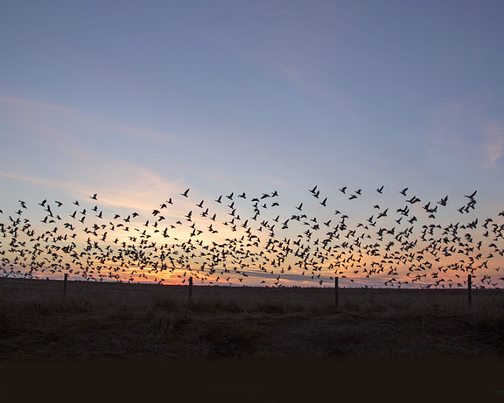
Once upon a time, when women were birds, there was the simple understanding that to sing at dawn and to sing at dusk was to heal the world through joy. The birds still remember what we have forgotten, that the world is meant to be celebrated.
Terry Tempest Williams, When Women Were Birds

No matter what the universe has in store, it cannot take away from the fact that you were born. You’ll have some joy and some pain, and all the other experiences that make up what it’s like to be a tiny part of a grand cosmos. No matter what happens next, you were here. And even when any record of our individual lives is lost to the ages, that won’t detract from the fact that we were. We lived. We were part of the enormity. All the great and terrible parts of being alive, the shocking sublime beauty and heartbreak, the monotony, the interior thoughts, the shared pain and pleasure. It really happened. All of it. On this little world that orbits a yellow star out in the great vastness. And that alone is cause for celebration.
Sasha Sagan, For Small Creatures Such as We
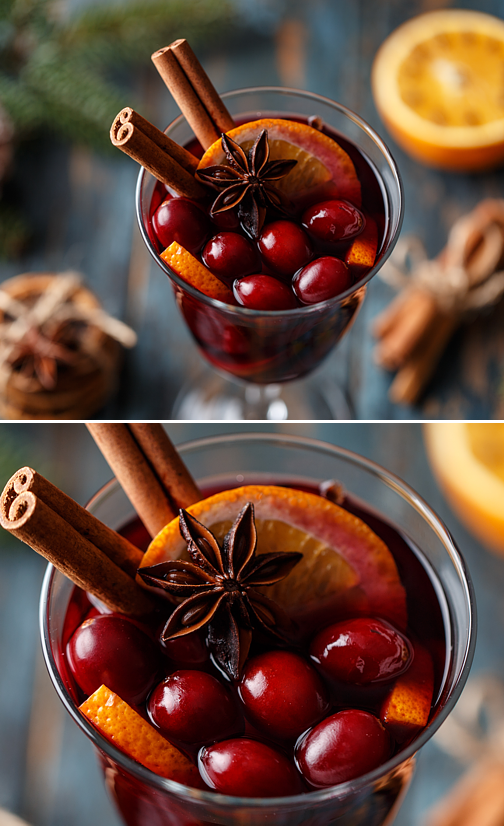
Wishing you abundance, cheer and rude good health in the shiny new year about to begin, wishing you many a festive beaker (or a noggin or a dram) too. Be warm and safe this evening, wherever you are, and whatever you are doing. Mind yourself!
Let us remember the bright spirits who left us in the last year or three and went on ahead to recce the sunny woodland trails on the other side. Let us give thanks for them being in our lives and send them our love when we raise our glasses. Let us give thanks for each other too. Community matters, matters more than ever in this plague year.
Be wise, be wild, be merry and light of heart. Walk in peace, and may there be many fine adventures on the road ahead of you. May every cup you hold next year contain a star or two and have a little light dancing in its depths. May all good things come to you and your clan (or tribe) in 2022. Blessed be.


Once upon a time, when women were birds, there was the simple understanding that to sing at dawn and to sing at dusk was to heal the world through joy. The birds still remember what we have forgotten, that the world is meant to be celebrated.
Terry Tempest Williams, When Women Were Birds: Fifty-four Variations on Voice

Here we are, only three days away from the end of January and the beginning of a new month. Next Monday, February 1st, is the eve of the Celtic
festival of Imbolc (or Candlemas). Strange to relate, this day of gladness in the depths of winter
celebrates light and warmth, the gentle stirring of green things within the
earth, the burgeoning of new life and the beginning of springtime.
The
first day of February is also called the Féile Bride (Festival of St.
Brigid) or "Bride's Day", and it is consecrated to Brigid, honored
during the common era as an Irish saint, but revered as a goddess of the
Tuatha Dé Danann long
centuries
before she was canonized. Brigid is a deity of fire and creativity,
wisdom, eloquence and craftsmanship. She is patroness of the forge and
the smithy, poetry, fertility and the healing arts, especially
midwifery. Light is her
special province, and hers are the candle, the hearth and the
blacksmith's
shop. It's always about the light.

Grace is the celebration of life, relentlessly hounding all the
non-celebrants in the world. It is a floating, cosmic bash shouting its
way through the streets of the universe, flinging the sweetness of its
cassations to every window, pounding at every door in a hilarity beyond
all liking and happening, until the prodigals come out at last and
dance, and the elder brothers finally take their fingers out of their
ears.
Robert Farrar Capon, from Between Noon & Three:
Romance, Law & the Outrage of Grace

How to mark such a magical moment in the Great Round...
Be outside in a field at sunrise and watch the sun come up. Capture the moment with your camera or cell phone. Sip a mug of Jerusalem Artichoke (Earth Apple tea) in your garden. Drink in the light of this hallowed day.
Float a candle or a wreath of wildflowers on a pond or a canal or a river and watch the current carry your offering away. Build a fire on your favorite beach after nightfall, and toast sweet "stuff" in the dancing flames.
Merry Midsummer/Litha to you and your clan. May all good things come to you on this longest day of the year!

Once upon a time, when women were birds, there was the simple understanding that to sing at dawn and to sing at dusk was to heal the world through joy. The birds still remember what we have forgotten, that the world is meant to be celebrated.
Terry Tempest Williams, When Women Were Birds


May I never not be frisky,
May I never not be risque.
May my ashes, when you have them, friend,
and give them to the ocean
leap in the froth of the waves,
still loving the moment,
still ready, beyond all else,
to dance for the world.
Mary Oliver, from Evidence


Grace is the celebration of life, relentlessly hounding all the non-celebrants in the world. It is a floating, cosmic bash shouting its way through the streets of the universe, flinging the sweetness of its cassations to every window, pounding at every door in a hilarity beyond all liking and happening, until the prodigals come out at last and dance, and the elder brothers finally take their fingers out of their ears.
Robert Farrar Capon, from Between Noon & Three:
Romance, Law & the Outrage of Grace

Here we are a few days before Midsummer, the Summer Solstice or Litha. Tomorrow night is midsummer eve, and Thursday is the longest day of the calendar year, the Sun poised at its zenith or highest point and seeming to stand still for a fleeting interval before starting down the long slippery slope toward autumn, and beyond that to winter. This morning's image was taken by the front gate of our Two Hundred Acre Wood in the Lanark highlands some time ago, and it is one of my favorites, capturing the essence of midsummer beautifully with tall trees and hazy sky in the background, golden daisies, purple bugloss and silvery meadow grasses dancing front and center.
Whither has the year flown? It fells as though Summer has just arrived, but it's all downhill from here, at least for six months or so. After Thursday, daylight hours will wane until Yule (or the Winter Solstice) around December 21 when they begin to stretch out again. Longer nights go along on the cosmic ride during the latter half of the calendar year, and that is something to celebrate for those of us who are moonhearts and ardent backyard astronomers. The Old Wild Mother strews celestial wonders by generous handfuls as the year wanes, spinning spectacular star spangled tapestries in the velvety darkness that grows deeper and longer with every twenty-four hour interval.
How does one mark this sunlit moment between the lighter and darker halves of the year? The notion of midsummer night skies as a vast cauldron of twinkling stars is appropriate and magical too. The eight festive spokes on the old Wheel of the Year are all associated with fire, but the summer solstice more than any other observance. Centuries ago, all Europe was alight on Midsummer eve, and ritual bonfires climbed high into the night from every village green.
According to Marian Green, midsummer festivities included morris dancing, games of chance and storytelling, feasting and pageantry and candlelight processions after dark. Prosperity and abundance could be ensured by jumping over Midsummer fires, and its embers were charms against injury and bad weather at harvest time. Embers were placed on the edges of orchards and fields to ensure good harvests, and they were carried home to family hearths for protection. Doorways were decorated with swags and wreaths of birch, fennel, St. John's Wort and white lilies.
My midsummer morning observance is simple and much the same as any other morning of the year, a little more thoughtful perhaps. I try to be outside or near a window with a mug of Jerusalem Artichoke (or Earth Apple as it is called here) tea and watch the sun rise. There's a candle on the old oak table and a lighted wand of Shiseido incense (Plum Blossom) in a pottery bowl nearby. The afternoon holds a few hours of pottering in the village, a quiet meal as the sun goes down, a little stargazing and moon watching later. We cherish the simplicity of our small festive doings, and the quiet pleasure of being surrounded by kindred spirits.
Happy Midsummer to you and your clan this year, however you choose to celebrate (or not to celebrate) the occasion. May the sun light up your day from sunrise to sunset, and your night be filled with stars from here to there. May all good things come to you.

Here we are on the last day of January and the eve of Candlemas or Imbolc. Strange to relate, this festival day in the depths of winter celebrates light and warmth, the stirring of green things within the earth, the burgeoning of new life and the beginning of springtime. Once called "Bride's day", the day is consecrated to Brigid, she who is loved as an Irish saint, but was revered as a goddess long centuries before she was canonized. Herself is a deity of fire and creativity, wisdom, eloquence and superb craftsmanship. She is patroness of the forge and smithy, poetry and the healing arts, particularly midwifery. Hers are the candle, the hearth and the forge, and light is her special province.
We are made of light ourselves, and that makes us Brigid's children - creatures forged from the dust of stars which once lighted the heavens and ceased to exist billions of years ago. Within the radiant particles of our being are encoded the wisdoms of the ancient earth and all its cultures, the star knowledge of unknown constellations and "The Big Bang" which created not just our own precious world, but the whole cosmic sea in which it floats.
The stardust of which we are formed is essentially recycled matter, having assembled spontaneously into diverse life forms over and over again, lived and expired, then dissolved back into the stream of existence. In our time, “we” have been many things, worn many shapes and answered to many names. In this lifetime I exist as a tatterdemalion, specific and perhaps unique collection of wandering molecules called Catherine or Cate, but in previous incarnations, I was someone or something altogether different.
Buddhist teacher and deep ecologist Joanna Macy has written that since every particle in our being goes back to the first flaring of space and time, we are as old as the universe itself, about fifteen billion years. In other words, we are the universe, and it is us.
Merry Imbolc to you and your clan, happy Candlemas and St. Brigid's Day too. May the manifold blessings of Light be yours.

In the days before Christmas, I sometimes awaken with a whole bag of chilling thoughts. What if I have forgotten someone, not carried out some holiday task or other? What if guests fall on our sidewalk or have an accident on their way over for dinner? What if the leg of lamb (and all the stuff that goes with it) is a charred fiasco and our holiday meal is a disaster? In predawn darkness, my unsettled mind worries, frets, ponders and spins on its axis like a tiny, cold and unknown planet somewhere beyond the rim.
Why didn't I just embrace the uncertainty, and what on earth was I worrying about? Refrigerator and larder were stuffed with good things waiting to be braised, sauteed or roasted. Gifts were wrapped and ready to be opened. The cookie jar was full. There was a fine detailed list in the kitchen, and it kept getting longer by the hour. There was a telephone to use in offering alternative ways for guests to get safely to our threshold. There was e-mail, for heaven's sake.
Somewhere in the midst of all the toings and froings on Christmas morning, I looked down at one of my lists and found myself engaged in what can only be described as a moment of eccentric pleasure: pleasure at the lovely thick lined paper I was writing on, at my old Waterman pen and how it felt in my hand, at the color of the ink and the effortless way it was flowing onto the page, at the sound of the silky nib lightly caressing the paper. In hectic times, such small pleasures are vivid, graceful and unexpected, a comfort in one's life. They are also a powerful reminder that things usually turn out somehow, if not as one expects they will, then certainly as they should.
Whatever 2018 brings (and there are bound to be surprises), there are fountain pens and lovely pots of ink (garnet, purple, turquoise???) in my future, other velvety paper too. Perhaps I will try my hand at making my own paper.
I am very tired, but Christmas was perfect, and I would love to be around for several more. Please let it be so.
