March 31, 2011

Thursday Poem - Hong Zhicheng (Excerpt)

When one sees with ears
and hears with eyes,
one cherishes no doubts.
How naturally the raindrops
fall from the leaves!
...
Taste the still air,
hear the still water: new leaves
wellspring from the doorpost.
Plum and bamboo will rise through you.
Snowflakes and stones will set roots
through your shoulders and hands.

What a stillness!
Deep into the rocks sinks
the cicada's shrill!

Robert Bringhurst,
from
Pieces of Map, Pieces of Music

March 29, 2011

Of Rain and Idleness

Will it rain today, or will it (sigh) snow? There is no way of knowing, and so we wait by the window with trappings for both types of weatherly doings: parkas and snow boots, raincoats, umbrellas and wellies. The thermometer is hovering around the freezing point this morning, and the foretold precipitation could go either way.

The latest issue of Lapham's Quarterly contains an essay on the art of idleness by Sven Birkerts, and it's a treasure to assimilated slowly, be there rain or snow in the offing. Alluringly titled "The Mother of Possibility", the article can be read here and many thanks to Terri Windling at the Drawing Board for mentioning the online edition in a recent post. I can often be found thumbing through paper copies of LQ in my local coffee shop with a latte or a cup of tea, but much of the time, I forget about the thoughtful online presence of this fine publication.

LQ's founder and editor, Lewis Lapham, believes that we cannot come to know ourselves without first knowing our stories and our history, and that we need the seasoned aromatic lumber of our collective past in order to build the future. His quarterly publication is dedicated to reclaiming the treasure trove of our forgotten history, one theme at a time.

The Spring 2011 issue is one I shall be carrying around until it falls apart. Perhaps I should purchase a few more copies?

March 28, 2011

Leaves and Falling Water

As cold as it is here at the moment, little rivers and streams in Lanark are free and running headlong down hillsides and gorges, focused on an impetuous springtime joining with beaver ponds and lakes still frozen over and artfully iced. Where the sun touches the slopes, ice and snow melt away, and a thousand and one little tributaries are born into the light. An ardent journey begins, and the undertaking is joyous - it froths and bubbles and laughs all the way.

The icy moving waters are sleek and glossy, and they hold a thousand and one images from last autumn: fallen leaves in shades of russet and gold and scarlet and even pink, fronds of cedar, crimson osier (dogwood) twigs, strands of birch bark, scouring rushes and faded field grasses. There is a fine symmetry to this beginning of new life and a new tale with the closing paragraphs of last year's winding odyssey.

Maple syrup operations are suspended while we wait for northern days to warm up several degrees, but there are signs of springtime everywhere here, geese grazing in the fields and owls cooing in the woods, turkey vultures circling overhead and robins in the garden. The equinox has passed, and it will not be long now....

March 27, 2011

Earth Hour 2011

Pictures here

Two Windy Views

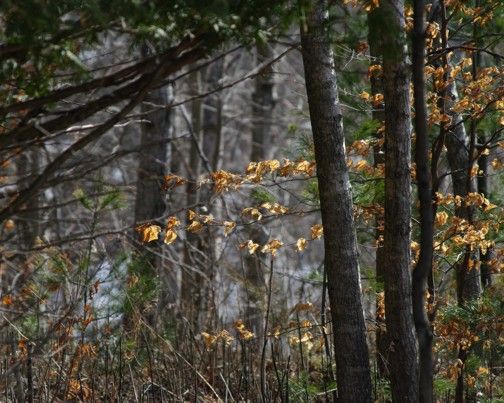
Looking Through the Woods

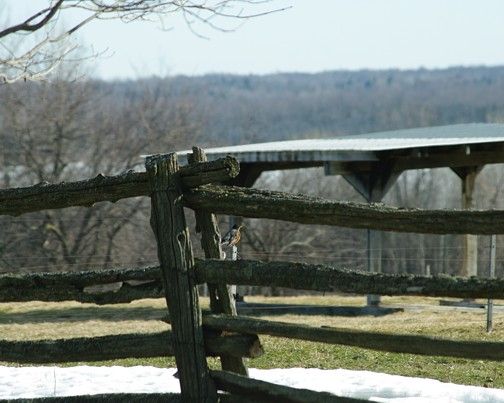
Through the Old Rail Fence and Down to the River

March 26, 2011

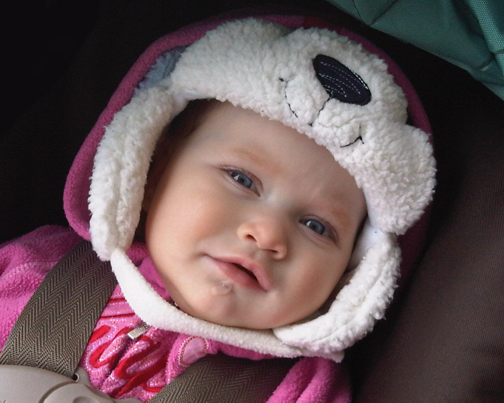
Little Rose Blooming

Olivia-Rose
(my great granddaughter at ten months)

March 25, 2011

Friday Ramble - Crepuscular

Crepuscular is one of those words which rolls trippingly off the tongue - it has a lovely ring to it, and the combination of consonants and vowels is such that one may wrap her mouth around it like a good bit of saltwater toffee. The word comes to us through the good offices of the Latin crepuscul(um) meaning twilight or dusk, and it claims kinship with the Latin crepus/creper meaning murky or obscure. There is no relationship with crepe (as in crepe paper or crepe rubber), for that word arises from the Old French crespe and Latin crispus meaning curly. Crepuscular and crepe are birds of vibrant but differing plumage.

It is all about light and things liminal. As an adjective, crepuscular describes the perfect hours at dawn and dusk when the contrast between light and darkness is most visible, when the world is bathed in a golden glow, and everything within it seems to be standing in a stronger light than at other times of the day.

Most of all, there are are crepuscular rays, beams of sunlight made visible by snow, rain or dust in the atmosphere and appearing to radiate from a single co-ordinate in the sky (usually the sun). Crepuscular rays occur near sunrise and sunset, streaming through openings in the towering clouds and pouring themselves out over the earth like molten honey. As they pass through the clouds, the columns of sunlight are separated by darker shaded areas, and the effect is that of a dazzling wheel, beautiful beyond words.

The ancient Greeks referred to crepuscular rays as "Sun drawing water", from their belief that sunbeams drew water into the sky - it was their "take" on natural processes of evaporation. There are a number of other names for this natural phenomenon which lights up the sky at sunrise and sunset: Buddha’s Rays, Cloud Breaks, Divine Light, Gateways to Heaven, God's Fingers, Jacob's Ladder, Jesus Beams, Jesus God Sunsets, Paths to Heaven, Ropes of Maui (from the Maori creation tale in which the child goddess Maui Potiki snared the sun with ropes and tied it in place to make days grow longer) Spokes of Heaven, Stairways to Heaven, Sunrays, Sun Wheel, Volumetric lighting (a graphic design term)

Once seen, crepuscular rays are never forgotten, and it is every photographer's dream to encounter them when she is holding a camera. In this long old life, I have seen them shining through the ice on an Arctic lake, dancing on the north shore of Lake Superior, flaming through cumulonimbus clouds on Dalhousie Lake on a fine autumn night. I remember each and every one.

March 24, 2011

Thursday Poem - Another Spring

The seasons revolve and the years change
With no assistance or supervision.
The moon, without taking thought,
Moves in its cycle, full, crescent, and full.

The white moon enters the heart of the river;
The air is drugged with azalea blossoms;
Deep in the night a pine cone falls;
Our campfire dies out in the empty mountains.

The sharp stars flicker in the tremulous branches;
The lake is black, bottomless in the crystalline night;
High in the sky the Northern Crown
Is cut in half by the dim summit of a snow peak.

O heart, heart, so singularly
Intransigent and corruptible,
Here we lie entranced by the starlit water,
And moments that should each last forever

Slide unconsciously by us like water.

Kenneth Rexroth
(From
One Hundred Poems from the Chinese)

March 22, 2011

Equinox Woods

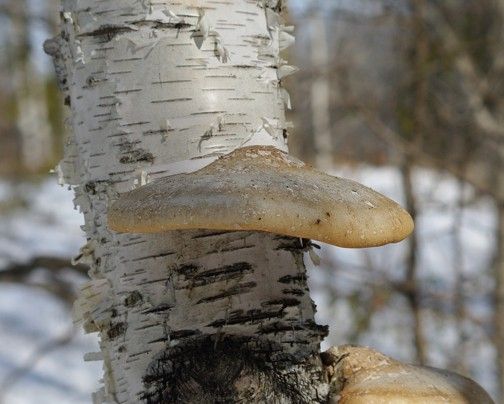
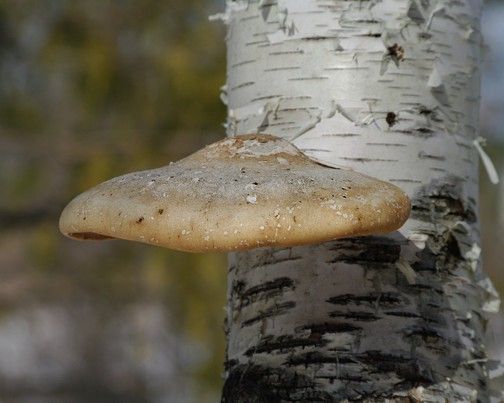
Birch Conk
(Piptoporus betulinus)

Equinox or no Equinox, there is still a fair amount of snow in the Lanark woods, as you can see from the first photo. The crust was firm for the most part, and one could go pottering about among the trees with minimal risk of sliding off a rock face, falling into a crevice or getting stuck in a sinkhole somewhere.

Ramble we did on the weekend..... The sky was brilliant blue, the light was glorious, and we must have covered miles on foot through the woods. Himself and I carried seed and suet cakes for the birds, and I (of course) also carried a field notebook, camera and a whole bag of lenses and filters. Spencer and his friend Emma floated along in the snow beside us, as graceful as deer, as swift as March hares and deliriously happy to be cavorting in the sunlight.

From the number of birch conks we found in our travels, a number of old trees on the Two Hundred Acre Wood are slowly expiring, and that is sad, for many of them are long time friends. The birch mothers have been ardently perpetuating their lineages though, and that made us happy. In almost every place where we found trees and conks existing together, there were active nurseries and throngs of stalwart young trees all around. In their groves, the saplings clustered proud and protective around their mother trees, and we knew that there would be birch trees in our favorite place for many years to come.

Yesterday it snowed heavily, and that is an Equinox tradition of another kind.

March 20, 2011

The Awakening Moon of March

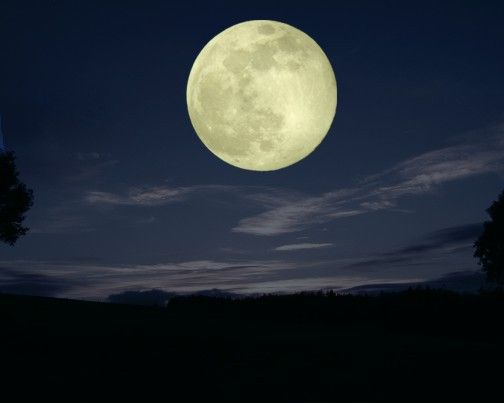
By rights, March's full moon should be rising when there is no snow and one does not have to don a parka to go out and see it. Last evening, I shivered as I waited for Lady Moon to put in an appearance in the inky sky, but it was a happy night for all that. The geese are returning, and so are turkey vultures, various hawks, starlings, robins and other songbirds.

This is the eve of Ostara or the Vernal Equinox, and light and darkness are hovering in perfect balance. In the northern hemisphere, this moon is often called the Moon of Awakening by indigenous cultures. It usually rises when the maple syrup season is in full swing, when the woodlands are full of Saw-whet Owl songs, migratory birds are returning in great singing throngs and trees everywhere are budding out. I say usually, because this year there is an astonishing amount of snow about, and temperatures are colder than they normally are at this time of year - the maple syrup season is just starting because of the unseasonably cold weather. It will be many weeks before I hear loons calling across the lake or watch herons moving majestically along the shore at sunset.

Whatever the weather last evening, the moon was gloriously bright, and one could not help but think of the springtime which is slowly making its way northward. I watched that magnificent moon rising like an Easter egg and thought of roses and butterflies and dew-ornamented spider webs in the garden like minute expressions of Indra's diamond net. The only thing which would have improved the experience would have been a flock of geese winging their way right across the moon's face and down to the river. That would have been sublime, but I was contented with things as they were. In my eldering years, I am (perhaps) learning a little patience and can wait for warmer nights and other moons. Every velvet night and every lustrous moon is a gift.

We also know this moon as:

Alder Moon, Big Famine Moon, Big Winds Moon, Blossoming Out Moon, Bud Moon, Buffalo Dropping Their Calves Moon, Catching Fish Moon, Chaste Moon, Cherry Blossom Moon, Cold’s End Moon, Crow Moon, Crust Moon, Daffodil Moon, Death Moon, Deer Moon, Eagle Moon, Goose Moon, Green Moon, Growth Begins Moon, Hard Crust on the Snow Moon, Hertha's Moon, Hyacinth Moon, Lenten Moon, Little Frog Moon, Little Sand Storm Moon, Little Spring Moon, Lizard Moon, Long Days Moon, Maple Sweetness Moon, Middle Finger Moon, Moon of Earth Awakening, Moon of Opening Hands, Moon of the Crane, Moon of the Snowblind, Moon of the Whispering Wind, Moon of Winds, Moon When Buffalo Cows Drop Their Calves, Moon When Eyes Are Sore from Bright Snow, Moon When the Leaves Break Forth, Moon When the Geese Return, Moose Hunter Moon, Much Lateness Moon, Ogroni Moon, Plow Moon, Rebirth Moon, Renewal Moon, Sap Moon, Seed Moon, Sleepy Moon, Snow Blind Moon, Snow Crust Moon, Snowshoe Breaking Moon, Storm Moon, Strawberry Moon, Sucker Fishing Moon, Sugar Making Moon, Trail Sitting Moon, Tree Peony Moon, Violet Moon, Water Stands in the Ponds Moon, Wind Strong Moon, Windy Moon and Worm Moon.

I am rather fond of Moon of Earth Awakening, Maple Sweetness Moon and Rebirth Moon.

Happy Ostara or Vernal Equinox if you live in the northern hemisphere, Happy Mabon or Autumn Equinox if you live in the south. A very happy Nowruz (or Persian New Year) if you are of Persian ancestry, and if you are Jewish, a very happy Purim to you and your clan.

March 18, 2011

Friday Ramble - March's Morning Light

In life there is a single color, as on an artist's palette, which
provides the meaning of life and art. It is the color of love.
Marc Chagall

The light comes slowly these March mornings, beginning with a blush on the horizon beyond Hampton Park. Then comes deep magenta blue and violet with pillars of fiery cloud, touches of darker coppery gold here and there. Painted in broad flowing strokes, the sky and the new day undergo a spontaneous glowing transformation, colors running like honey across the sky and over the village. Trees, chimneys and roof lines are silhouetted against the rising light, and they contribute their own more rooted glow to the day.

These are my "stained glass hours", and they have distinguished kin, however insignificant this watcher: the rose window of Notre Dame Cathedral in Paris, the panels of Edward Burne-Jones and William Morris, the jeweled work of Louis Comfort Tiffany. Most of all, there are the glorious offerings of the French/Russian master, Marc Chagall, his paintings of the biblical Song of Songs, the Reuben window for Jerusalem's Hadassah Medical Centre (which depicts the Twelve Tribes of Israel), the sumptuously hued commemorative windows for Sarah d'Avigdor-Goldsmith (also spelled Goldsmid) in All Saints Church, Tudeley, Kent. The master was commissioned by Sarah's parents to paint a single memorial window after her untimely death, and when he visited the little church and saw that its windows were plain glass, he decided to paint every single one in her memory. His was a generous heart.

Compelled for some reason to be up and about before the light show starts, out I go in my warmest togs to find a good seat and partake of the abundance. I bring a mug of tea, heavy shawl and various other swaddlings, notebook and camera. Chagall often seemed to be seeing the beauty of the earth through stained glass, and wrapped up in these morning colors, I am doing the same thing in an infinitely smaller and paler way.

Nature is the artist, and I, merely a doddering observer. Oh, to borrow the incandescent wordy gifts of Diane Ackerman for a few moments, that I might describe it all! This perfect morning is my own song of songs.

March 17, 2011

For St. Patrick's Day - Tobar Phadraic

Turn sideways into the light as they say
the old ones did and disappear into the originality
of it all. Be impatient with explanations
and discipline the mind not to begin
questions it cannot answer. Walk the green road
above the bay and the low glinting fields
toward the evening sun. Let that Atlantic
gleam be ahead of you and the gray light
of the bay below you,
until you catch, down on your left,
the break in the wall,
for just above in the shadow
you’ll find it hidden, a curved arm
of rock holding the water close to the mountain,
a just-lit surface smoothing a scattering of coins,
and in the niche above, notes to the dead
and supplications for those who still live.
Now you are alone with the transfiguration
and ask no healing for your own
but look down as if looking through time,
as if through a rent veil from the other
side of the question you’ve refused to ask,

and remember how as a child
your arms could rise and your palms
turn out to bless the world.

David Whyte
(from River Flow)

March 15, 2011

Invoking Warmth and Light

One does whatever she can to entice springtime into the world, bunches of confetti colored lilies from a local flower market, bowls of fragrant hyacinth and tulips on the dining room table, prisms suspended in a south facing window and and directing morning light into the study.

Last night the waxing moon was a vision dancing almost directly overhead, and Spencer and I went out into the cold garden in early evening to greet her. It could have been our imagination, but it seemed a little warmer out there then it usually does at that time, and our thoughts took a cheerful turn. One of these days, the snow in the garden will have disappeared completely, and like happy plants, we will dwell outside under the old trees, rooted, contented and part of the flowering throng.

In recent dreams, I have been wandering around in the orchard. The apple trees are in bloom and filled with happy buzzing bees; the wildflowers below are aflutter with dancing swallowtail butterflies. Both omens and cantrips, I take the dreams to mean that it is time to order that new close up lens I have been considering all winter.

The hearts of lilies yet unknown are beckoning, the shimmering wings of dragonflies, spider webs beaded with early dew, the glossy eyes and gloriously furred backs of legions of summer bumblebees. Ahead lie perfect hours in the presence of wonder and the elemental grace at the heart of existence, witness to the wild and perfect mysteries that light up our days and fill our nights with stars.

March 14, 2011

Horror in Japan

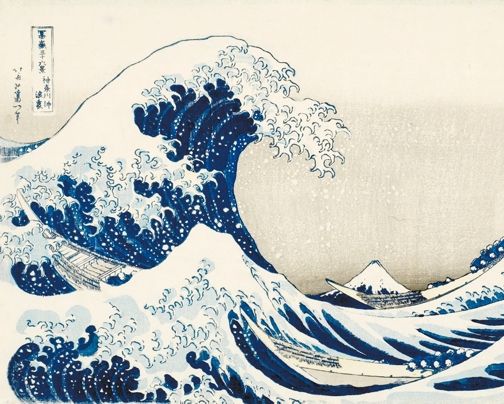
The Great Wave off Kanagawa,
Katsushika Hokusai

What can one possibly say about the destruction, heartbreak and suffering in northern Japan? The recent earthquake and the great tsunami which followed it wiped out entire islands and whole stretches of coastline, cities, farms, industrial complexes and countless precious lives. This was among the most powerful quakes ever recorded, and we may never know how many lives were lost or how much damage was done.

Now there is infinite danger from failing nuclear reactors, and Japanese officials are fighting on several fronts to avert disaster. Reactors in the already ravaged north have been shut down, and operators are flooding them with cold water – including plant corroding sea water in some cases – in an effort to lower temperatures and prevent explosions which would blanket all of eastern Asia with radioactive contamination.

The horror is beyond words, and I feel so helpless. Prayers and candles, raising money, sending food and water, tents, blankets and drugs... Whatever one does for the good people of Japan is an infinitely small drop in the ocean of this calamity. What else can we do?

March 13, 2011

Awaiting Spring

Looking down, the view by the creek resembled a wide flowing river with frothy rapids, billows, white-capped waves and even a mountain in the shape of a smooth rock on the bank. The pine poking out of the snow seemed to be a tall spruce, but it's a small tree, only a few inches high, looking hopeful in its pool of sunlight. Toward the end of winter, one becomes maudlin and a tad fanciful.

It has been a long cold winter, and we are ready for springtime. The songs of the owls brought that home yesterday. I listened to them calling to each other across the woods and thought that new life in the old nest by the beaver pond was beginning, that the next singers would be Saw-whet Owls and the maple sugaring season was not far off, that it would not be long before I could ramble the fields again and there would be wildflowers everywhere.

Last year at this time, maple syrup operations in the highlands were in full swing, and the geese had returned. This year, we still have a way to go before those happy events occur, but we watch the clouds for flocks, and we scan treelines for fragrant smoke arising from sugar shacks. In March, hope takes on the shapes of singing geese and maple trees.

March 11, 2011

Friday Ramble - Oscillate

Oscillate... the word does not see a lot of use in common parlance, and it has an interesting history, possibly going back to the Latin word oscillum, meaning small mouth. In a passage in his Georgics, the poet Greek poet Virgil used the Latin oscillum to describe a small mask of Dionysus/Bacchus which hung from the trees in a grove and moved in the wind. From the original Latin noun came a verb in the same august language describing something that fluctuates back and forth like a pendulum, a set of wind chimes or a child's swing. Thence comes the verb scillti, which describes the action of rotating from side to side. At the end of our exploration lies the noun oscillation, first seen in 1658, and its verb form oscillate, and the words still connote swinging movement.

This is one of the those lovely situations where a word has origins both mythic and truly intriguing. When I see the word oscillate in print or hear it spoken aloud, my thoughts wander off to a carved wooden mask of the grape god dangling from a tree in the ancient Roman countryside and swaying in the wind. Who would have guessed that vineyards and grapey Bacchanalian doings can be associated with the simple act of something swinging to and fro in the breeze?

Why use the word here this morning and honor it with a Friday Ramble? The weather here has been erratic in the last week or so, swinging (or oscillating) wildly between rain and heavy snowfall, between mild temperatures and deep icy cold, between brilliant sunlight and whole days of murky twilight. This morning, it is raining cats and dogs beyond the windows, and there are sheets of ice everywhere, vestiges of the night's plummeting temperatures. The distance between one end of the weather pendulum's swing (or oscillation) and the other end is called its amplitude, arising from the Latin amplitudo (or amplus), meaning large. Thus there is largeness, breadth and fullness at work here and not just mindless flapping about.

There has been much to be learned from the village children this week. When it rains, they don their oilskins and splash happily about in the oceanic puddles, demonstrating buoyancy or Archimedes' principle in action. When it snows, they scale the Himalayan snow piles and stand waving from the top like intrepid explorers on the roof of the world. Their beaming faces and cheerful gestures bespeak blithe good humor, tolerance and a largeness that is of the heart.

March 10, 2011

Thursday Poem - Geology

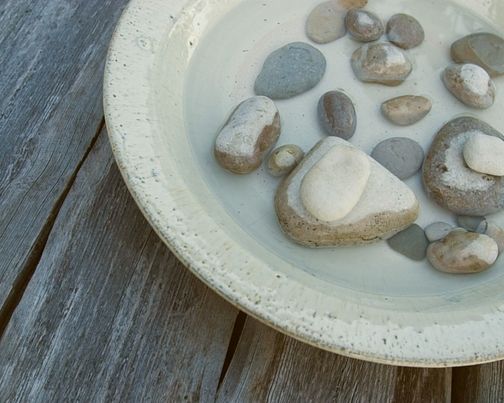
Place a stone in the palm of your hand;
it lies there, inert, nothing but itself.
It revels in its stoniness, its solidity.
It gathers light, rises from the plains,
a mountain in miniature, notches and ridges
carved by weather, strata and stria,
the pressure of time, the rough places,
planed. A climber might try for the pinnacle,
looking for toeholds in cracks and crevasses.
The way up is never easy. The air thins.
From the peak, the horizon falls away.
Borders are meaningless. The stone rests in your hand.
It sings its one long song. Something about eternity.
Something about the sea.

Barbara Crooker

March 8, 2011

Of Pens, Inks and Correspondences

I've just finished creating another series of blank note cards for a friend, an accomplished writer and a gifted correspondent with a wide circle of friends and a lifelong journaling practice. Dear me, there is a whole shelf of beautiful blank journals here in the study and boxes of handcrafted cards created in my studio, the KerrdeLune Design Works, and I am not using any of them. My friend has already run through the cards I gave her at Yule, but I have not sent out a card or written anything with my own hands since last December, and I am deeply ashamed. Even Spencer sends out an occasional card with his paw print on it - the last was a Valentine sent to his friend Emma last month.

The problem is that whenever I think about writing something longhand, I remember how appalling my handwriting is and feel like hiding in a corner somewhere. So much for the creature who once learned penmanship from the nuns at school and took prizes all over the place for her graceful endeavors... I can no longer pen anything even slightly legible, and there are times when even I can't figure out what I have written, but there is a nagging persistent voice saying that I have to get back to writing longhand, and it has issued a few rules. Not another blank journal is to enter the house until I get my act together and start using the blank journals I already have. Not another artsy card is to be created or purchased until I get out the old Waterman pen and start writing long promised notes to friends and kin. OK, so my paws are arthritic, and my cursive script wanders all over the page... This is what I have to work with, and it will just have to do. The thing is to commit something of the journey to real paper, to make inky marks on the page with one's own hands.

An excuse to haunt art stores and acquire inks in peacock blue, crimson and magenta? You bet. The voice says nothing at all about purchasing ink in unusual colors, and Private Reserve makes some whoppers including one called Tanzanite, a shade of violet so deep and rich that it is almost indigo in its intensity. The same manufacturer makes a gorgeous color called Purple Mojo, and I am thinking of giving both of them a go. I shall line the new inks up here on my desk and feel as happy as I do when looking at art markers, jars of brushes, boxes of water colors and tubes of oil based pigments. I can do this, yes, I can...

March 7, 2011

On the Library Table - Being with Animals

Being with Animals, Dr. Barbara J. King

If one is fortunate, once or twice in a calendar year, she encounters a book which fills her with wonder and stirs up deep thoughts for some time after reading it. Dr. Barbara J. King, Chancellor Professor of Anthropology at the College of William & Mary, has written such a book, and when I opened it a few weeks ago, I was delighted to realize that her creation dovetailed perfectly with my previous reading. The preceding books this winter were David Abram's Becoming Animal, and David Lewis Williams' weighty publication on human consciousness and the origins of art, The Mind in the Cave.

To tackle three books like this, one after the other, is a lovely thing indeed, and an exercise furnishing one with much food for consideration. Being with Animals was a gorgeous conclusion to the winter's bookish wanderings, and since completing it, my thoughts have been going round and round - I suspect that will be the case for some time to come. Dr. King's opus is one I shall visit again, and it's a measure of the book's excellence that I needed to ponder its teachings for a while before tackling this review.

A love of art, the living world and the manifold beings with whom we share that world underpins this blog, and simply saying that animals are close to my heart is something of an understatement. There is a little pack of timber wolves on my hill in Lanark and a resident black bear, beaver colonies and their lodges all along the waterways, owls in the woods, geese and loons, great herons along the lake - one can lose all track of conventional time while watching herons along a shoreline. Closer to home, there is sweet Spencer, curled up beside me as I tap away here, and not so long ago, beautiful now departed Cassie, my loving companion for many years.

Humans are animals, although we like to pretend otherwise. What would our earthly journey be like without the companionship of other animals? We share the world with them, and their reciprocity is boundless, although our own conduct is often appalling. They provide us with food and warmth, function as beasts of burden and our protectors. Faithful allies, they go to war with us, travel along with us on our migrations, act as spirit guides and totems, give us a bridge to the mythic and the ritual. Humans are usually the predators, and the animals our prey; occasionally the positions are reversed, and we cringe in our boots. It has ever been so. The bond between humans and other animals goes right back to our beginnings as a species, but we don't think about it for the most part.

Being with Animals
traces human relationships with other creatures all the way to our early ancestors. There is fine scholarship here, thoughtfulness and eloquence; there is deep respect for those with whom we share the world, humor, warmth and humanity. Art, our ancestral bonds with animals and the evolution of human consciousness are inextricably linked, and Dr. King illustrates that wonderfully, beginning with the Blessing of the Animals at the Cathedral Church of St. John the Divine in New York, then moving back to the ancient caves of Chauvet with their exquisite artistic renderings of horses, cattle, deer, lions, panthers, bears and owls, and beyond even that to the African savannas. I found much to think about as I was reading.

If you only read a few books this year, make this one of them. Prepare to be astonished, to be delighted and filled with wonder. This book is a keeper.

March 6, 2011

Lingering Winter

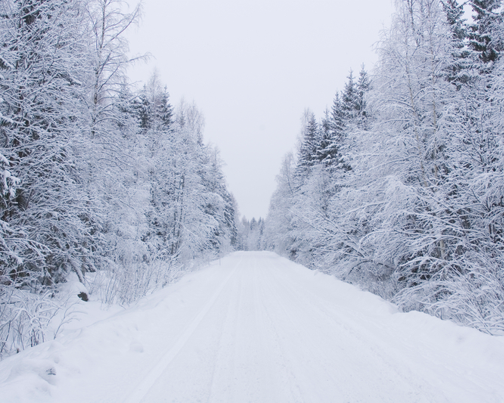
First there was snow, then hours of cold drenching rain, and now we are back to snow again, yesterday's rainfall having reinvented itself overnight as hard glossy (and concealed) ice in unexpected places. The world beyond the windows is a handsome place indeed this morning, but in charcoal or grayscale - no sunlight, the white stuff is still falling thick and fast, and it is very slippery "out there".

In the absence of good conditions for pottering about outside, this is a fine day for cups of tea, stacks of art books and Japanese flute music on the CD player, for getting out my pencils, pens and brushes and trying to capture the day in sweeping strokes.

Perhaps a series of ensos, each drawn in a single flowing movement? Whether or not my efforts embrace the "Way of the Brush" (筆禅道), holding vitality and eternal experience in their curves, they will surely hold snow and lingering winter.

March 4, 2011

Friday Ramble - Forget

Forget hails from before 900 CE, coming to us through the Middle English foryeten and the Old English forg ( i ) etan. All are cognate with the Old Saxon fargetan and the Old High German firgezzan, meaning much the same thing.

The first part of the word comes from the Old English for - meaning away, off, to the utmost degree, extremely, or wrongly. When added to words of Old English origin, for- generally has a negative or privative connotation, and many of the words incorporating it are now considered archaic: forbid; forbear; forswear; forbearance. If you have not already guessed, I have a passion for archaic words and delight in their origins. The second part of the word, get, hails from the Middle English geten, the Old English -gietan and the Old Norse geta meaning to receive, obtain or beget. Beget??? What ho, hallelujah, three cheers, there is an element of creativity involved in this week's wordy equation.

Put for- and get- together, and the result is a word describing our inability to remember something from the past or call it into mind. We omit that something or leave it behind in our earthly travels, and our doing may be either intentional or unintentional - we do so on purpose or we do it without thinking. Sometimes, notions of impropriety come into play. Forgetting (as in forgetting one's self) also means to say or do something improper, something not befitting one's rank, character or station in life. When I was a child, one of my elderly aunts liked to refer to such behaviours as impertinence, and I smile now when I think of her doing it.

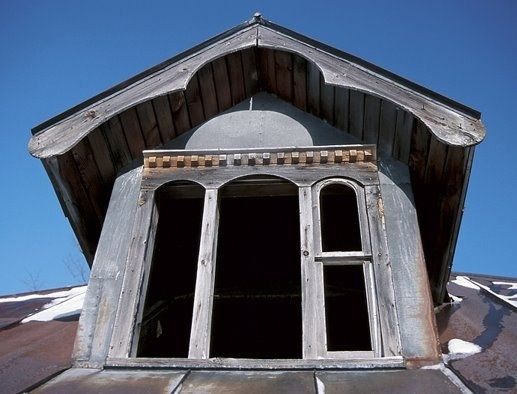
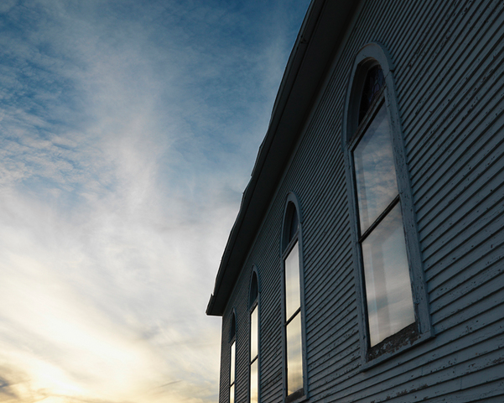
What is the word forget doing here today? Yesterday morning, I thought I would post Lisel Mueller's beautiful "Scenic Route" here and use a favorite photo of an old window to illustrate the poem. Nothing doing.... As often as I encounter that poignant image when I am poking about in my photo archives, yesterday I could not remember where I had stored it and searched for it in vain. Having said that, there were an amazing number of photos to go through in my quest for the right image.

This old hen is becoming forgetful, and she has to write everything down in her little Moleskine these days, but that is quite all right, and mirabile dictu, things do have a way of working out. Finding and using the image this morning rather than yesterday is apt, for the dear old house and its window have long been abandoned and forgotten, and they break my heart every time I pass by.

March 3, 2011

Thursday Poem - Scenic Route

Someone was always leaving
and never coming back.
The wooden houses wait like old wives
along this road; they are everywhere,
abandoned, leaning, turning gray.

Someone always traded
the lonely beauty
of hemlock and stony lakeshore
for survival, packed up his life
and drove off to the city.
In the yards the apple trees
keep hanging on, but the fruit
grows smaller year by year.

When we come this way again
the trees will have gone wild,
the houses collapsed, not even worth
the human act of breaking in.
Fields will have taken over.

What we will recognize
is the wind, the same fierce wind,
which has no history.

Lisel Mueller
Scenic Route from Alive Together

March 1, 2011

Speak Memory

It has been snowing again, and there is more of it to come. Alas, snow is as much as fact of life here in March as it was in January and February. In the circumstances, there is little to be done, so I have succumbed to plaintive temptation and am undertaking a meandering journey through other places and other times with accumulated volumes of bad photos, tattered notebooks, journals full of awful handwriting and odd scraps of paper gathered on long ago travels. There is paper everywhere, and it makes a fine comforting music on this gray day, like a rustling old taffeta skirt.

Through the peaks and valleys of Donegal, Alaska and the Himalayas I go, slow by the northern shores of Lake Superior, the cold clear bays of the high Arctic and the geysers of Iceland, past Pacific redwoods, Haida totems, long barrows and dancing stones, under winter skies where the Aurora dances, through deep dark forests and cloud covered hills on winding trails.

I turn a page and remember a long ago autumn morning in the Algoma district. Near the town of Iron Bridge, migrating herons were congregating before dawn, and hundreds of the magnificent birds stood side by side in the foggy waters of the Mississagi river, a silent community of stately silhouettes in darkness. There is enough magic in such tatterdemalion pages to last many lifetimes.

Note to self.... be back in the real north next autumn when the herons are migrating. It is about time that I returned.