

Saturday, July 31, 2010
Thursday, July 29, 2010
Thursday Poem - Quiet Friend
 Quiet friend who has come so far,
feel how your breathing makes more space around you.
Let this darkness be a bell tower
and you the bell. As you ring,
what batters you becomes your strength.
Move back and forth into the change.
What is it like, such intensity of pain?
If the drink is bitter, turn yourself to wine.
In this uncontainable night,
be the mystery at the crossroads of your senses,
the meaning discovered there.
And if the world has ceased to hear you,
say to the silent earth: I flow.
To the rushing water, speak: I am.
Rainer Maria Rilke,
Sonnets to Orpheus, Part Two, Sonnet XXIX
(Translated by Joanna Macy and Anita Barrows)
Wednesday, July 28, 2010

Tuesday, July 27, 2010
Lady Merlin
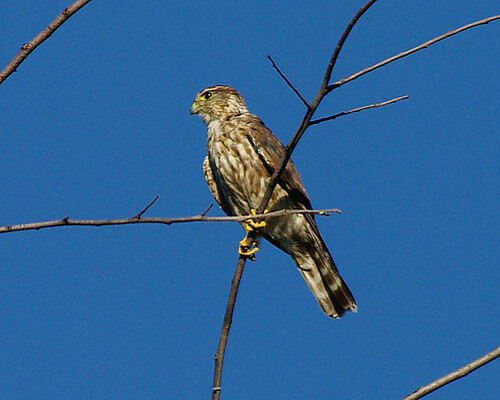 The garden has a new patron, and there she sits, mistress of all she surveys and a force to be reckoned with, a fierce and hungry force.
The feeders in the garden behind the little blue house in the village have been mostly quiet for days; not a sparrow or a chickadee or a nuthatch to be seen most of the time. The old trees sway in the summer wind, but they are seldom graced by a feather, a beak or a wing - there has been much scampering about and rustling in the hedgerow, but the birds have been staying out of sight until an hour or so before sunset.
As it has turned out, their quiet and caution are warranted. This young falcon, a female Merlin (Falco columbarius), has taken to hunting in our garden, and she perches in a tree there for hours at a time. Her speed is astonishing, and her ferocity and agility in the air are really something to see. On the attack, she is a blur in the clear blue air.
There have been tales in the village of a successful nesting of these beautiful falcons in our park, and the tales are true. Wonder of wonders, we have a falcon in our midst, and she is a beauty.
Sunday, July 25, 2010

Friday, July 23, 2010
Friday Ramble - Remember

There are memories lodged deep within each of us which awaken longings so intense that they are painful, and we each have our own stories, our own storehouses and hoards of special memories and dreams. Like the mythical dragons of old, we heap up treasures in the dusty recesses of our craniums, and we guard them fiercely.
A color here, a shape there, sunlight drifting through the cranny in an old barn wall, an elusive evergreen fragrance wafting from somewhere nearby, rolling pine-clad ridges from here to there, the sound of rain falling among the trees, the companionable call of an owl at twilight, the perfect swaying dance of a cluster of Queen Anne's Lace on a summer morning in late July ...
My own memories seem to suggest that wild places have been engaging my attention and tugging away at my sensibilities for a long time - probably since I arrived on the planet this time round, and perhaps even before that. How else can I explain the absence (generally) of urban motifs in my portfolio work, this feeling of utter kinship with wildness and the wild?
As a child, I went off seeking wild places whenever I could escape, and it was always difficult to leave such places behind when I found them. As an adult (well sort of), It was a gift to share the untrammeled and undomesticated with children and grandchildren, although I am sure they sometimes found me tedious on the subject. Now I am contemplating another sharing with my sweet and perfect new great-granddaughter, Olivia-Rose, and the mere thought is a joy beyond words.
If we can teach those who will follow us into stewardship of this earth to appreciate its grandeur and mystery, we may be able save the world, and such passionate coinage transcends all my feeble expressions of love and reverence and wonder.
Thursday, July 22, 2010
Thursday Poem - Evening

The sky puts on the darkening blue coat
held for it by a row of ancient trees;
you watch: and the lands grow distant in your sight,
one journeying to heaven and one that falls;
and leave you not at home in either one,
not quite so still and dark as the darkened houses,
not calling to eternity with the passion
of what becomes a star each night, and rises;
and leave you (inexpressibly to unravel)
your life, with its immensity and fear,
so that, now bounded, now immeasurable,
it is alternately stone in you and star.
Rainer Maria Rilke, Evening
(translation by Stephen Mitchell)
held for it by a row of ancient trees;
you watch: and the lands grow distant in your sight,
one journeying to heaven and one that falls;
and leave you not at home in either one,
not quite so still and dark as the darkened houses,
not calling to eternity with the passion
of what becomes a star each night, and rises;
and leave you (inexpressibly to unravel)
your life, with its immensity and fear,
so that, now bounded, now immeasurable,
it is alternately stone in you and star.
Rainer Maria Rilke, Evening
(translation by Stephen Mitchell)
Rainer Maria Rilke's lyrical hymn to twilight is surely one of the most magnificent poems ever written, and it is one I never tire of reading - it speaks to me in a way that very few other poems ever do.
Wednesday, July 21, 2010

Tuesday, July 20, 2010
Rosy
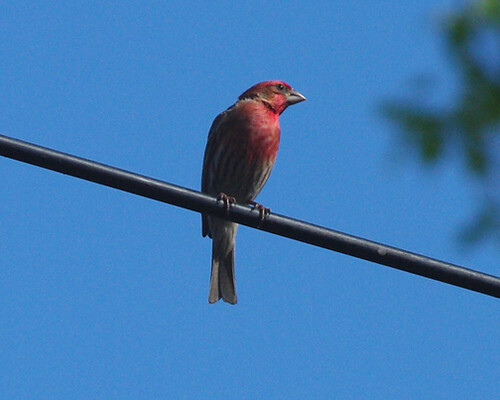
House Finch (Male)
(Carpodacus mexicanus)
Alas, the third brood of house finches who entered the world from a nursery in the wreath on our front door are growing up. It will be only a few days until they have flown, the nest is vacant again, and we can go in and out of the little blue house as we do at other times of the year. After entering and exiting the house through the garage or the rear door for several weeks, it will feel strange to be using the front door again.
For months we have been listening to youngsters chirping merrily, and we have been watching their parents fly back and forth with food and words of encouragement to each other. We have been gloriously serenaded by a magnificent rosy tinted male finch each and every morning, and it is a wonderful way to start one's day. After the children fly off this week, there will be no morning finch songs until next year, and I am rather dreading the poignant silence to come.
Monday, July 19, 2010
Gathering Up and In
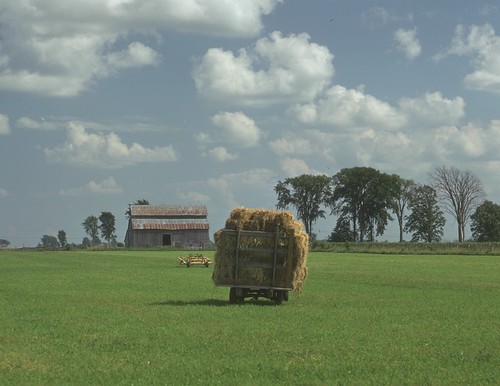
Huge round bales of hay are everywhere one looks in July, fields of waving wheat and barley and oats. The first gold and cream corn of the season is showing up at roadside stalls and farm gate shops along with cucumbers, beets, purple onions as big as baseballs, tiny new red potatoes and rainbow hued salad makings. Dinner is often a bowl of freshly picked salad or a lightly wokked melange of veggies in every conceivable color, lightly tossed in olive oil and lemon juice or a serendipity invented-on-the-spot dressing with a little curry tossed in to kick things up a notch.
How can we not think of harvest and plenty at the height of summer? How can we not think of the reciprocity of the Old Wild Mother and her generous treatment of us? We in our turn treat this beautiful earth with such utter contempt and thoughtlessness.
Sunday, July 18, 2010

Saturday, July 17, 2010
Dancing in the Western Sky

She dances in the western sky at sunset like a radiant female in a Maxfield Parrish painting.
The summer sky is painted from here to there in shades of lavender; and the floating summer haze is like a diaphanous veil. The slender crescent of moon glows like a lantern, and a single star hovers high above everything. The drifting clouds are intense rose and purple, and all is framed by a frieze of smoky dreaming trees.
Parrish was a painter like no other, and he "did" dawn and evening skies like nobody else. His use of color was dazzlingly luminous, particularly his golds, cobalts, mauves and purples, and he achieved what is often called an elegiac vivacity through a complicated technique in which layers of oil color were applied alternately with layers of varnish. An ethereal magical otherworldly quality informs everything he ever painted.
There is no mansion, barn or gently flowing stream here, but I would like to think that my photo is reminiscent in its own small way of Maxfield Parrish's lovely "New Moon".
The summer sky is painted from here to there in shades of lavender; and the floating summer haze is like a diaphanous veil. The slender crescent of moon glows like a lantern, and a single star hovers high above everything. The drifting clouds are intense rose and purple, and all is framed by a frieze of smoky dreaming trees.
Parrish was a painter like no other, and he "did" dawn and evening skies like nobody else. His use of color was dazzlingly luminous, particularly his golds, cobalts, mauves and purples, and he achieved what is often called an elegiac vivacity through a complicated technique in which layers of oil color were applied alternately with layers of varnish. An ethereal magical otherworldly quality informs everything he ever painted.
There is no mansion, barn or gently flowing stream here, but I would like to think that my photo is reminiscent in its own small way of Maxfield Parrish's lovely "New Moon".
Thursday, July 15, 2010
Thursday Poem - Night Falling
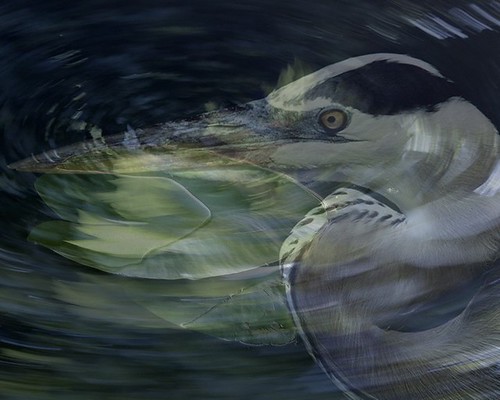
before the light has fallen away, there's a fiery sun
above me, cool dusky waters and hidden depths
below. I make my way along the shore and its
guardian cliffs, a patient observer of evening
unfolding, these timeless oscillating rites of
rising light and slowly descending darkness.
A great heron moves though the shallows,
and mallard ducks assemble on the shoreline,
somewhere a loon laughs on a hidden bay.
My paddle moves of its own accord through
the ripples and every drop falling away from it
is a flame, a sparkling union holding fire in its
heart and thoughts of other paddlings here -
evening sun, shadowed trees and distant stars,
a lone woman in her battered canoe at twilight,
the earth and dappled waves conjoined.
It's an unfinished conversation of sorts, the
drops falling away from my paddle forming
trailing dots and small silences in a dialogue
with its roots in the past and its end resting
easy on the quiet water somewhere up ahead.
Who knows such things with any certainty?
Lake and landscape are telling tales this
evening, but they seldom speak in words.
Cate (kerrdelune)
Wednesday, July 14, 2010

Tuesday, July 13, 2010
On the Library Table - Daughters of the Witching Hill

The reigning monarch of the time ( James I) was convinced that Britain was a hotbed of witchcraft and satanic conspiracies and had just published a witchunter's manual called Daemonologie. Those wishing to advance themelves at court could do no better than promote their monarch's ideas and hunt down witches, and Roger Nowell, high sheriff and magistrate of Lancashire was a very ambitious man indeed.
Jamesian Britain is a dreary comfortless place, and the lives of many of its people are lives of hardship and quiet despair. Bess Southerns is an impoverished widow living with her daughter and granddaughter in an old stone tower in Pendle Forest. Known locally as Mother Demdike, Bess is a practicing cunning woman who earns her meager daily bread (and that of her family) through small mundane magics - she is a blesser with the power to cure human and animal illnesses, help barren women conceive children, find lost or stolen items and similar taskings.
Raised in the old Catholic faith, Bess does no curses or dark magics. She uses her talents for good, and her craft is rooted in the folk magics and prayer charms of her Catholic childhood. She also draws on an older power, that of the earth itself as represented in the Queen of Elfhame. That power is personified in the presence of Tibb, her shapeshifting spirit helper or familiar - he serves Bess on instructions from someone he lovingly calls "my Lady". By contrast, Bess's destitute childhood friend Anne Whittle (Mother Chattox), turns to dark magics in desperation, and her actions draw the unwelcome attentions of local authorities to the little community of Lancashire wise women and men. The results are tragic.
Bess's daughter Eliza follows her mother's craft, but turns away from it when her husband dies, believing that her spouse's death was orchestrated by Mother Chattox. Granddaughter Alizon possesses the ability to become a powerful healer, but she is conflicted and foregoes formal training, hoping for a more ordinary, prosperous and balanced existence. When Alizon rebukes a traveling peddler for his uncouth conduct without thinking and he suffers a stroke on the spot, she is reported to the local magistrate/sheriff as a witch. Alizon, six other women and two men are tried and convicted of witchcraft and sentenced to hang for their crimes. The elderly Mother Demdike does not fall prey to the hangman's noose but perishes in prison - the last words of the book are memorable, and they belong to her.
Roger Nowell ordered his men to bring down Malkin Tower stone by stone till only the foundation remained. Yet he could never banish me and mine from these parts. This is our home. Ours. We will endure, woven into the land itself, its weft and warp, like the very stones and the streams that cut across the moors.
Mary Sharratt has done a wonderful thing in bringing the Pendle witches back to life after their long sojourn in relative historical obscurity. For all the bleak trappings of lives lived in dire poverty under the yoke of post-Reformation culture, her characters blaze with vitality, power, deep reverence and passion for life. They shine with a light that is bright, true, and at times, utterly joyous; their voices are clear and eloquent. She has recreated the era of the Pendle witches with a sure hand, illustrating poignantly the desolate social landscape forged by the banishing of most ritual forms in Britain and the rise of a spare Protestant spirituality to power. Vibrant, authentic and beautifully written, this novel works on every conceivable level - it is a wonder and a delight to read.
To learn more, please feel free to visit Mary Sharratt at her website.
Monday, July 12, 2010

Saturday, July 10, 2010
Thursday, July 08, 2010
Thursday Poem - Aunt Leaf
the great-great-aunt dark as hickory
called Shining-Leaf, or Drifting-Cloud
or The-Beauty-of-the-Night.
Dear aunt, I'd call into the leaves,
and she'd rise up, like an old log in a pool,
and whisper in a language only the two of us knew
the word that meant follow,
and we'd travel
cheerful as birds
out of the dusty town and into the trees
where she would change us both into something quicker —
two foxes with black feet,
two snakes green as ribbons,
two shimmering fish — and all day we'd travel.
At day's end she'd leave me back at my own door
with the rest of my family,
who were kind, but solid as wood
and rarely wandered. While she,
old twist of feathers and birch bark,
would walk in circles wide as rain and then
float back
scattering the rags of twilight
on fluttering moth wings;
or she'd slouch from the barn like a gray opossum;
or she'd hang in the milky moonlight
burning like a medallion,
this bone dream, this friend I had to have,
this old woman made out of leaves.
Mary Oliver
Wednesday, July 07, 2010

Monday, July 05, 2010

Saturday, July 03, 2010
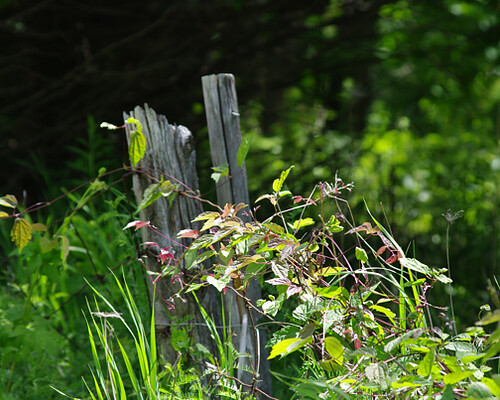
Thursday, July 01, 2010
Thursday Poem - In Praise of Mortality

where everything shines as it disappears.
The artist, when sketching, loves nothing so much
as the curve of the body as it turns away.
What locks itself in sameness has congealed.
Is it safer to be gray and numb?
What turns hard becomes rigid
and is easily shattered.
Pour yourself out like a fountain.
Flow into the knowledge that what you are seeking
finishes often at the start, and, with ending, begins.
Every happiness is the child of a separation
it did not think it could survive. And Daphne, becoming a laurel,
dares you to become the wind.
Rainer Maria Rilke, In Praise of Mortality
The Sonnets to Orpheus, Part Two, XII
(translated and edited by Anita Barrows and Joanna Macy)
Subscribe to:
Posts (Atom)