September 30, 2010

Thursday Poem - Some October

Some October, when the leaves turn gold, ask
me if I've done enough to deserve this life
I've been given. A pile of sorrows, yes, but joy
enough to unbalance the equation.

When the sky turns blue as the robes of heaven,
ask me if I've made a difference.
The road winds through the copper-colored woods;
no one sees around the bend.

Today, the wind poured out of Canada,
a river in flood, bringing down the brilliant leaves,
broken sticks and twigs, deserted nests.
Go where the current takes you.

Some twilight, when the clouds stream in from the west
like the breath of God, ask me again.

Barbara Crooker,
Originally published in Borderlands:
The Texas Poetry Review

September 28, 2010

Rain and Drifting Fog

One of those drifting nebulous autumn mornings when the village is cloaked and mysterious... I almost typed "early autumn" in the preceding sentence, but autumn is properly upon us, and she is comfortable in her tenure.

It is raining. Fog swirls around everything in billowing waves, draping trees like a veil, smoothing hard edges and rounding the contours of house and street. Out of the pearly gray comes a sound now and again: rain on the roof of the little blue house, village doors opening and closing as sleepy residents collect their newspapers, the muffled purring of autos, an early commuter detouring through the park, children walking to school, a caroling bird in the hedgerow, the whistle of a faraway train that is usually only a faint echoing in the air.

On such mornings, the world seems to go on forever and to be filled with a luminous floating Zen possibility. Part of me is curled up and engaged in a morning breathing meditation, counting my slow breaths in and out. Other parts are drifting along with the fog and happy to be doing so.

September 26, 2010

High Winds and Purple

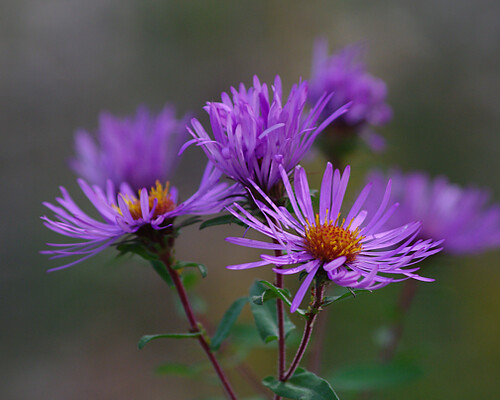
Michaelmas Daisies
(Aster novae-angliae)

The calendar year wanes, and the world is slowly turning gray and brown, soon to be blanketed in white and pale crystalline blue. One can hear winter in the hollow wind and blowing trees, in the drifts of leaves slowly piling up in village streets.

One craves color, not just any old color but shades which are exuberant, dazzling, intoxicating and downright riotous. A velvety taupe and cream milkweed pod disclosing its dancing silk in late September is a wondrous thing, but thank the Old Wild Mother for color.

Think bronze chrysanthemums, burgundy sedums and fall blooming wild asters in gold and purple. Think scarlet maple leaves, russet oak and golden birch. Think autumn nights when the sun goes down in flames over the western hill. Think cold clear mornings when you can see your breath and the rising sun turns the whole cosmos gold, erasing for a few precious moments the shifting ephemeral boundaries between land and water and sky. Wow....

September 25, 2010

Little Sister in the Garden

Common Eastern Bumble Bee - Female
(Bombus impatiens)

This "bumble" may be the last little sister to visit us this year, for our nights are becoming cold, and the congregation of happy buzzing a few weeks ago is but an echo in the wind. Yesterday, she was the only little sister gathering late nectar in the garden, and she was moving very very slowly.

There is a lesson or three to be learned from the cheerful bumbles. As our days shorten and temperatures plummet, they continue to do their appointed work and gather nectar as long as they can. Knowing all the while that winter is coming and their days are numbered, they move from flower to late autumn flower, and how they sing. I shall miss them.

September 23, 2010

Thursday Poem - Fall Song

Another year gone, leaving everywhere
its rich spiced residues: vines, leaves,

the uneaten fruits crumbling damply
in the shadows, unmattering back

from the particular island
of this summer, this NOW, that now is nowhere

except underfoot, moldering
in that black subterranean castle

of unobservable mysteries - roots and sealed seeds
and the wanderings of water. This

I try to remember when time's measure
painfully chafes, for instance when autumn

flares out at the last, boisterous and like us longing
to stay - how everything lives, shifting

from one bright vision to another, forever
in these momentary pastures.

Mary Oliver

September 21, 2010

Equinox Blessings

Today is the Autumn Equinox, and it marks the second of three observances dedicated to the harvest, the other two being the earlier Lughnasadh on August 1 and Samhain (or Halloween) which follows on October 31.

We know this day by many names: Harvest Home, Mabon, the Feast of Ingathering, Equinozio di Autunno (Strega), Meán Fómhair, and in Druidic tradition, Alban Elfed, to name just a few. Mabon is the name by which Autumn Equinox ritual observances are most widely known these days, but the connection between the Welsh hunter god and this day is flimsy to say the least. Mabon's only discernible link with the Autumn Equinox is that he is reputed to have been born on this day. Lugh, Demeter, Ceres, Persephone or John Barleycorn would have been better choices as a deity presiding over the Autumn Equinox. South of the equator seasonal patterns are reversed, and this day is celebrated as Ostara or the Spring Equinox.

In the old Teutonic calendar, the Autumn Equinox marked the beginning of the Winter Finding, a ceremonial interval lasting until Winter Night on October 15, also the date of the old Norse New Year. In Christian tradition, the festival is closely associated with St. Michael the Archangel - his feast takes place a few days from now on September 25, known for obvious reasons as Michaelmas.

The day is about abundance and harvest, but it is also about balance, for this is one of only two days in the whole turning year when day and night are perfectly balanced in length. Like all the old festivals, this is a liminal or threshold time, for we are poised between two seasons, summer and autumn.

A song by Bob Dylan comes to mind this morning: "The Times They Are a-Changin". Written for Dylan's third studio album in 1963, the song was an inchoate expression of the tumult of the times, of the ethos of counter culture movements and particularly the civil rights movement. It was inspired by the Book of Ecclesiastes, and it presaged by only a few weeks the assassination of John Fitzgerald Kennedy. Critics of Dylan's work claimed that his creation was outdated almost from the moment it was published, but it has always seemed to me that his words are timeless, and as appropriate for seasonal turnings as they were (and are) for social and political movements. Pete Seeger later adapted words from Ecclesiastes to write his folk anthem "Turn, Turn, Turn!", and the line about the first being last is a scriptural reference to Mark 10:31: "But many that are first shall be last, and the last shall be first." Perhaps there is indeed nothing new under the waning sunlight of this beautiful season.

Autumn skies overhead are brilliant blue and full of singing geese; the leaves of tree and vine and creeper are turning ruby, russet, burgundy and gold. There is intense glossy color everywhere, and wherever I turn, I am dazzled and entranced. The corn harvest is over for the most part, but the first apples, potatoes, gourds and pumpkins of the season adorn market stalls and farm gate shops in the Lanark Highlands. My freezer is full to brimming, and our larder is slowly filling up with quart sealers of tomatoes and squash, wax beans and pickles, relishes and preserves - those who know me will probably not be surprised to learn that the pantry is arranged by color and designed to be a feast for the eye as well as the palate.

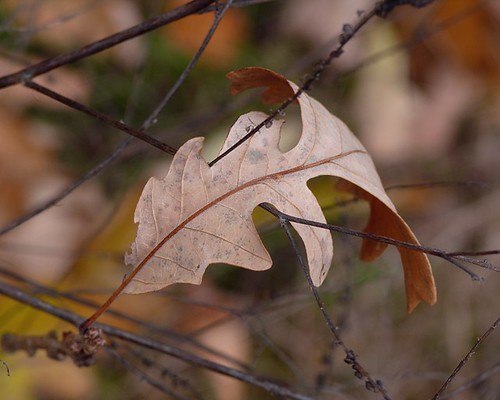
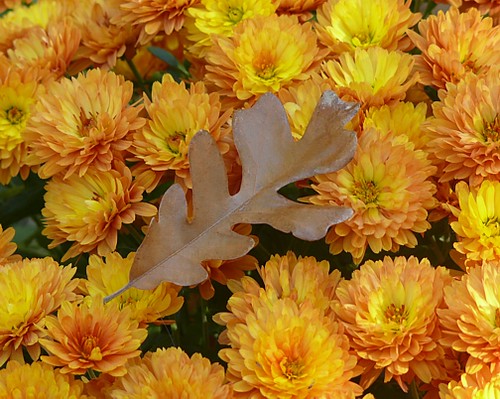
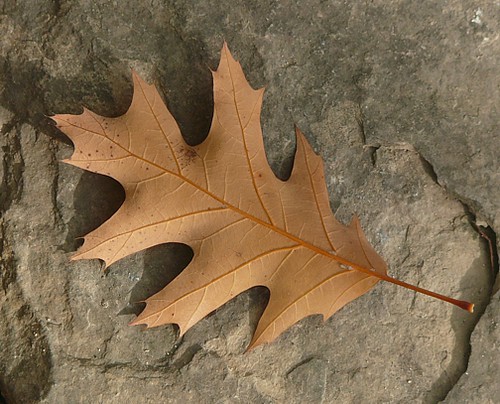
As always, there is a bronze chrysanthemum on the threshold of the little blue house in the village, this morning graced by a single fallen russet oak leaf. That plant is my own nod to the seasons and Mama Gaia. On this day of color and richness and equilibrium, we can be still for a moment and acknowledge our bond with the hallowed earth. We can offer up thanks for the dear little blue planet which is our home, and for the autumn bounty bestowed by Mama Gaia, that which we are reaping and "putting by" to see us through the long nights of winter. On this day, we may also rightfully celebrate clan and tribe and community and sharing - all of the fine old qualities which unite us in a dancing chain spiraling on down the years from the ancestors to the present day and ourselves.

Whatever you call it, a very happy Autumn Equinox, Harvest Home, Mabon, Feast of Ingathering, Equinozio di Autunno, Meán Fómhair and Alban Elfed to you and your clan.
September 19, 2010

What Falls Away

Common Eastern Bumble Bee
(Bombus impatiens)

September mornings are beyond "cool', and at sunrise, skies are precisely the hue of a robin's egg with a touch of gold and vibrant mauve thrown in for good measure. Below, my roses offer the last magnificent blooms of the season, and the crinkly Autumn Joy sedum is moving from silvery green to rose and thence to a deep autumn burgundy.

I prowl the garden watching the slow early movements of the awakening bumble bees and know with a touch of sadness that one of these mornings we will awaken to frost, and there will be no more female "bumbles" enacting their buzzing nectar dance in the garden behind the little blue house in the village. Their already mated queen will sleep out the winter underground and mother a new community in the spring, but the merry sisterhood who graced our garden all summer long will have passed away and returned to the earth.

As I move from plant to plant this morning, I bend and thank them, each and every one.

September 18, 2010

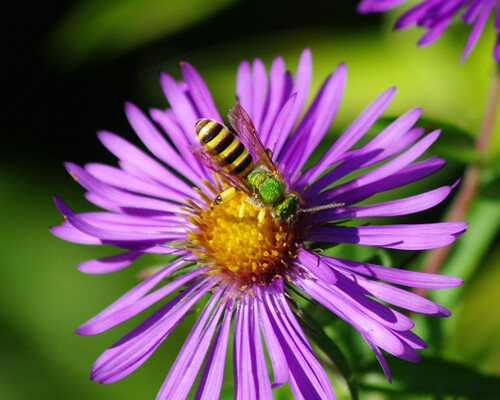
Nectar in Slow Motion (II)

Michaelmas Daisy or New England Aster
(Symphyotrichum novae-angliae)
Green Metallic Sweat Bee
(Agapostemon cockerelli)

September 17, 2010

Friday Ramble - Autumn

What does the word autumn actually mean? It comes to us through the Middle English autumpne and the Old French autompne from the Latin autumnus, and the Latin likely derives from even older Etruscan forms. The first part of autumnus (autu) probably derives from the Etruscan autu which is related to avil, or year. There may be some connection with the old Venetic autu or autah, which means much the same thing. The second part of autumnus (mnus) comes from menos meaning loss, minus, or passing.
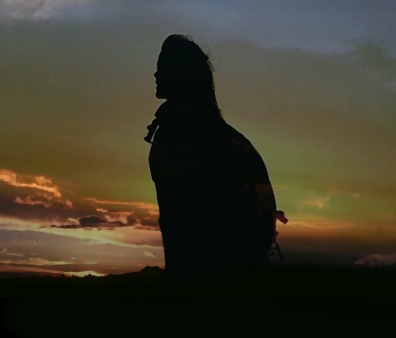
At the end of our etymological adventure is the burnished notion that autumn, both word and the season, signifies the passing of a bright and fertile interval and the waning of another calendar year in what I like to call simply, "the Great Round," the natural cycle of all days and seasons.

One cannot take a walk in village or countryside these days without noticing that the world is changing and changing swiftly. Vibrant colors surround us. In the village, red and gold leaves rain color over streets and paths, the brilliant blue skies overhead contrasting with deliciously rustling drifts underfoot. Geese pass over in vast singing waves, and their happy music fills the sky. At dawn and dusk, deer forage in farm fields, and flocks of wild turkeys stand on the great round bales of hay like sentries. The heat and high sun of summer are waning; plummeting temperatures and long nights are on their way, and winter awaits just over the hill. Let us enjoy these beautiful days while we can, for they are fleeting.

September days are about harvest and abundance, but they are about balance too. The Autumn Equinox on September 21(this coming Tuesday) is one of the two times in the year when day and night are perfectly balanced in length, the other being the Vernal Equinox on March 21.

The expression "Autumn Equinox" describes the day on which the sun passes over the equator on its long journey southward, moving away from our northern hemisphere. Of course things are actually the other way around, and it is the earth that is in motion, as the northern hemisphere tilts away from the sun. Earth's tilting is caused by a slight wobble (or in astronomical lingo, "precess"), and our planet is actually about 23 degrees and 27 minutes off true perpendicular as it spins merrily on its own axis. The wobble determines how many hours of daylight and darkness we receive at various times of the year, and it gives rise to the four glorious seasons that constitute our calendar year.

Mindful that the old is passing away, we harvest the yield of the season, storing the abundance of summer fields with the knowledge that colder, darker, and leaner times lie ahead. For the ancients, autumn must have been a time of frantic activity, anxiety, and uncertainty about winter survival. We moderns have fewer anxieties. We have time to walk among the falling leaves and glory in the magnificent colors surrounding us, but we know we are witnessing a swan song of unparalleled brilliance, a last hurrah before the world falls asleep and gathers its energies for the year to come. Many of the activities we are engaged in at this time of year are ones in which our ancestors were engaged in their time. Across the years, we join hands and nod to each other in greeting, ancestors and moderns moving to shared and timeless rhythms in the great dance of time.

For those of you are passionate about seasonal rhythms, calendar lore and the ways of our ancestor, visit Waverly Fitzgerald online at the School of the Seasons and Living in Season, her delightful ezine. I visit both places often, and I always come away feeling refreshed, renewed and a little wiser too.

September 16, 2010

Thursday Poem - Sometimes

A lambent moon in the east tonight, she pours her
light across the sleeping garden, the hills beyond,
shadows painting the old fence in pansy purple
and dusky indigo, fragrant cedars beyond the
pale rustling like thin silk in the hollow wind.

Starlight, moonlight and inky darkness make their
way along the grass under the trees, there's the
light tinkle and swaying movement of wind bells
suspended high from the rafters over my head
in the richly textured fabric of this autumn nightfall.

It's the journey's face, its true and ardent shape,
these lights and darks, those peaks and valleys,
the meandering trail into the bosky hills being
followed by an elderly shapeshifting acolyte —
she's alone and yet magically enfolded on this
windy night in September's middling pages.

Sometimes, just sometimes, being alone in
the hills at night out under the waxing moon
confers a sense of community, a wild and gentle
benediction. It makes the passionate wanderer
long to dance and howl, rejoicing in the light.

Cate (Me)

September 14, 2010

After the Rain

A day full of rain now and again is a given in September. Travelers in a dry and dusty landscape, we have been in need of rain and longing for it too. Yesterday, the skies addressed our parched state in an ecstatic display of thunder and lightening that rattled the windows, a drenching rain that shook roof shingles and eaves and set the windbells on the veranda dancing vigorously. Little rivers filled the village gutters and went dancing down the streets bearing fallen leaves, twigs and acorns, and their glossy reflections held the dark clouds high above. Just before sunset the cloud rolled back for a moment, and the waxing moon was visible for a brief scrap of time.
The bronze and burgundy chrysanthemums and scarlet geraniums on the cobblestone walkway at the front of the little blue house were looking parched and rather forlorn earlier, but this morning they have recovered their bounce and zest and called back into mind their reasons for being - to share their vibrant color with the world and cheer those who pass by, to welcome and greet those who attend our threshold.

After a September rain, there are serendipitous ponds everywhere, and Spencer and I paused at them all on our early walk this morning, watching the leaves drifting down from their high perches and coming to rest on the water and the rocks here and there. There were clouds and blue sky in each and every pool of water, and every one was a wonder.

September 13, 2010

Nectar in Slow Motion

Common Eastern Bumble Bee
(Bombus impatiens)

September nights here are refreshing, and there is no question - autumn is moving in on us in all her fragrant technicolor magnificence. One needs a jacket, and its collar is often turned up against the wind on early morning and late day rambles.

Local poplar trees have already gone golden and birches are starting to turn, the cherries are dancing flame colored thickets in the wind. Local maples are touched with scarlet; the oaks are still green for the most part, but they are showing a lovely clear russet along the artfully scalloped edges of their leaves. Our cedar hedges are adorned in early morning with dragonflies (mostly darners) whirring their wings and trying to warm up for flight.

Farm fields in the Lanark highlands are morphing from their vibrant summer greens to bleached straw colors. From a distance, the tall stands of goldenrod on the western hill are in ceaseless motion, and they resemble a rolling golden sea, captivating to watch from the bottom of the hill. They make me sneeze when I get closer to them with camera in hand and a good "close up" lens mounted, but get closer I must, and the pockets of my photographer's vest are stuffed with tissues as well as lenses and filters.

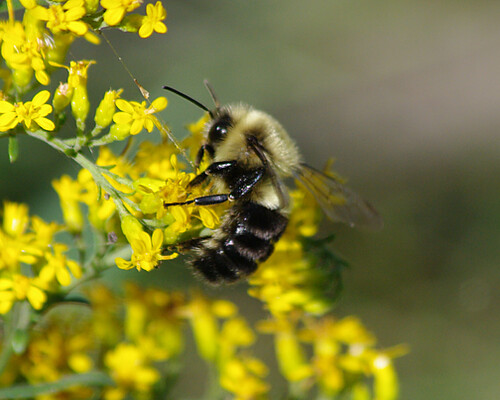
Yesterday morning, almost every waving frond on the hill wore a sleepy slow moving bee which had gone dormant in the cool of the previous evening and was just waking up in the clear cool sunlight. How grand this season is and how truly liminal in its shapes and tints...

September 12, 2010

September 9, 2010

Thursday Poem - Directions

The best time is late afternoon
when the sun strobes through
the columns of trees as you are hiking up,
and when you find an agreeable rock
to sit on, you will be able to see
the light pouring down into the woods
and breaking into the shapes and tones
of things and you will hear nothing
but a sprig of birdsong or the leafy
falling of a cone or nut through the trees,
and if this is your day you might even
spot a hare or feel the wing-beats of geese
driving overhead toward some destination.

But it is hard to speak of these things
how the voices of light enter the body
and begin to recite their stories
how the earth holds us painfully against
its breast made of humus and brambles
how we who will soon be gone regard
the entities that continue to return
greener than ever, spring water flowing
through a meadow and the shadows of clouds
passing over the hills and the ground
where we stand in the tremble of thought
taking the vast outside into ourselves.

Billy Collins
(from
Directions in The Art of Drowning)

September 7, 2010

By the Paddock

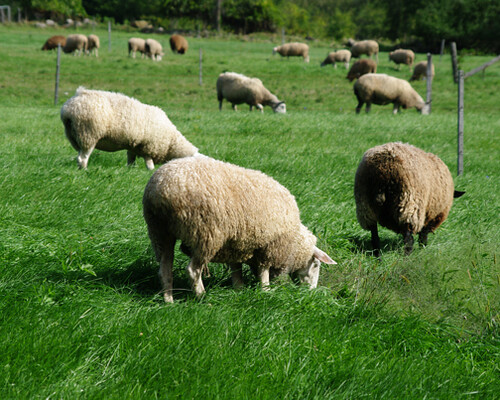
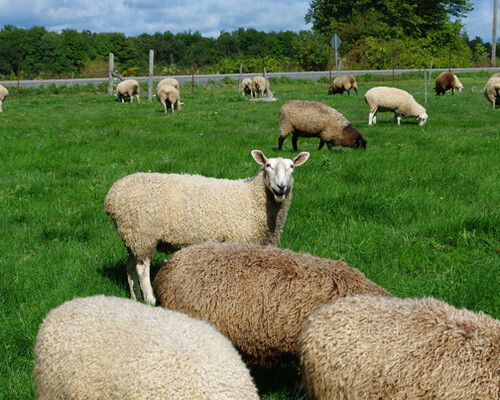
A cool sunny September morning, blue sky and fluffy clouds from here to there, green fields unfurling into the distance like bolts of rich green cloth, the sturdy companionship of a placid flock of Border Leicesters in the Lanark Highlands...

Time spent hanging out by the paddock fence is time well spent, and no matter how I feel when I first arrive, I invariably leave in a peaceable frame of mind. One particular golden eyed ewe is always happy to see me when I turn up at the fence, and her undisguised pleasure shows in her delighted expression.

Johann Sebastian Bach's lovely Was mir behagt, ist nur die muntre Jagd (The cheerful hunt is all my heart's desire) has a way of ambling through my thoughts at such times. BMW 208, usually called simply Jagdkantate (the Hunt Contata), was composed for the birthday of a Austrian Duke, and the fifth aria, Schafe können sicher weiden (Sheep may safely graze), is gorgeous stuff indeed. Some six hundred moons ago, I loved playing the aria on both piano and organ and later managed decent renditions on both cello and alto recorder. Bach's creation, my memories of playing it and the present company of the sheep continue to gladden and pacify, to dish out in abundance what the British poet Chaucer called "sentence and solace".

September 6, 2010

Darner in the Wind

Green Darner Female
(Anax junius)

September 5, 2010

In the Blue Bowl of Morning

You awaken to skies that would make Maxfield Parrish want to dance, the sound of geese in singing flight back to the corn and barley fields to feed, this year's progeny singing loudest of all up there in the blue bowl of morning. Their pleasure awakens your own as you stand watching and listening in the garden with your mug of tea, eyes shielded against the bright rising sun with a sleepy hand.
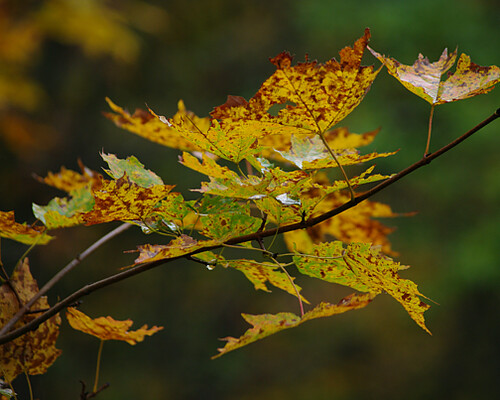
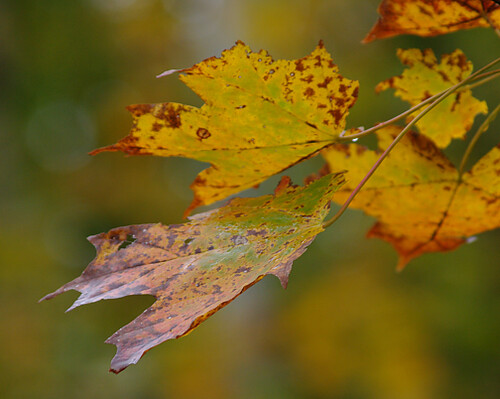
Setting off on an early walk with Spencer, you pause together by your neighbor's fish pond to watch the white and scarlet koi finning their way around in circles, and you notice that the first fallen maple leaves of the season have already drifted into the pool, making eddies and swirls and perfect round spirals there.

Blue and gold and scarlet lodge in your wandering thoughts, and on the way home, you consider hauling out your potter's wheel, throwing bowls and glazing them in just those perfect autumn colors. Emaho!