June 30, 2010
June 29, 2010
Rainy Day
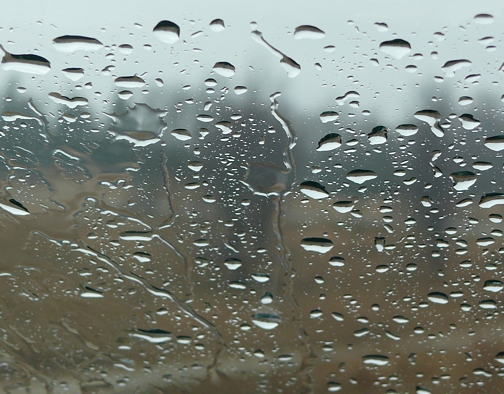
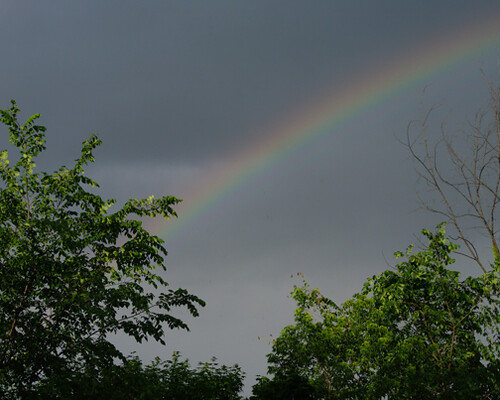
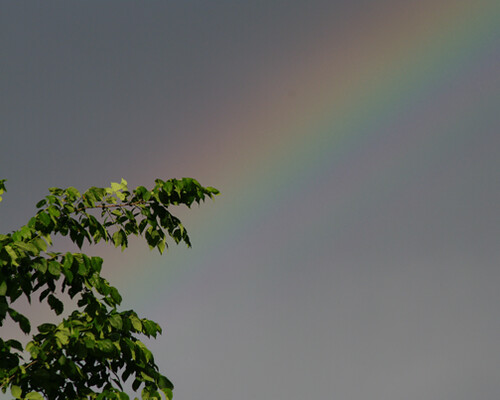
Rain on the window forms draperies of its own; the garden and old trees are barely visible beyond the glass and precipitation and mist.
This is a good day for reorganizing art and stationery cupboards and reordering the multitudinous folders on this computer system, for drinking pots and pots of tea, reading, sketching and rocking gently along in time with the Scarlatti sonatas (Pletnev's recording), Hildegarde of Bingen and the Mediaeval Baebes too. Tucked somewhere in the midst of such lovely pursuits are a batch of molasses cookies, scones and at least one loaf of gluten free bread.
A day like this is no' a bad thing.
This is a good day for reorganizing art and stationery cupboards and reordering the multitudinous folders on this computer system, for drinking pots and pots of tea, reading, sketching and rocking gently along in time with the Scarlatti sonatas (Pletnev's recording), Hildegarde of Bingen and the Mediaeval Baebes too. Tucked somewhere in the midst of such lovely pursuits are a batch of molasses cookies, scones and at least one loaf of gluten free bread.
A day like this is no' a bad thing.
June 28, 2010
Surprise, surprise...
Indigo Bunting
(Passerina cyanea)
Surprise, surprise.... While looking around the eastern hill on Friday morning, there was a flash of iridescent blue in the prickly ash thicket, and a single brilliant male Indigo bunting flew up into a nearby tree. The behaviours of this handsome fellow and his dainty brown lady love were agitated, and they were clearly nesting behaviours - I shot a mere three frames then retreated to the other side of the hill to let them get on with their nest construction.
The second surprise of the week was not so fortunate. I succumbed to a weak spell on Saturday afternoon and fell backward into the old oak desk here in the study, concussing myself royally and bruising my lower back. There was an audible "crack" as my elderly sconce connected with the solid wooden desk surface and then the floor - I don't remember anything of the few minutes before and after. A doozy of a headache lingers, I list slightly to port, and my doctor says there is to be no outdoor rambling for this old hen for a few days. Barges of patience will be required...
June 27, 2010
The Rose Moon of June
We also know this moon as the Midsummer Moon, for it occurs near the Summer Solstice, when the Sun reaches its zenith and seems to stand still for a short time before beginning its slow inexorable tumble toward shorter days and longer nights, toward autumn and winter. The word solstice means "sun standing still" or stopping, and the Sun does indeed seem to stand still on the two solstices of the calendar year, but it is we earthlings and our dear little blue planet who are in constant motion, not the Sun dancing serenely in place at the center of our universe.
In the northern hemisphere, it is high summer, and we tend to think of the burning intensity and power of old Helios ascendant, not the gentler silver aura of Lady Moon lighting up the summer night against a tapestry of twinkling stars.
When June's full moon makes her appearance, we are tending our shaggy fruiting gardens and thinking ahead to timeless rhythms of harvesting, gathering in and putting bounty by for the long nights of winter. In the Lanark Highlands, the first harvest of the year is already in progress, and the fields are dappled with great round bales of fragrant hay: timothy (or blue grass), alfalfa and sweet clover. Is there anything on this planet to compare with the delightful and rather spicy fragrance of freshly cut clover?
The corn is growing by leaps and bounds, and fields of barley are "pinking up" nicely. At sunset there are deer and fawns grazing along the shadowed verges of our freshly mowed fields, wild turkeys foraging in the high oak groves and expressing their pleasure at the dainties on offer. Our cups and our baskets runneth over with light and abundance and contentment in June. We know autumn and winter are coming, and we accept their coming, but our thoughts are lodged in warmth and golden sunlight.
We also know this moon as the:
Bass Moon, Big Mouth Moon, Big Summer Moon, Blackberry Moon, Bulbs Mature Moon, Columbine Moon, Corn Tassels Appear Moon, Dancing Moon, Duckling Moon, Dyan Moon, Egg Hatching Moon, Egg Laying Moon, Egg Moon, Eucalyptus Moon, Fatness Moon, Fish Spoils Easily Moon, Fishing Moon, Flowering Cherry Moon, Full Leaf Moon, Gardening Moon, Green Corn Moon, Hoeing Moon, Honey Moon, Hot Moon, Lady Slipper Moon, Leaf Dark Moon, Litha Moon, Lotus Moon, Lovers' Moon, Mead Moon, Middle of Summer Moon, Midsummer Brightness Moon, Midsummer Moon, Moon of Horses, Moon of Little Fawns, Moon of Making Fat, Moon of Planting, Moon of the Turtle, Moon When Green Grass Is Up, Moon When June Berries Are Ripe, Moon When the Buffalo Bulls Hunt the Cows, Moon When the Hot Weather Begins, Moon When the Leaves Are Dark Green, Moon When the Leaves Come out, Moon When They Hill Indian Corn, Oak Moon, Peony Moon, Planting Moon, Pomegranate Moon, Raspberry Moon, Ripening Moon, Ripening Time Moon, Seventh Moon, Sockeye Moon, Solstice Moon, Strawberry Moon, Strong Sun Moon, Summer Moon, Sun High Moon, Thumb Moon, Turning Moon, Watermelon Moon, Windy Moon
In the northern hemisphere, it is high summer, and we tend to think of the burning intensity and power of old Helios ascendant, not the gentler silver aura of Lady Moon lighting up the summer night against a tapestry of twinkling stars.
When June's full moon makes her appearance, we are tending our shaggy fruiting gardens and thinking ahead to timeless rhythms of harvesting, gathering in and putting bounty by for the long nights of winter. In the Lanark Highlands, the first harvest of the year is already in progress, and the fields are dappled with great round bales of fragrant hay: timothy (or blue grass), alfalfa and sweet clover. Is there anything on this planet to compare with the delightful and rather spicy fragrance of freshly cut clover?
The corn is growing by leaps and bounds, and fields of barley are "pinking up" nicely. At sunset there are deer and fawns grazing along the shadowed verges of our freshly mowed fields, wild turkeys foraging in the high oak groves and expressing their pleasure at the dainties on offer. Our cups and our baskets runneth over with light and abundance and contentment in June. We know autumn and winter are coming, and we accept their coming, but our thoughts are lodged in warmth and golden sunlight.
We also know this moon as the:
Bass Moon, Big Mouth Moon, Big Summer Moon, Blackberry Moon, Bulbs Mature Moon, Columbine Moon, Corn Tassels Appear Moon, Dancing Moon, Duckling Moon, Dyan Moon, Egg Hatching Moon, Egg Laying Moon, Egg Moon, Eucalyptus Moon, Fatness Moon, Fish Spoils Easily Moon, Fishing Moon, Flowering Cherry Moon, Full Leaf Moon, Gardening Moon, Green Corn Moon, Hoeing Moon, Honey Moon, Hot Moon, Lady Slipper Moon, Leaf Dark Moon, Litha Moon, Lotus Moon, Lovers' Moon, Mead Moon, Middle of Summer Moon, Midsummer Brightness Moon, Midsummer Moon, Moon of Horses, Moon of Little Fawns, Moon of Making Fat, Moon of Planting, Moon of the Turtle, Moon When Green Grass Is Up, Moon When June Berries Are Ripe, Moon When the Buffalo Bulls Hunt the Cows, Moon When the Hot Weather Begins, Moon When the Leaves Are Dark Green, Moon When the Leaves Come out, Moon When They Hill Indian Corn, Oak Moon, Peony Moon, Planting Moon, Pomegranate Moon, Raspberry Moon, Ripening Moon, Ripening Time Moon, Seventh Moon, Sockeye Moon, Solstice Moon, Strawberry Moon, Strong Sun Moon, Summer Moon, Sun High Moon, Thumb Moon, Turning Moon, Watermelon Moon, Windy Moon
3
singing pebbles
resting easy in
earth,
harvest,
In the Great Round,
Lady Moon
links to this ramble
June 24, 2010
Thursday Poem - Questions Before Dark
Day ends, and before sleep
when the sky dies down, consider
your altered state: has this day
changed you? Are the corners
sharper or rounded off? Did you
live with death? Make decisions
that quieted? Find one clear word
that fit? At the sun's midpoint
did you notice a pitch of absence,
bewilderment that invites
the possible? What did you learn
from things you dropped and picked up
and dropped again? Did you set a straw
parallel to the river, let the flow
carry you downstream?
when the sky dies down, consider
your altered state: has this day
changed you? Are the corners
sharper or rounded off? Did you
live with death? Make decisions
that quieted? Find one clear word
that fit? At the sun's midpoint
did you notice a pitch of absence,
bewilderment that invites
the possible? What did you learn
from things you dropped and picked up
and dropped again? Did you set a straw
parallel to the river, let the flow
carry you downstream?
Jeanne Lohmann
June 23, 2010
June 22, 2010
Viceroy (Vicereine)
Viceroy Butterfly
(Limenitis archippus)
On a fine morning in June's middling pages, a flash of bright orange fluttered through the western field. We grabbed the camera, mounting a telephoto lens as we scurried down the hill and lurched into the tall grass, hoping beyond hope that the vibrant shape dancing among the milkweeds was a Monarch. Monarch butterflies have been few and far between here for the last two years or so, and we are always looking for them.
Our visitor turned out to be a rather tattered but sprightly Viceroy, no less bright or elegant for all that, and a welcome visitor. A Müllerian mimic, the Viceroy looks much like the larger Monarch (Danaus plexippus), but it displays a postmedian black line running across the hindwing. The unsightly (in conventional terms anyway) caterpillars look rather like small heaps of bird droppings. Feeding on trees in the willow family such as willows, poplars and cottonwoods, they store the salicylic acid in their body tissues, and this makes them a bitter morsel to swallow - like the Monarch, they upset a predator's digestive system.
The word viceroy is a combination of the Latin prefix vice, meaning "in the place of" and the French word roi, meaning king. To be a viceroy or vicereine, is to be merely the representative of a reigning monarch - there is a fair of amount of pomp and circumstance associated with such status, but the plushy robes and spotlight are borrowed and not one's own. My lady may have resembled the larger (and much longed for) Monarch butterfly, but she was royalty in her own right, and she was standing in her own glorious summer light.
June 20, 2010
June 19, 2010
Of Herons and Summer Waters
The Great Blue Heron (Ardea herodias)
Dalhousie Lake, June 2010
She is standing among the rocks near the Geddes bridge, where our own Mississippi river enters Dalhousie Lake after its tumultuous journey down the gorge from the High Falls power station. The water is too deep here for heron fishing, but there are shallow pools of water between the boulders, here and there a choice morsel of minnow, a frog or a fingerling moving about in lazy circles. The rocks give flickering shelter from the intense sunlight; the river's headlong journey under the bridge and out into the lake is almost trance inducing in its hypnotic rhythm.
Bedrich Smetana's symphonic Moldau (Vitava) comes to mind - the Czech composer gave his river a theme of its very own, a rippling leitmotif which emerges again and again from other elements of the score: the river's beginnings, its passage through forest and farmland, its triumphant sweep through Prague, and its joyful song of homecoming as it joins the Elbe. There are scenes of life along the riverside and snippets of Czech folklore: hunting horns in the forest and village wedding celebrations, visions of moonlight dancing on the river, a nocturnal dance of Rusalkas, the haunting water-nymphs of Slavic folklore who enticed mortals to their watery doom. OK, mine is a just little river, but oh, how she sings in summer....
I have been wondering if this summer of 2010 might not turn out to be "the summer of the heron". Herons and bitterns have been turning up in all sorts of places this year: in flight above the Clyde and Mississippi rivers, on our favorite lake in the highlands (above), on a friend's artfully reed fringed pond, standing majestically in a favorite fen at twilight - the great birds are often in my dreams too.
If there is a deity of these northern wetlands, it is heron with her golden eyes, her focus as fierce and intent as any lens, however powerful. Watching, it seems to me that in heron's gimlet gaze is a bone deep knowing of this rich, ecologically diverse and fundamentally wild commonwealth I call home. Long after my molecules have dispersed back into the cosmic sea, I shall probably be here in spirit. In some as yet unknown measure, I shall be here and rambling about (or flying) in this place, for I could be nowhere else.
Had I but a fragment of heron's patience and focus and dignity, I would be a happy camper indeed. Lacking those qualities, I am merely her ardent devotee.
June 18, 2010
Friday Ramble - Aestival
The word comes to us from French, thence the Late Latin aestīvālis, both originating in the earlier Latin form aestās meaning summer or summery.
In the science of zoology, the word aestival refers to the tendency of living creatures to be somewhat sleepy and slow moving in the heat of summer; botanists use the word to describe the arrangement of organs or components in a flower bud. I once thought that the word siesta (referring to a nap after lunch) was related, but I discovered some time ago that siesta comes from the Latin sexta meaning the sixth hour of the day (midday). The sounds are similar, but the words are not related as far as I know.
Aestival is one of my favorite words for the greening season. I am fond of the word summer, but it does not hold a candle or even a tiny match to the frothy magnificence of the golden season which reigns so briefly here in the sub-Arctic climes of Canada. I say "aestival" and its sibilance summons up images of festivals and celebrations, of gardens bursting with song and trees full of singing birds, of roses sweeter than any vineyard potion and perfect sunsets across the lake, shared with herons. It's all gold, and it's all good...
In the science of zoology, the word aestival refers to the tendency of living creatures to be somewhat sleepy and slow moving in the heat of summer; botanists use the word to describe the arrangement of organs or components in a flower bud. I once thought that the word siesta (referring to a nap after lunch) was related, but I discovered some time ago that siesta comes from the Latin sexta meaning the sixth hour of the day (midday). The sounds are similar, but the words are not related as far as I know.
Aestival is one of my favorite words for the greening season. I am fond of the word summer, but it does not hold a candle or even a tiny match to the frothy magnificence of the golden season which reigns so briefly here in the sub-Arctic climes of Canada. I say "aestival" and its sibilance summons up images of festivals and celebrations, of gardens bursting with song and trees full of singing birds, of roses sweeter than any vineyard potion and perfect sunsets across the lake, shared with herons. It's all gold, and it's all good...
June 17, 2010
Thursday Poem - This
This is what was bequeathed us:
This earth the beloved left
And, leaving,
Left to us.
No other world
But this one:
Willows and the river
And the factory
With its black smokestacks.
No other shore, only this bank
On which the living gather.
No meaning but what we find here.
No purpose but what we make.
That, and the beloved's clear instructions:
Turn me into song; sing me awake.
Gregory Orr
This earth the beloved left
And, leaving,
Left to us.
No other world
But this one:
Willows and the river
And the factory
With its black smokestacks.
No other shore, only this bank
On which the living gather.
No meaning but what we find here.
No purpose but what we make.
That, and the beloved's clear instructions:
Turn me into song; sing me awake.
Gregory Orr
June 16, 2010
June 15, 2010
First Faery Rose
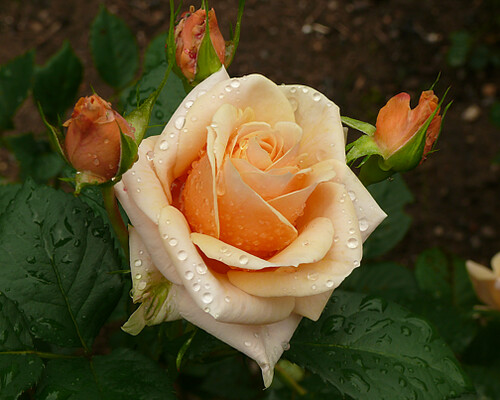
I captured this frame a few minutes after yesterday's refreshing afternoon rain, a once miniature Kordana rose in the garden which has taken off in all directions since being planted outdoors and tended with loving attention.Rose can no longer be called a miniature because of her newfound robust stature, but for all that, she is still a faery rose, a fey and magical creature of great beauty, particularly when blooming. Her exuberance and her delight in garden life know no bounds, and this year, she is just covered with buds.
When the rose came to me in the heart of winter, she was a mere sprite, a potted creature with tiny leaves and bearing blooms hardly bigger than my thumb. Residing In the garden behind the little blue house in the village now, she spreads her arms toward the sky. She flowers all season with utter abandon, offering bloom after bud of intoxicating hue and texture.
June 14, 2010
Water Blooming
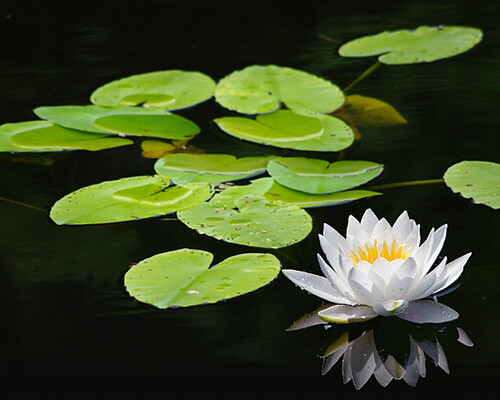
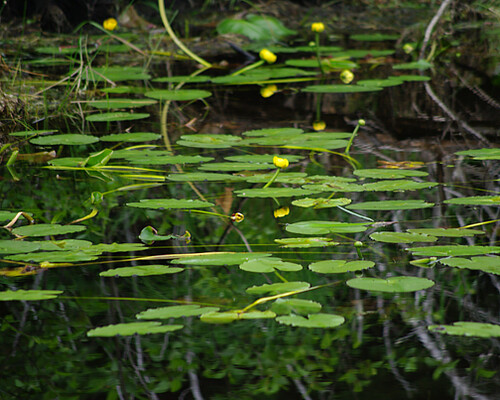
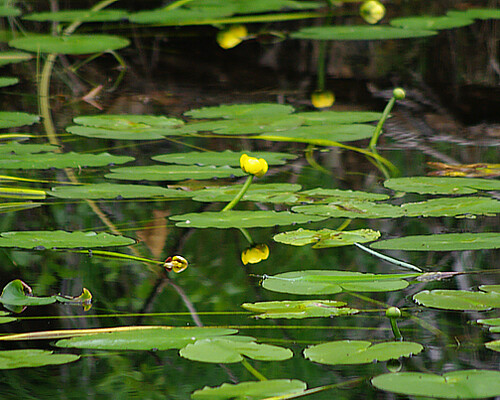
I am always looking for the perfect water lily and water lily leaves in this wild pond in the Lanark Highlands, looking also for little green snakes and frogs reclining on the leaves in the sunshine, for rainbow winged dragonflies floating on the smooth dark reflecting waters.
Sometimes, a beaver swims by, or a muskrat perches on the far shoreline and peers at the blundering human on the verges of her home. Once, a visiting otter climbed on a nearby rock and regarded me with curiosity for several minutes before dismounting and swimming off toward a nearby connecting river - it yawned occasionally showing the bright red interior of its mouth and a wickedly sharp set of teeth. There is always something going on here.
Water lilies (of course) are home to many varieties of pond insect life as are their leaves, and the tiny residents make their way into every image taken. The odd perfect silvery and unattended leaf floating on the pond notwithstanding, every festooned and nibbled leaf is perfect just as it is. Little green snakes, frogs and dragonflies are wonderful, but bees, beetles, thrips and leafcutter insects are free adornments too - they are icing on the wild cake.
I need a new set of chest high rubber waders to get a little closer to them all.
Sometimes, a beaver swims by, or a muskrat perches on the far shoreline and peers at the blundering human on the verges of her home. Once, a visiting otter climbed on a nearby rock and regarded me with curiosity for several minutes before dismounting and swimming off toward a nearby connecting river - it yawned occasionally showing the bright red interior of its mouth and a wickedly sharp set of teeth. There is always something going on here.
Water lilies (of course) are home to many varieties of pond insect life as are their leaves, and the tiny residents make their way into every image taken. The odd perfect silvery and unattended leaf floating on the pond notwithstanding, every festooned and nibbled leaf is perfect just as it is. Little green snakes, frogs and dragonflies are wonderful, but bees, beetles, thrips and leafcutter insects are free adornments too - they are icing on the wild cake.
I need a new set of chest high rubber waders to get a little closer to them all.
June 13, 2010
All Grown Up...
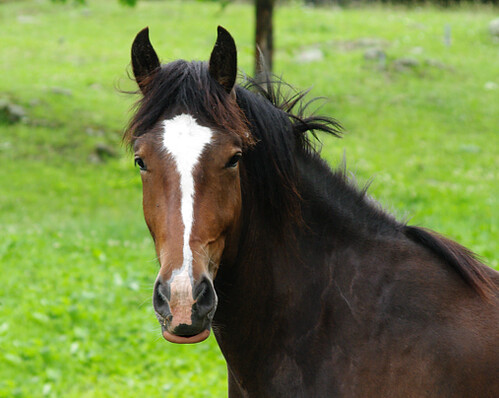
Bonhomme (Beau) is a few months short of three years old now, and he grew into a handsome lad of innate nobility, about seventeen hands tall. The intelligence and gentle nature he displayed as a colt remain today and so does his curiosity about everything that happens beyond the paddock gate.
His eyes are bright, he is an excellent listener, and he still has the softest and most expressive nose on the planet - spending time with him is always therapeutic. I could spend hours draped over the fence patting that velvet nose, and there are days when I do just that.
June 12, 2010
June 11, 2010
Friday Ramble - Atomy
Atomy comes to us from the Middle English attome, the Latin atomus and the Greek atomos: a- (not) plus -tomos (cutting), thence the from the Indo-European temnein meaning to cut. Kindred words (of course) are atom, atomism and atomic, and (not so obviously), tome which now refers to a volume of reading material but which once meant a section or piece cut off from something. Synonyms for atomy include corpuscle, mote, particle, speck, molecule and grain as in "a grain of sand" or "a grain of sugar"
An atomy is a tiny part of something, a minute particle. In physics, the atomy or atom was once held to be the smallest possible unit of the known universe, a dense, central, positively charged nucleus surrounded by electrons whirling in ecstatic orbit. Complete within itself, it was deemed irreducible and indivisible except for constrained processes of removal or transfer or the exchange of component electrons. We now know that the even smaller quark is the fundamental element of creation - the quarks of which atomies and atoms are composed come in six eccentric flavors, up, down, charm, strange, bottom and top.
I think of atomies on mornings like this one when I awaken to gray skies and rain on the roof beating a staccato time without reference to meter or metronome, to a puckish wind capering in the eaves and ruffling green leaves in the garden like tangy decks of playing cards, to fog wrapping the old trees and village rooflines.
Pools of rainwater on the hosta leaves, rain on the roses, drops of dew suspended in the hedgerow - each is an atomy, a minute world teeming with vibrant life, a whole magical universe looking up and smiling at this ungainly creature bent over in wonder with camera in hand.
An atomy is a tiny part of something, a minute particle. In physics, the atomy or atom was once held to be the smallest possible unit of the known universe, a dense, central, positively charged nucleus surrounded by electrons whirling in ecstatic orbit. Complete within itself, it was deemed irreducible and indivisible except for constrained processes of removal or transfer or the exchange of component electrons. We now know that the even smaller quark is the fundamental element of creation - the quarks of which atomies and atoms are composed come in six eccentric flavors, up, down, charm, strange, bottom and top.
I think of atomies on mornings like this one when I awaken to gray skies and rain on the roof beating a staccato time without reference to meter or metronome, to a puckish wind capering in the eaves and ruffling green leaves in the garden like tangy decks of playing cards, to fog wrapping the old trees and village rooflines.
Pools of rainwater on the hosta leaves, rain on the roses, drops of dew suspended in the hedgerow - each is an atomy, a minute world teeming with vibrant life, a whole magical universe looking up and smiling at this ungainly creature bent over in wonder with camera in hand.
June 10, 2010
Thursday Poem - Mule Heart
On the days when the rest
have failed you,
let this much be yours --
flies, dust, an unnameable odor,
the two waiting baskets:
one for the lemons and passion,
the other for all you have lost.
Both empty,
it will come to your shoulder,
breathe slowly against your bare arm.
If you offer it hay, it will eat.
Offered nothing,
it will stand as long as you ask.
The little bells of the bridle will hang
beside you quietly,
in the heat and the tree's thin shade.
Do not let its sparse mane deceive you,
or the way the left ear swivels into dream.
This too is a gift of the gods,
calm and complete.
Jane Hirschfield, from The Lives of the Heart
have failed you,
let this much be yours --
flies, dust, an unnameable odor,
the two waiting baskets:
one for the lemons and passion,
the other for all you have lost.
Both empty,
it will come to your shoulder,
breathe slowly against your bare arm.
If you offer it hay, it will eat.
Offered nothing,
it will stand as long as you ask.
The little bells of the bridle will hang
beside you quietly,
in the heat and the tree's thin shade.
Do not let its sparse mane deceive you,
or the way the left ear swivels into dream.
This too is a gift of the gods,
calm and complete.
Jane Hirschfield, from The Lives of the Heart
June 9, 2010
June 8, 2010
By the River
A favorite sitting place, and a wondrous moment in a shining season, although I am passionate about every season in the highlands.
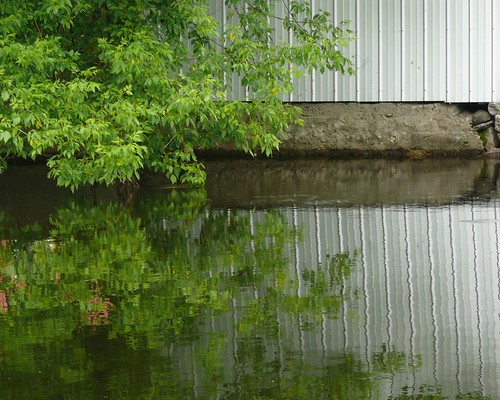
The Clyde river is a jewel in summer stillness, a shining strand in Indra's web. A light wind stirs the trees and makes shimmering ripples on the water, making the reflected image of the old granary sway and dance. At twilight, ducks panhandle for bread on the beach, and herons wade in the shallows nearby. A lone beaver goes swimming up and down, giving some thought to trying another dam on the river.
The crone sits by the water and snaps a few photos of a place she loves, her thoughts as slow and honeyed as the winding summer river. She thinks that as often as she comes to this place and sits for a while, watching the play of light across the water and trying to capture the moment in her camera, the loveliest part of the equation is what the river says, "Just be in this moment, nothing else is needed at all.."
As she turns to go, she thinks that in some measure she will be here by the river forever.
The Clyde river is a jewel in summer stillness, a shining strand in Indra's web. A light wind stirs the trees and makes shimmering ripples on the water, making the reflected image of the old granary sway and dance. At twilight, ducks panhandle for bread on the beach, and herons wade in the shallows nearby. A lone beaver goes swimming up and down, giving some thought to trying another dam on the river.
The crone sits by the water and snaps a few photos of a place she loves, her thoughts as slow and honeyed as the winding summer river. She thinks that as often as she comes to this place and sits for a while, watching the play of light across the water and trying to capture the moment in her camera, the loveliest part of the equation is what the river says, "Just be in this moment, nothing else is needed at all.."
As she turns to go, she thinks that in some measure she will be here by the river forever.
June 7, 2010
Monet in the North Woods
Not looking for clarity or definition or perfect ambient light, but something softer, more nebulous and serene...
I craved this Monet moment in the north woods: the flowing shapes, untroubled waters and gentle reflections of an early June evening—I craved stillness and a quiet interval spent sitting by the beaver pond.
There were no little green frogs or snakes resting on the lily pads this past weekend, but there was a chorus of horn throated bullfrogs somewhere in the tall reeds, and they were engaged in a resonant (and at times spirited) descant, sounding for all the world like a choir of chanting Tibetan monks.
I craved this Monet moment in the north woods: the flowing shapes, untroubled waters and gentle reflections of an early June evening—I craved stillness and a quiet interval spent sitting by the beaver pond.
There were no little green frogs or snakes resting on the lily pads this past weekend, but there was a chorus of horn throated bullfrogs somewhere in the tall reeds, and they were engaged in a resonant (and at times spirited) descant, sounding for all the world like a choir of chanting Tibetan monks.
June 6, 2010
Not in My Name
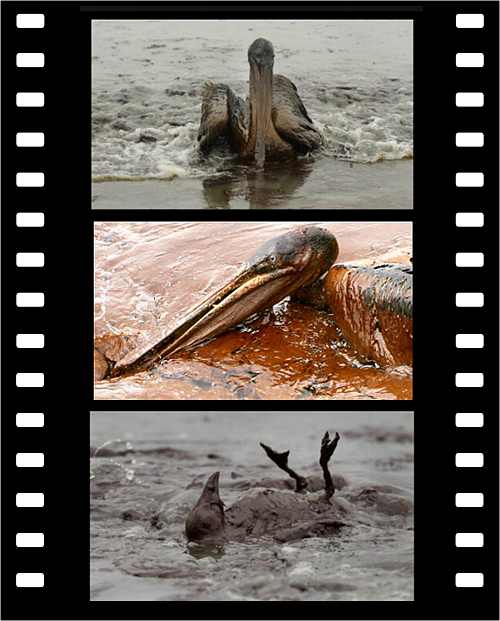
What can I say, and where do we go from here anyway? This is beyond heartbreaking and horrifying, and I am furious.
Gaia grievously wounded and reeling from the blows which have been dealt her, so much destruction, so many lives and livelihoods lost for greed and profit. BP's words not withstanding, the Gulf situation cannot just be fixed, and we cannot believe a word that comes out of the collective mouths of the oil company.
June 5, 2010
Heron on the Lake
Great Blue Heron
(Ardea herodias)
(Ardea herodias)
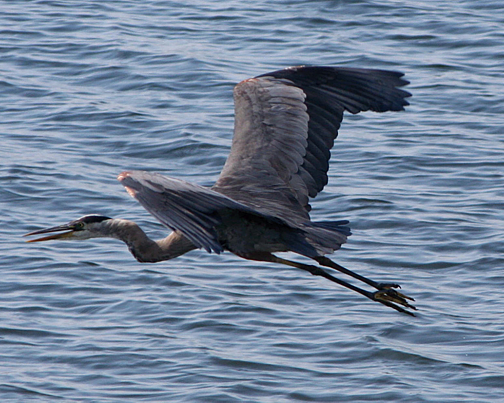
This is another one of those years when I stand on the shore of the lake and snap image after fuzzy image of herons. Day after day, I haunt shorelines and shallows and ponds and estuaries with camera in hand. I am seldom (if ever) even slightly satisfied with the images of them I upload here, but my love of the great blue birds goes on and on.
Standing by the water a day or two ago, I remembered a dear departed friend and sister who loved these magnificent wild birds as much as I do. I shared every single photo with her, fuzzy or not, and she loved them all. I know that Aloha still loves herons - this week I could feel her smiling on the beach beside me.
Sometimes, I feel like the elderly Buddhist monk who was asked to describe his life (or journey) and exclaimed, "Just one mistake after another...." Then he laughed.
June 3, 2010
Thursday Poem - Generation
Our stories lie down in the orchard,
their time is not now, but something is
coming, something is going away. They
rise to the stars, and wait to be told.
There are listeners who know how little
we know, how much we are feeling.
We had to go our own way, a little off course,
always, no matter how specific the directions
seemed at the time. In this universe if we’re lucky,
we will live in our children’s stories,
their tales that will turn us to legend,
some absurd truth that has nothing to do
with our plans, our meticulous records.
No matter what stories we discard or keep,
they will give us a life we cannot imagine.
Jeanne Lohmann
June 2, 2010
June 1, 2010
Helping Mama Home
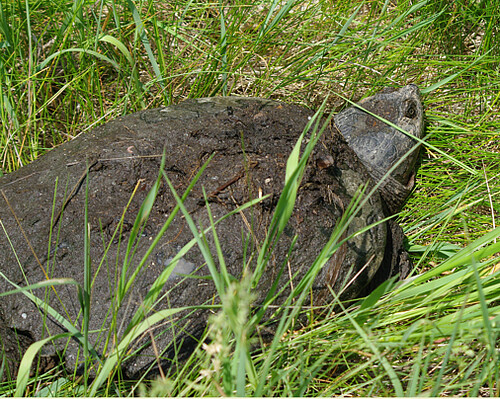
This snapper mother was, I think, the last one we will be helping across the road this season, and in many ways, she is the one I am most proud of assisting this year.
The turtle had already finished laying her eggs when we encountered her on the road Sunday afternoon near the eastern edge of the Two Hundred Acre Wood. She was trying to return home, but was too exhausted to make it across the road, had simply collapsed on the median and was lying there, trying to find the strength to continue her crossing as traffic whizzed by her in both directions. She was alert but quiet, and one could see in her old eyes that she was resigned to what was going to be a gruesome ending to her life. We pulled over immediately, knowing that something had to be done quickly, or our snapper was going to be run over by a speeding vehicle.
As we climbed out of the car with our stout turtle stick, a truck traveling in the other direction stopped by the side of the road, and the driver hopped out carrying a fluorescent orange vest - he volunteered to help us move the weary turtle to safety. While our new friend directed traffic going in both directions, we prodded mama gently onto a towel and towed her over to the grassy verges by the beaver pond. She was too tired to react in any way at all, and she complied with nary a hiss or a snap, simply relaxing in the long grass when the move was over and breathing deeply.
I am probably "reaching for it" when I say that mama seemed thankful for our assistance, but I was glad we had been there when she needed us. Our snapper is a neighbor of sorts, and I really do love these magnificent reptiles.
OK, I am a little weird, but you already knew that...
The turtle had already finished laying her eggs when we encountered her on the road Sunday afternoon near the eastern edge of the Two Hundred Acre Wood. She was trying to return home, but was too exhausted to make it across the road, had simply collapsed on the median and was lying there, trying to find the strength to continue her crossing as traffic whizzed by her in both directions. She was alert but quiet, and one could see in her old eyes that she was resigned to what was going to be a gruesome ending to her life. We pulled over immediately, knowing that something had to be done quickly, or our snapper was going to be run over by a speeding vehicle.
As we climbed out of the car with our stout turtle stick, a truck traveling in the other direction stopped by the side of the road, and the driver hopped out carrying a fluorescent orange vest - he volunteered to help us move the weary turtle to safety. While our new friend directed traffic going in both directions, we prodded mama gently onto a towel and towed her over to the grassy verges by the beaver pond. She was too tired to react in any way at all, and she complied with nary a hiss or a snap, simply relaxing in the long grass when the move was over and breathing deeply.
I am probably "reaching for it" when I say that mama seemed thankful for our assistance, but I was glad we had been there when she needed us. Our snapper is a neighbor of sorts, and I really do love these magnificent reptiles.
OK, I am a little weird, but you already knew that...
Subscribe to:
Posts (Atom)