May 31, 2010

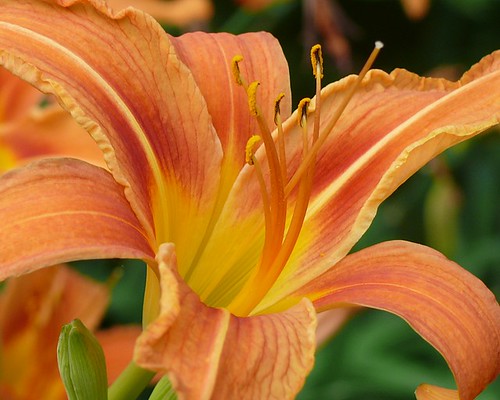
Lily of the Day

Tawny Daylily
(Hemerocallis fulva)

May 30, 2010

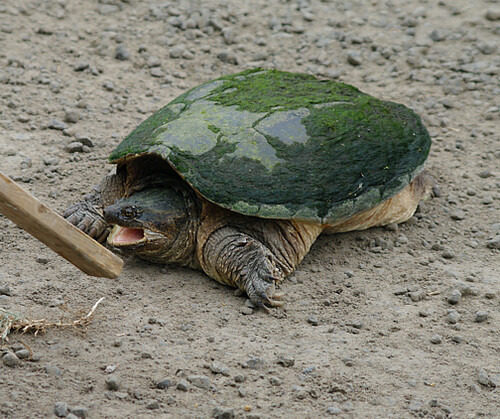
Mother

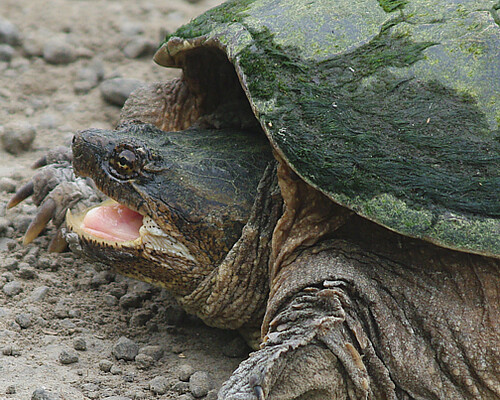
Common Snapping Turtle
(Chelydra serpentina serpentina)

These are not particularly good photos because the day was overcast, and "mama" was in constant bellicose motion, hissing and snapping at us.

We were out for a drive near Rosetta when the first of the season's snapper mamas came into view yesterday - she was right in the center of the gravel road and taking her own sweet time crossing to the other side to lay eggs in the warm gravel.

There is always a big turtle stick in the back of the VW at this time of year, and we stopped to nudge the combative female across the road and into the ditch on the other side. She was not happy, and she let us know it, biting several chunks out of our stick on her unwilling way to the safety of the verges.

I have great affection for these modern day survivors of the dinosaur age. Snappers, as we know them today, evolved forty million years ago and have been around a lot longer than that - they were the ancestors of most of the other turtle species now residing on the planet. The snapper's own ancestor, the late Triassic Proganochelys, rambled the earth some 215 million years ago, predating dinosaurs by at least 100 million years.

Snappers are a tough tribe indeed - they were one of the few reptile species to survive the Cretaceous–Tertiary extinction event (once known scientifically as the K-T boundary) and the nuclear winter or ice age which followed it sixty or seventy million years ago. [Use of the term "tertiary" to describe units of time or geology is now in disfavor in the scientific community, and the K–T extinction event is often referred to as the Cretaceous–Paleogene (or K–Pg) event.] By contrast, we humans have been blundering around here on earth and mucking things up royally for a scant three or four million years.

With their horned beaks, ridged carapaces, huge talons and spiked tails, snappers do resemble the ancient dinosaurs, and I have always loved their style, their solid stance, lumbering gait and Amazon attitude. Vast numbers of snapper mamas are killed on country roads every year at this time, and it seems a small thing to stop and move them to safety.

May 28, 2010

The Flower Moon of May

Out of the velvet night and over the trees and lake she rises, and her rising is an expression of warmth and the greening season and new life awakening.

When April's full and radiant orb made her appearance, I was unable for health reasons to do my usual thing - to stand as the moon's ardent acolyte, out in the garden with camera, tripod and the most powerful telephoto lens I own.  It was good to be out there again this month in the enfolding light of the lady who reigns over the dark hours, our sleepings and dreamings.  We also know this perfect pearly moon as the:

Alewife Moon, Anagantios Moon, Blossom Moon, Bottlebrush Moon, Bright Moon, Budding Moon, Corn Planting Moon, Death Moon, Dragon Moon, Dyad Moon, Fawns Moon , Field Maker Moon, Fifth Moon, Fish Moon, Flower Moon, Flowering Moon, Fright Moon, Frog Moon, Frogs Return Moon, Geese Go North Moon, Geese Moon, Grass Moon, Green Leaf Moon, Hare Moon, Hoeing Corn Moon, Idle Moon, Iris Moon, Joy Moon, Leaf Dancing Moon, Leaves Appear Moon, Leaves Tender Moon, Lily of the Valley Moon, Little Corn Moon, Little Finger Moon, Magnolia Moon, Merry Moon, Milk Moon, Moon of Big Leaf, Moon of the Strawberry, Moon of the Camas Harvest, Moon of Waiting, Moon To Plant, Moon When Corn is Planted, Moon When Ponies Shed Their Fur, Moon When the Buffalo Plant is in Flower, Moon When the Leaves Are Green, Moon When the Little Flowers Die, Moon When the Horses Get Fat, Moon When Women Weed Corn, Mulberry Moon, Mulberry Ripening Moon, New Waters Moon, Old Woman Moon, Panther Moon, Penawen Moon, Peony Moon, Planting Moon, Putting Seeds in the Hole Moon, Seeds Moon, Seeds Ripen Moon, Sprout Kale Moon, Staying Home Moon, Storing Moon, Strawberry Moon, Suckers Dried Moon Summer Moon, Thrice Milk Moon When the Ponies Shed Their Shaggy Hair Moon, Wind Tossed Moon, Winnemon Moon

I am rather fond of "Green Leaf Moon".

May 27, 2010

Thursday Poem - Happiness

---She loves West Tenth Street on an
ordinary summer morning.
Michael Cunningham, The Hours

And I love this ordinary summer afternoon,
sitting under my cherry tree full of overripe fruit,
too much for us to pick, an abbonanza of a tree,
I love this dark grey catbird singing its awkward song,
and the charcoal clouds promising rain they don't deliver.
I love the poem I've been trying to write for months,
but can't; I love the way it's going nowhere at all.
I love the dried grass that crackles when you walk on it,
leached of color, its own kind of fire.
Way off in the hedgerow, the musical olio of dozens of birds,
each singing its own song, each beating its own measure.
This is all there is: the red cherries, the green leaves,
sky like a pale silk dress, and the rise and fall
of the sweet breeze. Sometimes, just what you have
manages to be enough.

Barbara Crooker

May 25, 2010

Floating in Late May Stillness

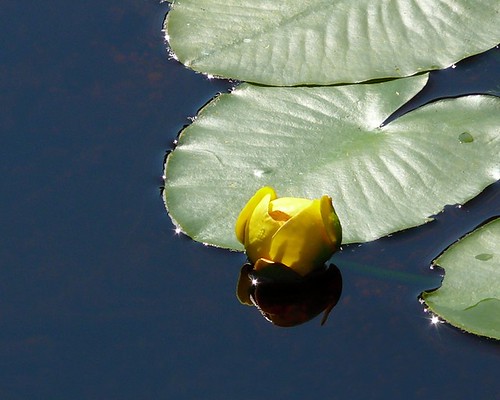
There just had to be a water lily or lotus here this morning, for the first yellow water lilies (spatterdock) of the season are starting to bloom, and that means summer is here. Plans are afoot (or aboot) to spend some happy time this summer, prowling hidden ponds and fens in the Lanark Highlands with a whopper of a telephoto lens mounted on the camera.

The wildflowers of northern springtime passed their time of blooming some time ago. Bloodroot, violets, trilliums and hepatica were captured for electronic posterity this year, but they will be only a poignant memory until the next springtime rolls around. We find ourselves in the time of columbines, wild orchids and water bloomers now, and that is just fine by me. All is well in what I call "the Great Round".

My wise and beautiful grandmother had a favorite wisdom tale or parable for my tadpole self. A teacher for many years, she liked to use the water lilies in the pond on her farm as a teaching motif because she knew I loved them. "We cannot choose where we are put down here on earth," she would say, "but like the water lilies, we can make a good, honest, happy and useful life for ourselves wherever we land up. All we have to do is embrace our time and place, just be ourselves, be kind to other beings and get on with things - we can bloom right wherever we are planted." She made it sound so easy, and sometimes it is.

The roots/origins of the water lily or lotus are way down in the mud, the muck, the slime and the pollution. It sends its fragile fronds spiraling up through the purifying (although one can no longer be sure of the purity) element of water and emerges on the surface to float effortlessly and bloom so gloriously that there are no words for the breathtaking shape, color, luminescence and indescribable perfume. The blooms glow like lanterns or beacons, even in deepest twilight.

The fluid wonder of the lotus is a perfect metaphor for our earthly journey, and for the long meandering voyage toward enlightenment, wisdom or simple knowing which we are all on together. Grandmother's saying "that one may bloom right where she is planted", has been in use in our tribe for as long as I can remember, and one of these days, I shall put it on a T-shirt - after all these years, I still need a reminder now and again. I nourish fond hopes of being like Gran, but I am not sure I shall ever get there.

May 24, 2010

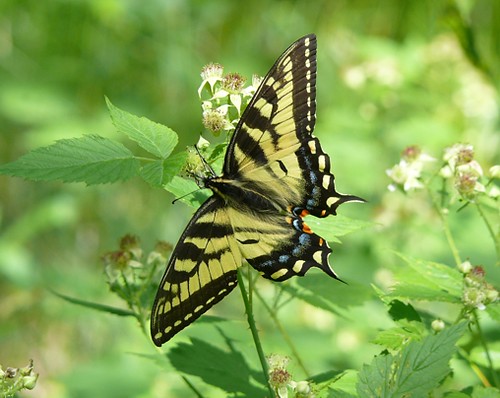
Alighted

Canadian Tiger Swallowtail
(Papilio canadensis)

May 22, 2010

Golden

Larger Yellow Lady's Slipper
(Cypripedium pubescens)

May 20, 2010

Little Summer Poem Touching The Subject Of Faith

Every summer
I listen and look
under the sun's brass and even
into the moonlight, but I can't hear

anything, I can't see anything --
not the pale roots digging down, nor the green stalks muscling up,
nor the leaves
deepening their damp pleats,

nor the tassels making,
nor the shucks, nor the cobs.
And still,
every day,

the leafy fields
grow taller and thicker --
green gowns lofting up in the night,
showered with silk.

And so, every summer,
I fail as a witness, seeing nothing --
I am deaf too
to the tick of the leaves,

the tapping of downwardness from the banyan feet --
all of it
happening
beyond any seeable proof, or hearable hum.

And, therefore, let the immeasurable come.
Let the unknowable touch the buckle of my spine.
Let the wind turn in the trees,
and the mystery hidden in the dirt

swing through the air.
How could I look at anything in this world
and tremble, and grip my hands over my heart?
What should I fear?

One morning
in the leafy green ocean
the honeycomb of the corn's beautiful body
is sure to be there.

Mary Oliver, from
West Wind

May 18, 2010

Cap and Bells

Wild Columbine
(Aquilegia canadensis)

There are some things I shall always remember, and this flower is one of them. I could forget my own name, and I would probably remember the words Aquilegia canadensis.

The eighteenth century father of taxonomy, Carl Linnaeus, thought that the nectar filled spurs resembled the talons of an eagle and named them Aquilegia (or eagle in Latin). There has also been some speculation that the name derives from the Latin aqua legere, meaning to carry water. The common name (columbine) has its origins in the Latin columba,meaning dove.

To me, the blooms with their complex architecture and nodding heads resemble jesters' caps, and I never see a columbine without thinking of the lovely poem by Yeats called "The Cap and Bells". Later this summer, when I have finished rereading the published works of poet, typographer and mythologist, Robert Bringhurst, I shall be revisiting Yeats, and I am looking forward to it.

May 17, 2010

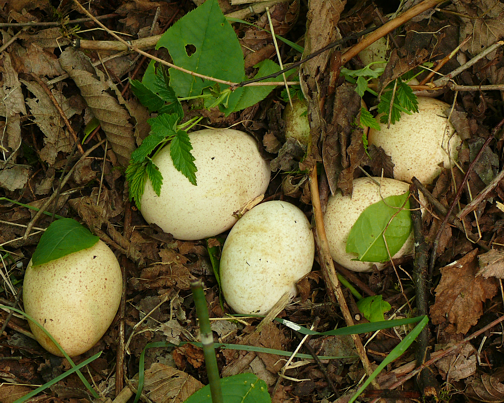
Wild Turkey Nest and Eggs

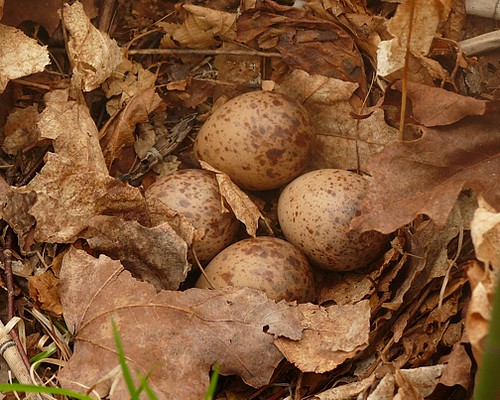
One of our wild turkey nests as promised.... We are not sure how many nests there are on the Two Hundred Acre wood this year, but so far we have discovered five.
There are actually eight eggs in this nest. One egg is beyond the right edge of the photo; two eggs are partially buried in leaves and difficult to see. Chances are the mother bird had not finished her laying when the picture was taken - there are usually about fourteen eggs in a wild turkey's nest.

May 16, 2010

Emergence

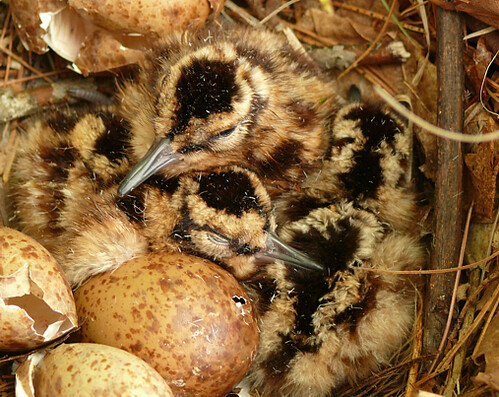
The woodcock nursery was at the perimeter of a favorite grove on the edge of the western hill, a snug leaf lined depression in the earth under an old birch tree. The camouflaging was superb, and we (Himself and Spencer and I) did not know the nest was there until it was right at our feet and the nervous mother flew up into a maple tree nearby. It is a good thing that we watch the ground when we are walking in the woods, especially in springtime...

Spencer possesses a gentle curiosity, and he merely points such things with a thoughtful expression when he finds them - he never invades a nest, scatters its wrappings or grabs a young bird. He also discovered a wild turkey nest yesterday, and we took a quick photo since the mother turkey was not sitting when we arrived on the scene.

Three of the eggs in the woodcock's nest had hatched out scant minutes before we arrived, and three little ones were snuggled up together to stay warm, still festooned with bits of membrane from their shells. A cautious tiny beak was just poking its way through the shell of the fourth egg (near the bottom of the photo).

We grabbed a few quick exposures and were well away from the place in a few seconds, and we marveled all the way home, thinking that this is one of those happenings that comes along once in a single lifetime if one is very fortunate.

May 15, 2010

New Leaves

Having spent a goodly chunk of the day searching for a bank access card which seems to have become invisible (or has embraced the void), I needed to get outside and discover these delicate rosy new maple leaves, just stand and look at them for a while.
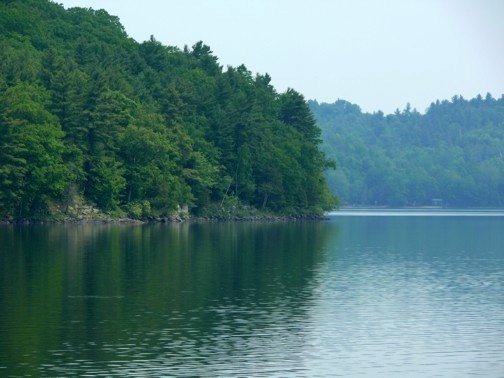
My present absent mindedness knows no bounds. I will trot off on Monday morning and acquire a new bank card, and then the old one will turn up in a pocket when I am looking for something else.

A behavioral disorder??? No just plain old age...

May 13, 2010

Thursday Poem - Looking for Gold

A flavor like wild honey begins
when you cross the river. On a sandbar
sunlight stretches out its limbs, or is it
a sycamore, so brazen, so clean and so bold?
You forget about gold. You stare—and a flavor
is rising all the time from the trees.
Back from the river, over by a thick
forest, you feel the tide of wild honey
flooding your plans, flooding the hours
till they waver forward looking back. They can’t
return; that river divides more than
two sides of your life. The only way
is farther, breathing that country, becoming
wise in its flavor, a native of the sun

William Stafford, Looking for Gold
from
The Way it Is: New and Selected Poems
(Grey Wolf Press 1998)

May 12, 2010

Wordless Wednesday - On the Path

Eastern Cottontail
(Sylvilagus floridanus)

May 11, 2010

Columbine

 Wild Columbine
(Aquilegia canadensis)

Amid the cold temperatures and gray skies, the first blooming columbine of the season, a small wild miracle if there ever was one.

May 10, 2010

Rereading Jayber Crow

"Everything there seemed to belong where it was. That was why I went there. And I went to feel the change that that place always made in me. Always, as soon as I came in under the big trees, I began to go slowly and quietly. This was not because I was hunting (I hunted in other places), but because in a place where everything belongs where it is, you do not want to disturb anything. I went slowly and quietly. I watched where I put my feet. I went for solace and comfort, for a certain quietness of mind that came to me in no other place. Even the nettles and mosquitoes comforted me, for they belonged where they were."
Wendell Berry, Jayber Crow

As part of our brief (hopefully) return to winter, there was a light dusting of snow yesterday, and it lay lightly over Lanark fields and fences for most of the morning. There was also a raw north wind which pushed temperatures well below freezing, freezing noses, fingers and lenses and plucking tenaciously at parkas, hoods and gloves.

Today the clouds have rolled away, and it is a fine sunny and very cold morning. Here I sit indoors in the sunlight with a mug of tea and a copy of Wendell Berry's Jayber Crow, one of the most magnificent novels written in the twentieth or any other century for that matter.

Berry's novel tells the story of Jayber Crow, twice orphaned and a evangelical seminary dropout, who returns to his roots in Port William, Kentucky, choosing to spend his life there and live out his bachelor days as the town's barber, church sexton and gravedigger. Of a firm, eccentric and pastoral faith, Jayber falls in love with a local woman who is already married. Unable to profess his feelings, he chooses to cultivate a careful friendship with her and remains faithful to her all the days of his life. As someone who is apart and yet truly rooted in his place and time and community, Jayber is a careful observer of the world around him, and he relates stories of Port William's landscape and human membership with wise and loving eyes.

There are no adequate words to describe what a stellar reading experience Jayber Crow is. This is (at least) the third time I have read it, finding again within its pages on this cold morning a sure elucidation of what it means to be rooted and part of one's home earth, to honor life and love and place and community.

If you have not already read Jayber Crow at least once, please do.

May 9, 2010

Mother's Day Rambling

And so it goes... The weather here has done one of its famous (or rather infamous) May flip flops.

With just a week or two to go before we are officially in springtime's frost-free zone, temperatures have plummeted and are hovering just a few degrees above freezing.  Our furnace has been murmuring along happily after resting for several days, and it is chanting a susurrant mantra about springtime being somewhere over the hill and still some distance away.

The house finches who are raising a blithe brood in the front door wreath are making occasional trips away to find nourishment, but they are also spending a fair bit of time hunkered down in the crowded nest keeping their fuzzy offspring warm.  The maple trees in the garden are in a mild state of shock and a few are even showing traces of shellshocked pink and red along their edges when the north wind brings them fluttering down and onto the rainy deck.

There is always a silver lining though - the return to cooler weather means that we will not be carried away entirely by flies and mosquitoes today, and that is a very good thing.  We were royally chewed last weekend.

Mother's Day morning is to be spent in the woods, Thai takeaway and many cups of tea later....

May 6, 2010

Thursday Poem - You Are the Future

You are the future,
the red sky before sunrise
over the fields of time.

You are the cock's crow when night is done,
you are the dew and the bells of matins,
maiden, stranger, mother, death.
You create yourself in ever-changing shapes
that rise from the stuff of our days---
unsung, unmourned, undescribed,
like a forest we never knew.

You are the deep innerness of all things,
the last word that can never be spoken.
To each of us you reveal yourself differently:
to the ship as coastline, to the shore as a ship.

Rainer Maria Rilke, The Book of Hours, II, 22
(translation by Anita Barrows and Joanna Macy)

May 4, 2010

Nestings

Squishing my way through the soggy woodland on Sunday afternoon and watching the leaf strewn carpet for ??? I've no idea what I was actually looking for that day or even if I was looking for anything - I so seldom go out looking for anything specific, just try to be there in the moment and responsive to whatever the Old Wild Mother (Earth) decides to share with me.
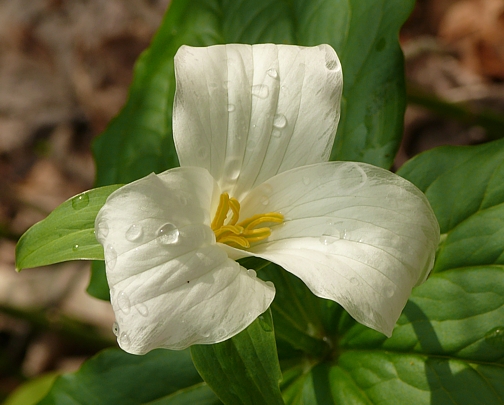
On Sunday, the mother woodcock launched herself out of the foliage right at my feet like a missile and flew up into a nearby tree, fluttering and making anxious sounds. I took a single photo and left the clearing at once, having stepped carefully around the nest and touched nary a leaf of its artful wrapping.

Later in the day, I surprised a mallard hen sitting on nine eggs in a nest at the bottom of the eastern hill and made a swift retreat from there as well. I know for a fact that there is a wild turkey nesting in a hollow near the main trail into the deep woods, and a thrush is constructing a delicate nursery in a clump of prickly junipers near the wild orchid colony.

Each and every time I go into the woods, there is something magical and breathtaking to see, and I always come home renewed, refreshed and thankful too. I am so looking forward to sharing rambles and wild magics with my great granddaughter Olivia Rose when she makes her appearance in the great wide world in July. I have loved her fiercely since I learned of her coming.

May 3, 2010

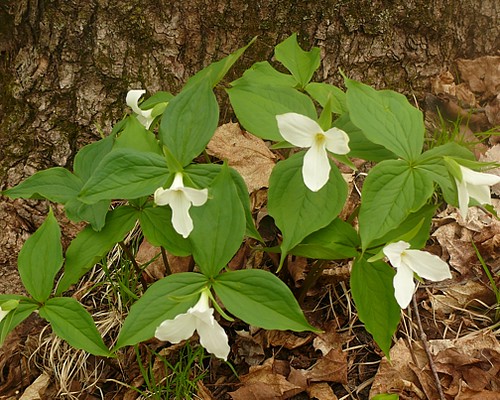
Raindrops and Trilliums

One thinks of April as being the northern month of springtime rains, but here we are in the first week of May with nothing but rain in the forecast for the next whole week. So much for planned rambles in the woods with Spencer for a few days anyway..
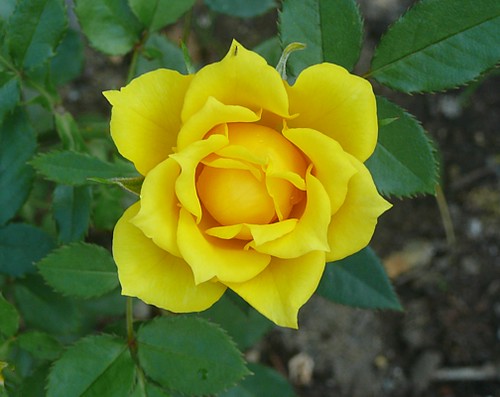
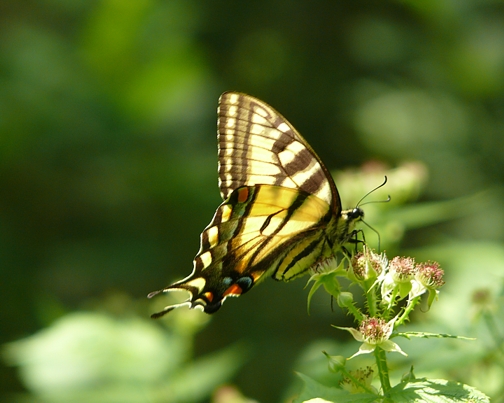
Woe betide us, the black flies are out and about in dense biting clouds. We are a mite chewed this morning, having spent yesterday morning photographing rain wet trilliums in our beloved soggy highlands - there is nothing the gnats like better than a fine wet day and something or someone to munch on.

Having already provided nourishment for the little biters, Spencer and I will spend the day indoors with tea and books, with the piano sonatas of Scarlatti and the sound of gentle rains beyond the window.

May 1, 2010

Spring's Reflection (For Beltane)

What could be more in the spirit of Beltane (or May Day), than the gnarled ash tree leaning over the Clyde River by the bridge and the old granary in Lanark?

The water holds everything so tenderly in reflection, leaves, tree, stones and old building. A short distance away, geese are floating majestically along without moving a feather, and an otter swims back and forth near the shoreline. Swallows swoop back and forth over the water in search of food, and the whole May morning is caught up in shimmering green.

Happy Beltane to you and your clan!