August 31, 2009

Rocks, Lichens and Turning Leaves


This is the last day of August, and I am in thoughtful mode.  It is difficult NOT to be in thoughtful mode when one is dancing on the cusp between summer and autumn, particularly when she is dancing along with another round of pneumonia at the same time and feeling a little woolly in her sconce as a result. Health and seasonal considerations notwithstanding, I look out through the window, and the whole wild world seems to be passing by and putting on a fine performance.

This morning a little after sunrise several hundred geese flew over the house at low altitude - they were all headed for the cornfields, and the air was full of their jubilant honking and calling to each other as they flew.  An hour or so later, a heron followed and then a loon, singing in that plangent, eerie and utterly glorious voice that belongs to the Great Northern Diver alone.

Rocks, lichens and turning leaves,  herons, geese and singing loons - the words form a wild mantra or litany, and the recitation lights up my day.  I think I shall try to paint it.

August 27, 2009

Thursday Verses - To My Elder Self and All

"Look at me now," I say, "just look and listen".
I have no wisdom to give you, no insights
into your journey, the shapes and colours
of your myriad lives, their twists and their
turns, their themed and glossy fragrance.

Look, here are my hands beseeching you,
cupped, I hold them out like a benediction,
resting easy within, golden leaves and fragments
of the clearest autumn skies at sunrise,
blue as a starling's egg and mole dappled,

tiny ripples and perfect reflections all rounded
in a wooded blessing of the finest kind.
Drink from these hands, and be content,
oh friends, let us travel on together starting
here and now, light of heart and singing as
the birds sing, branch to branch at dawn.

Cate Kerr (Me)

August 22, 2009

Touch Me Not

Touch Me Not
also called Jewelweed, Policeman's Helmet, Himalayan Balsam
(Impatiens glandulifera)

This pink form of jewelweed is a member of the Balsaminaceae family and, as its Latin name suggests, genus Impatiens, but a member with sass and clout and invasive attitude. It takes the biblical injunction to go forth and multiply seriously. The names are many: Kiss-me-on-the-mountain, Jewelweed, Policeman's Helmet and Touch Me Not to name just a few.

There are many forms of jewelweed world wide, and an orange form is native to parts of North America, but this outlander was growing wild in a hydro corridor leading down to the river, an import from the far Himalayas which probably escaped from the long ago plot of a now much sadder and wiser gardener.

The name of "Touch Me Not' is appropriate, for the weed has explosive seed pods which hurl up about 2500 seeds per plant, traveling up to ten kilometers before germinating the following spring. All one has to do is touch the pods to release the seeds into the air, and I remember delighting as a child in the way jewelweed launched its children into the air like tiny catapults when touched.

For all its less endearing qualities, hummingbirds love the stuff, and in native American lore, the mucilaginous sap is used to treat skin irritations caused by Poison Ivy and Stinging Nettle. The sap also has fungicidal properties and has been used to treat Athlete's Foot.

August 21, 2009

Friday Ramble - Standing in the Light (For Muriel)

Legendary peace activist Muriel Duckworth has told friends she is “going now,” accepting what appears to be the imminent end of a long life of striving for social change.The 100-year-old, whose advocacy earned her honorary degrees and the Order of Canada, had a serious fall recently at her cottage in Magog, Que. She is receiving palliative care and does not expect to recover.

“I'm going to leave you now. It's time for me to go. Everything is ready,” she told two visiting friends, the words relayed to Ms. Kipping by Ms. Duckworth's daughter. “Be happy with each other. You have each other. Goodbye, I'm going now.” That inner peace contrasts with the grief of those close to her. Some were too distraught to speak publicly. Others praised her for remaining true to her principles.

“Her life shows not only it can be done, but that it has been done,” said friend Ursula Franklin, 87, senior fellow at the University of Toronto's Massey College. “I would like her to be remembered as somebody who demonstrated that it's possible to change one's society, to be profoundly critical and still remain a respected member of that society.”

Ms. Duckworth, a practising Quaker and founding member of protest group The Raging Grannies, was born in Quebec and moved to Nova Scotia in 1947. She and her late husband, Jack, raised three children in the province while dedicating themselves to the cause of social justice. A founding member of the provincial branch of Voice of Women, Ms. Duckworth served as national president for four years. She helped establish the anti-poverty Canadian Council for International Co-operation, and was one of the first women in Nova Scotia to run for provincial office. She was always strongly opposed to war, a stand that went back more than half a century, and did not recognize popular distinctions between “good” and “bad” conflicts.

She was able to hold onto hope of a better future even as fighting continued around the world, Ms. Franklin said, who noted that social attitudes have slowly changed for the better. Citing the less authoritarian ways people relate in the family, the workplace and at school, Ms. Franklin said the challenge is to extend these new approaches to the international sphere. But that task will soon be left to the next generation.

“When any person passes, it's the end of an era,” said Bruce Kidd, a close Duckworth family friend and the dean of physical education and health at the University of Toronto. He went on to quote an Ethiopian saying he'd heard from a colleague, noting that the effects of some deaths are particularly profound. “When an elder dies, a great library and archive burns to the ground.”

This was largely reprinted from an article by Oliver Moore in a recent issue of the Globe and Mail, and it says, better than I ever could, what an incandescent spirit and a courageous warrior this gentle woman has always been - we have been blessed in knowing her and having her light shining in our lives.

August 20, 2009

Thursday Poem - The Seven of Pentacles

Under a sky the color of pea soup
she is looking at her work growing away there
actively, thickly like grapevines or pole beans
as things grow in the real world, slowly enough.
If you tend them properly, if you mulch, if you water,
if you provide birds that eat insects a home and winter food,
if the sun shines and you pick off caterpillars,
if the praying mantis comes and the ladybugs and the bees,
then the plants flourish, but at their own internal clock.

Connections are made slowly, sometimes they grow underground.
You cannot tell always by looking what is happening.
More than half the tree is spread out in the soil under your feet.
Penetrate quietly as the earthworm that blows no trumpet.
Fight persistently as the creeper that brings down the tree.
Spread like the squash plant that overruns the garden.
Gnaw in the dark and use the sun to make sugar.

Weave real connections, create real nodes, build real houses.
Live a life you can endure: Make love that is loving.
Keep tangling and interweaving and taking more in,
a thicket and bramble wilderness to the outside but to us
interconnected with rabbit runs and burrows and lairs.

Live as if you liked yourself, and it may happen:
reach out, keep reaching out, keep bringing in.
This is how we are going to live for a long time: not always,
for every gardener knows that after the digging, after
the planting, after the long season of tending and growth,
the harvest comes.

Marge Piercy (The Seven of Pentacles)

August 16, 2009

Siesta

Red-legged Grasshopper
(Melanoplus f. femurrubrum)

We could hear cicadas singing high in the trees yesterday, but there was nary a discarded carapace to be seen adorning the poplars and not a single Monarch caterpillar to be glimpsed munching the yellow and burgundy milkweed leaves in the western field.

What did catch my eyes were scores of grasshoppers resting among the curling milkweed leaves and drowsing contentedly in the heat of the day.

August 13, 2009

Thursday Poem - Why We Tell Stories

I
Because we used to have leaves
and on damp days
our muscles feel a tug,
painful now, from when roots
pulled us into the ground

and because our children believe
they can fly, an instinct retained
from when the bones in our arms
were shaped like zithers and broke
neatly under their feathers

and because before we had lungs
we knew how far it was to the bottom
as we floated open-eyed
like painted scarves through the scenery
of dreams, and because we awakened

and learned to speak

2
We sat by the fire in our caves,
and because we were poor, we made up a tale
about a treasure mountain
that would open only for us

and because we were always defeated,
we invented impossible riddles
only we could solve,
monsters only we could kill,
women who could love no one else
and because we had survived
sisters and brothers, daughters and sons,
we discovered bones that rose
from the dark earth and sang
as white birds in the trees

3
Because the story of our life
becomes our life

Because each of us tells
the same story
but tells it differently

and none of us tells it
the same way twice

Because grandmothers looking like spiders
want to enchant the children
and grandfathers need to convince us
what happened happened because of them

and though we listen only
haphazardly, with one ear,
we will begin our story
with the word and ...

Lisel Mueller

August 11, 2009

Summer's Spirit Singing

Yesterday I heard the first cicada song of this most unusual summer season, and when the resonant music floated down to my ears from one of the tall trees in the garden, I dropped my pruning shears and did a happy dance in the grass, Spencer cavorting right along with me.

I apologize for the quality of the photos, but they are the only cicada photos in my digital archive - they date from the summer of 2006 and were taken with my first digital camera ever, a tiny Sony with little or no zoom and no nifty features whatsoever. It was (however) an easy device to tuck in one's pockets and take to the woods on a hot summer day.

For all their shortcomings, I am fond of the images - they are of a magnificent bug, and one which is truly dear to my heart. The imago (adult) in these photos had just shed its carapace, and it clung to its discarded shell on a cottonwood tree in all its jeweled pink and turquoise glory, breathing in and out slowly and waiting for its wings and body to firm up.

The central figure in a well known Chinese classic called Journey to the West is a priest who is called the Golden Cicada. The cicada is a powerful motif in Asian wisdom tales, and it also makes frequent appearances in haiku old and new. Its climb into the light of day and the shedding of its shell represent the pure light of wisdom and the many stages in one's earthly journey which must be completed before all illusions are shattered, and one attains enlightenment. To "shed the golden cicada skin' means to outwit and deceive through trickery, specifically to use decoys to fool one's enemies.

When I encountered it, I thought that this single cicada was one of the beautiful things I had ever seen in all my years. Its delicate colors, its round luminous eyes and its hopeful expression were poignant indeed, when one considers that it was nearing the end of its life cycle, and that its buzzing ballad in the high trees would be its parting song to the great wide world.

There is no fool like an old fool, but I am in fine company and happy to be there.

August 10, 2009

In the Pink

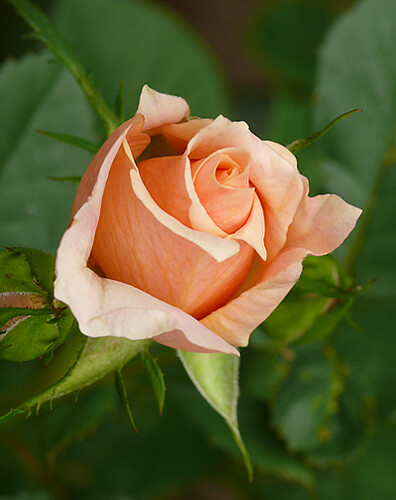
David Austin Rose
Heritage (Ausblush)


Who would ever have thought, even for a moment, that she could grow such perfection this far north?

After an extravagant (and ecstatic) blooming in late June, the roses in the garden behind the little blue house in the village rested for a few weeks, dancing in the breeze and sending up lovely red and emerald green leaves all over the place. Having caught their breath now, they are all in bud, and there will be at least fifty roses in bloom over the next week or so.

What a fragrant embarassment of riches...

August 8, 2009

Lacy

Queen Anne's Lace
also called Wild Carrot, Bird's Nest, Bishop's Lace
(Daucus carota)

August 6, 2009

Thursday Poem - What Should We Do About That Moon?

A wine bottle fell from a wagon and
broke open in a field.

That night one hundred beetles and all their cousins
Gathered

and did some serious binge drinking.

They even found some seed husks nearby
and began to play them like drums and whirl.
This made God very happy.

Then the "night candle" rose into the sky
and one drunk creature, laying down his instrument,
said to his friend ~ for no apparent
Reason,

"What should we do about that moon?"

Seems to Hafiz
Most everyone has laid aside the music

Tackling such profoundly useless
Questions.

Hafiz
(Shamseddin Mohammad)


August 2, 2009

Dragonfly

Halloween Pennant,
(Celithemis eponina)

August 1, 2009

Wild Medicinal Salad

Common Self-heal
(Also called Allheal and Woundwort)
(Prunella vulgaris)

It's an intensely purple little wild herb which blooms in the midst of summer, and it's one we tend to overlook because it is short and the vividly green leaves blend in with field grasses and shorter species of clover. Encountering it in the field, I am always fascinated by the color and complexity of the flowers.

The mildly bitter leaves are wonderful in salad, and the name tells us something about the plant's properties and folklore. Reputed to have antiseptic, healing and antibacterial properties, prunella has been used by practitioners of native medicine on wounds for centuries, and in traditional Chinese medicine, it is employed as an antioxidant, immune stimulant, viral replication inhibitor and anti-inflammatory.